
June 8, 2023
Minstrels of the Dawn
Among the passing of more than a few recognizable names in the music world this year are several musicians whose mark has been significant on both a global and personal level and who I was fortunate enough to see in concert on several occasions.
David Crosby and Gordon Lightfoot each nudged pop music into different sensibilities. Those accomplishments are enough to allow their names and recordings to exist for a long time. For each, the music they made in their prime will remain what most people hear and revisit. Aficionados will continue to explore the entire catalogs, sifting, sorting, rummaging through everything including the unreleased leftovers. But live performances, which can only be partially experienced through a live recording, a concert album or a film, can no longer be shared with these musicians.
Seeing Crosby for the first time, I was one of 40,000 people at the Crosby, Stills, Nash and Young concert at Atlantic City Race Course in Mays Landing, New Jersey in 1974, and I can still vividly recall the beauty and precision of his, Nash’s and Young’s harmonies on “Only Love Can Break Your Heart” and “Sugar Mountain.” I can remember the silence of the crowd, as if each attendee was holding his/her breath while the vocalists onstage worked their magic, casting their spells with each chorus’s three-part harmony. And I can recollect the applause, the cheers and the appreciation that swelled from the audience after each a cappella conclusion.
The next time I saw Crosby live was at the Bijou Café in Philadelphia on April 25, 1981with 275 other people. We didn’t know at the time about his addiction issues but, looking back now, playing small clubs like this mostly solo (he was joined by an electric guitarist for the last several songs) was a quick paycheck.
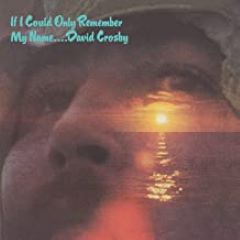
On this occasion, he was not the talkative, jovial performer of 1974. He was clearly nervous during the first few songs until someone from the audience offered some verbal support, which he gratefully acknowledged. Despite his problems, he was in fine voice, offering some of the jazz inflections that had often flavored his songs with the Byrds, CSNY and his solo albums, particularly his first, If I Could Only Remember My Name. And he even accompanied himself on an old upright piano, standing and vocalizing, still casting those spells.
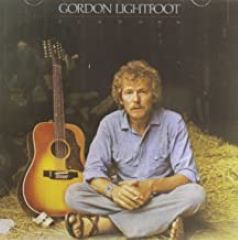
As for Lightfoot, his pop balladry captured the attention of many by the early 1970s. A blend of folk and contemporary, his material could be called “working class poetic,” filled with characters, situations and events culled from real life and the average person. His 1976 appearance at Philadelphia’s Academy of Music was a celebration of his catalog that relished the old as much as the new, with a full band that included drums and a pedal steel player to provide the perfect backing for them.
It wasn’t until the early 2000s that I saw Lightfoot in concert again, at the Broadway Theater in Pitman, New Jersey when the venue was booking national acts for a brief period. He was still sporting a large backing band, but the vigor and grandeur of his vocals by then had diminished. The early songs, though, still carried with them the youth and exuberance of when they were first written and recorded, and that’s not easy after decades of travel and performance.
Ultimately, even writing about attending live performances by musicians like Crosby and Lightfoot are approximations, mere attempts to convey with words the experience of being there, of seeing and hearing what was presented and of processing what that means. The experiences themselves ended decades ago but, like the artist, they’re alive in what we continue to remember of them.





 Epistrophe
Leave a comment