
August 21, 2023
Evening Shades of Gray
In 2008, I wrote an article about Bob Dylan’s mysterious presence at the 1972 Philadelphia Folk Festival for Derek Barker’s Dylan magazine Isis. Following its publication, I finally heard from Steve Goodman biographer Clay Eals, who I had approached with some questions and who, after apologizing for a busy schedule, answered them and then suggested I contact the woman who had booked the festival at the time. Her subsequent interview clarified a number of points and added some fascinating information well worth a second article. Derek was kind enough to allow me space for it, but I’ve since wondered how all the information would have read as one article. Except for some additional research, the piece below is probably close to what I would have written if delays and deadlines hadn’t conspired. Thanks to Clay for his help.
One of the more obscure moments in Bob Dylan’s career is his attendance at the 1972 Philadelphia Folk Festival, which was held on August 25, 26 and 27. His decision to visit the event in its eleventh year came at a stage when he wasn’t performing or recording much at all. His mini-sets at the Concert for Bangladesh on August 1, 1971 and at the Band’s New York Academy of Music New Year’s Eve show a few months later had both been unannounced moments that were received enthusiastically by audiences, and Dylan seemed to be somewhat interested in returning to performing without touring. Therefore, it begs the question: Was the Philadelphia Folk Festival another opportunity for a live appearance or is this one more thread in the web of Dylan myths?
Clinton Heylin, in Bob Dylan: A Life in Stolen Moments, references a report in The Arizona Republic that claims Dylan gave an impromptu performance aboard a riverboat on the Lower Salt River in Arizona early in 1972. On Sunday July 16, Dylan attended the Mariposa Folk Festival. He was highly visible during this Canadian event, which was held on Toronto’s Centre Island, a ten-minute ferry ride from the city. Heylin states that there were high expectations for Dylan putting in an appearance on stage, but festival organizers were concerned with “the chaos that a Dylan set would cause.”
In 1972, Paula Ballan would cross paths with Dylan twice, the first at the Mariposa Folk Festival. “I was there, “Ballan proclaims. “I recognized Dylan walking around.”
Ballan was no stranger to the folk festival circuit and while she’s “not a real big Dylan fan,” she had witnessed a few of his significant appearances over the years including the Newport Folk Festival in 1963, 1964 and 1965.
She recalled that at the Mariposa Festival many of the performers were hanging out with the crowds without any noticeable stir during this daytime-only event and explained that performances were interspersed on stages throughout the island with seating for 1,000 to 1,500 people per stage. The players had a backstage area, but even this was visible to the audience. She added that some of the musicians even rode the ferry back to the city, giving ten-minute concerts for those on board.
According to Michael Hill’s book The Mariposa Folk Festival: A History, it was late Sunday afternoon when Dylan and fellow singer-songwriter Gordon Lightfoot were about to leave the festival but changed their minds. It was then that “Dylan politely and quietly asked if he could get up and sing a song.”
Having been alerted to Dylan’s upcoming presence earlier that day, the board of directors, fearing that an onstage appearance “would cause pandemonium,” had already gathered and voted to deny Dylan a performance should he ask. According to Hill’s book, the decision was delivered by Michael Cooney, who said, “I remember [in the ‘backstage area’ tent of one of the stages] that [Dylan] never said a word; all the talking was done by some young jerk – his road manager? But he didn’t play.”
Ballan maintained that the audience’s eventual anticipation of a Dylan performance and the festival organizers’ fear of chaos might actually have been precipitated by the crowd’s initial low-key response to Dylan’s presence. “My gut reaction,” she explained, “says he was annoyed that he hadn’t been noticed. He could have done the whole day and he wouldn’t have been bothered.” She said that the audience’s eagerness began “once he started acting like Dylan,” and that either “he was so afraid of what could happen, he made the idiocy happen, or it could have been it just got out of hand…it was necessary to bring in a launch [to transport Dylan]. He had to be escorted away.”
After that, Ballan was uncertain of what happened. “He may or may not have been at the party that night,” she said, explaining that she did attend the post-concert festivities, but didn’t hang with the singer-songwriter crowd.
Ballan never imagined she would encounter Dylan a second time that summer at the Philadelphia Folk Festival, where she booked acts from 1966 to 1976. Dylan wasn’t on the list of scheduled performers, but there he was anyway, and “I had a bird’s-eye view of it,” she noted.
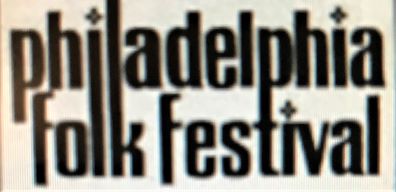
The Philadelphia Folk Festival originated ten years earlier. Its name has more to do with its sponsorship by the Philadelphia Folksong Society than its actual geographic location, which is Old Pool Farm in Upper Salford Township near Schwenksville, Pennsylvania, over twenty miles west of the Philadelphia city limits. The festival quickly established a strong reputation by booking many of the great folk, blues and country artists of the time like Doc Watson, Mississippi Fred McDowell and Ralph Stanley. Rolling Stone magazine, in its coverage of the 1970 festival, pointed out that it was the policy of the Folksong Society, established in 1957, to avoid booking “stars” for the event. It also stated that while Dylan wasn’t at the festival in 1970, rumors of his presence at Old Pool Farm had become an annual occurrence.
Dylan was involved early on with the Philadelphia Folksong Society. The group’s historian Lewis Hipkins offered a story he was told by Ed Halpern, who ran the Gilded Cage folk club on 21st Street back in the Sixties. “Dylan played a concert for the Folksong Society back in the early days,” Hipkins reported, “and apparently the place he played didn’t have a sound system.”
That concert also involved later WMMR and WXPN DJ Gene Shay who, as a member of the Folksong Society, helped co-found the Philadelphia Folk Festival and hosted numerous singers and musicians on his radio shows over the years until his death in 2020.
“My wife and I brought [Dylan] to town for his very first concert in 1963,” Shay related in an email. According to the April 2004 article “AKA Gene Shay” on the Philadelphia Arts Writers website, that show took place Saturday May 3, 1963 at the Philadelphia Ethical Society’s 300-seat Rittenhouse Square auditorium.
In the online article, Shay, who met Dylan and girlfriend Suze Rotolo at Philadelphia’s 30th Street [Train] Station May 2, recalled that the sound system for the show was locked up and there was no way to gain access to it. Dylan refused to take the stage at the 8:30 starting time. According to the article, he finally relented after forty-five minutes and performed before what Shay said was an audience of forty-five, earning $150 for the show.
“In the ‘60s I emceed Dylan’s first three concerts in Philadelphia,” Shay mentioned in his email. The second and third concert appearances, according to Heylin’s chronology, would most likely have been at Town Hall on October 25, 1963 and in late September 1964. Shay was also Master of Ceremonies at the 1972 Philadelphia Folk Festival as he had been every year since the event’s inception. In the 1980s, he and fellow DJ Ed Sciaky, also a significant figure in Philadelphia radio until his death in 2004, briefly discussed during an on-air broadcast Dylan’s attendance at the festival and what they witnessed. Sciaky remembered Dylan and guitarist David Bromberg playing guitars backstage. “I heard him jamming,” he said.” It was fascinating ‘cause I was like eavesdropping on Bromberg and Dylan kind of warming up and then I guess it was just a…he didn’t want to go on ‘cause it would cause too much of a scene or something.”
Sciaky’s recollection seems more than a hint that Dylan was preparing to perform at the festival. While no mention is made of which songs were played by the duo, the term “warming up” seems to imply that Bromberg would be accompanying Dylan.
Bromberg was, in fact, scheduled to play the night of August 27, which concluded the 1972 festival, so Dylan may have attended only the last day. Bromberg, who became one of the most consistently booked performers at the event through the Seventies, debuted at the Philly festival in 1969 and returned for the next three years. Before his second appearance there, he recorded with Dylan for the first time. Bromberg, in fact, seems to be a significant factor in why Dylan attended the 1972 festival.
“He came with David to the Festival,” Shay explained in his email. Clay Eals, in his biography Steve Goodman: Facing the Music, reports on Bromberg bassist Steve Burgh’s view of the pair’s relationship at the time. “As Burgh put it,” Eals writes, “Dylan ‘had an infatuation’ for the multi-instrumentalist Bromberg, extending him a portion of his enigmatic aura.”
Shay offered this evaluation in the 1980s radio broadcast: “Dylan was with Bromberg. Bromberg took him under his wing and said, ‘Hey, look, I’ll protect you until after the festival.’”
In his email, Shay said that Dylan “was there mainly to ‘hang out’ with friends like Bromberg.” The other friends on the bill that weekend also included John Herald and Jean Redpath as well as newcomers Steve Goodman and John Prine, who were performing Saturday and Sunday respectively.
According to Eals, Dylan first met both Prine and Goodman at a party hosted by singer Carly Simon in Manhattan the previous November. Along with Kris Kristofferson, the four men sat around playing their songs for each other. Dylan was already familiar with the material from Prine’s then unreleased first album, having heard it through an advance copy and praising “Donald and Lydia,” a tune he is rumored to have recorded at the “George Jackson” sessions that year. He also would have been introduced to Goodman’s “City of New Orleans” at this gathering.
During a 2008 interview, Bromberg remained guarded concerning questions about Dylan and the Philadelphia Folk Festival in 1972, offering only a small glimpse into what went on behind the scenes. The question as to whether Dylan was planning on a surprise performance at one of the evening concerts elicited a quick response. “I doubt it,” he said.
Bromberg did reveal that Dylan “spent his time there in my equipment van.” This was most likely during the course of the day. Eals quotes from Goodman’s 1973 Record Mirror interview in which the singer is told to “go across [the festival grounds] and meet a friend.” Goodman says he walked across and found Dylan, who complimented him on “City of New Orleans.” Dylan apparently spoke with other performers but preferred to sit tight. Nighttime, however, was a different story since he was spotted by individuals like Shay during the evening concerts.

“I know he was there backstage,” Shay recounted in his email. “I saw him walk by me a couple of times. He even complimented Janis Ian on her song ‘At Seventeen’ immediately after she finished her set that Sunday evening.”
But concerns were already brewing. “As the Sunday night show progressed,” Shay explained, “I saw Dylan walk by me a few times wearing sunglasses (at 10 PM, or so) and at one point someone from the festival production team asked me a pointed question…‘Gene…do you think that if Dylan would agree to do one song on stage that you could control the audience so that the audience calls for more would not take us into an overtime situation?’ Like all of our festivals we had a time frame set by an agreement with the township. We could not run overtime or we could lose our lease.”
According to Ballan, Upper Salford Township had taken the festival to court that year over a 1971 workshop on bawdy songs that Ballan admits “should have been secluded,” but, because a hurricane necessitated the consolidation of stages, was placed on the main stage, resulting in the performances being heard beyond the festival grounds. The event was slapped with a curfew that, if violated, would terminate it.
Shay identified that there was concern over Dylan performing only one song and the audience losing control and demanding more, risking a violation of the curfew. However, the festival sets for scheduled performers during that time were not very extensive. Newcomers, in particular, had very limited time. Eals identifies Goodman’s debut set at the festival in 1971 as consisting of only four songs. A recording of Bonnie Raitt’s 1972 Friday festival appearance features a five-song set. Encores were also uncommon. A recording of Fairport Convention’s 1970 performance has the band returning to the stage after its set and emcee Shay telling the enthusiastic audience that had been insisting on an encore, “you just got a special treat because nobody does them.”
Shay explained that he carefully considered what he had been asked by the organizers in 1972. “I thought about this for a bit,” he wrote, “that I could get [the audience’s] cooperation by telling them we had a special treat for them – IF they promised that we could continue with the festival program AFTER that special treat. If they gave me their assurance (I was sure they would) then I would say something like, ‘Ok, here he is – but only to do one song, ok ladies and gentlemen, Bob Dylan.’ That never happened. Never even came close.”
But, in his 1980s on-air discussion of the festival with Sciaky, Shay informed radio listeners, “They asked me at one point, ‘Do you think that you could’ [pause] they said, ‘Gene, do you think as emcee you can control the crowds so that he only does one or two songs?’ Because we had a curfew, a limit as agreed upon by the township and the Folksong Society and we couldn’t go over that limit. So, I said, ‘I think so,’ and just before he was supposed to go on, he decided, ‘Nah, better not.’”
While his and Sciaky’s on-air conversation in the Eighties implies that a Dylan performance was imminent, in his email, Shay unequivocally states that Dylan had no intention of performing. “He had not been planning to perform that night,” Shay wrote. “I believe that question asked to me was before anyone really asked Dylan if he would consider doing a tune. Dylan never really expressed a desire to get on stage that night in 1972 or make his appearance backstage known to the audience.”
Shay revealed that gospel singer Bessie Jones nearly “blew his cover” when she got on stage that Sunday night “by mentioning to the audience that Dylan was talking with her.”
“Not many in the audience picked up on what she was saying as I remember,” Shay recalled, “but enough people understood her comment and slowly the buzz went around the festival that ‘yes indeed, Dylan was in the building.’ A lot of people asked about that the next day.”
Ballan confirmed Dylan’s presence there wasn’t really known until nightfall but provided more details about what was going on behind the scenes. “Until it got dark, he was invisible,” she said. It was at that point, she explained, that the heads of the event began worrying. “The executive committee of the festival came running to me and said, ‘We have a curfew and if we go over… You must tell him he can’t go onstage. Once he goes onstage, the audience won’t let him off.’”
“I go to Dylan,” Ballan continued, “and I welcome him to the festival and explained that we have this situation, a curfew, and we can’t go overtime. I said, ‘If you perform, the audience would make it difficult for you to leave.’ I go, ‘Please don’t go onstage,’ and he says, ‘Hey, no problem. See you later.’”
Ballan said she returned to work, making sure the performers’ sets didn’t run overtime. At 10 p.m., the executive committee approached her again. “They had reasoned, ‘How could we possibly not have him perform?’” she explained. They sent her back to talk to Dylan. When she found him again, she reported that there had been a reconsideration. “He looked at me,” Ballan recalled, “and I looked at him and he said, ‘Why don’t we forget about it and stick to our original agreement.’ And so, he did not play until we got back to the hotel.”
Bromberg recalled the after-hours gathering in his interview, remarking, “we had a nice little jam back at my hotel room.” Eals places the jam at a nearby George Washington Motor Inn. According to Bromberg, the guests included Prine, Goodman, Raitt and Maria Muldaur, who was not listed as a festival performer that year. And, of course, Dylan.
Ballan attended the hotel jam, which she says lasted until 3 or 4 a.m. She said the main participants were “swapping songs with each other” on instruments that included fiddle, mandolins and “two or three guitars that got passed around.” She also revealed that in addition to the players, “there were half a dozen people who weren’t musicians in the room.”
According to Ballan, another participant in the jam was Bobby Neuwirth who “played a couple of his own songs.” She said he must have also attended the festival but remembered him definitely being at the hotel.
“Dylan was part of that night of incredible jamming,” Ballan added. She couldn’t remember which songs he played but recalled that “he was participating in all of it and chatting up a couple of females.” One of the women had been to Israel, she says, and discussed her experiences there with Dylan, but she later left with fiddler Kenny Kosek.
Ballan believed the festival-hopping and hotel jams were indicative of this phase of Dylan’s career. “He was hanging out with pickers at that point,” she said. “As part of that hanging out, he wanted to go and party and jam. He wanted to go where everyone else was going.” As if to prove her point, two weeks after the Philadelphia Folk Festival, Dylan joined Prine onstage at the Bitter End in New York City for three songs and, in September, through Bromberg’s request, he played piano on several tracks for Goodman’s Somebody Else’s Troubles album.
Once the festival was over, word about Dylan’s presence ignited all the various scenarios, some of which have been carried along with time. Hipkins noted that he had always heard about Dylan’s attendance but never knew that he was with Bromberg or that there was talk of him performing. Sifting through the available information today, it seems that while the festival would have provided a perfect situation for an appearance, it could be Dylan was there simply because, as Bromberg put it, “he liked it.” But did he ever consider performing that Sunday night? We may just have to accept that Dylan’s backstage presence in evening shades is the only sure bet.
SOURCES
Clinton Heylin, Bob Dylan: A Life in Stolen Moments, Schirmer Books, 1996.
Hill, Michael, The Mariposa Folk Festival: A History, Dundurn Press, 2017.
Dennis Wilen, “Philly Folkies’ Community Vibes,” Rolling Stone, October 15,1970.
Paula Ballan, phone interview with writer, August 13, 2008.
Lewis Hipkins, email correspondence with writer, May 12, 2008.
Gene Shay, email correspondence with writer, May 13, 2008.
Mike DelVecchia, “AKA Gene Shay,” Philadelphia Arts Writers website, April 2004.
Audio recording of off-air broadcast by Ed Sciaky and Gene Shay, WIOQ-FM, Philadelphia, mid-1980s.
Clay Eals, Steve Goodman: Facing the Music, ECW Press, 2007.
David Bromberg, phone interview with writer, May 6, 2008.
Audio recording of Fairport Convention at Philadelphia Folk Festival, August 30, 1970.




 Epistrophe
Leave a comment