
May 15, 2024
All You Need is Love
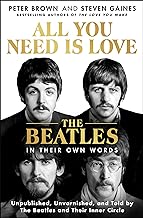
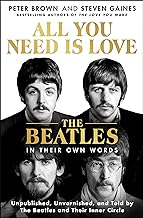
Peter Brown and Steven Gaines’s All You Need is Love can probably be considered a sequel to the duo’s 1983 biographical offering on the Beatles, The Love You Make. But the new release, published last month by St. Martin’s Press, is not so much a narrative account of the Fab Four as an offering of raw transcripts of interviews conducted largely during the fall of 1980 for the first book. As a collection, it forms an intriguing puzzle of information.
The band and its inner circle, many of whom are no longer with us, comprise the cast interviewed for All You Need is Love. There are three Beatles (Paul McCartney, George Harrison and Ringo Starr), wives (Cynthia Lennon, Yoko Ono, Patti Boyd, Maureen Starkey), business associates (Allan Williams, Dick James, Geoffrey Ellis) and employees (Neil Aspinall, Derek Taylor, Alistair Taylor and Brown) among those interviewed. Topics include the group’s early days, manager Brian Epstein, the Manila touring fiasco, the Maharishi, Allen Klein and Apple.
The conversations in this collection range from frank recollections or reminiscences to the self-serving, retaliatory or evasive. Some are anecdotal, others are elliptical, but what’s revealed is not always about the Beatles, given the range of personalities who sat with Brown and Gaines for these interviews.
In his Introduction, Brown calls the transcriptions “a mosaic: elucidating, contradicting, confounding,” and the resulting book becomes a sort of Rashomon, with truth hiding somewhere between each account. The information here informs and corroborates as much as it clashes from one interviewee to another, such is the complexity of interpreting the world of the Beatles’ decade-long existence all those years ago.
Advanced publicity declared that the book addresses the Beatles’ breakup, and it does. Was it Yoko Ono who split the band asunder or was it Linda McCartney? Were the bandmates growing apart or impatient with each other? Was it Klein who severed the group’s unity? A number of conjectures and declarations about what led to the group’s demise are on offer, however no two interpretations are exactly the same. And despite Brown’s assessment in the Afterword that “the time had come, an annoyingly philosophical answer yet accurate,” we’re left to sift through the statements and piece together what satisfies our own version of why the Fabs disbanded when they did.
But the collection does contain its share of fascinating accounts, including McCartney’s candid assessment of the treatment he received from his bandmates in the waning days of the Beatles’ existence, journalist Ray Connolly’s recollection of the film shoot of Magical Mystery Tour and former Apple Records head Ron Kass’s appraisal of the group members as he recounts the difficulties of running his part of the business. The attempts made by the questions to jog memories don’t always succeed, and it’s understandable why much of these interviews weren’t usable in The Love You Make as most offer little in the way of enlightening clarification or revelation.
Is All You Need is Love a necessary book in the Beatles canon? For fans it will be but for anyone new to the history of the band, it’s best to start with biographies, beginning with Mark Lewisohn’s All These Years Volume 1: Tune In.








 Epistrophe
Leave a comment