
December 15, 2023
Joy Abounded at Christmas
This article originally appeared in two parts on December 16 & 23, 2020 in SNJ Today.
There are dozens of holiday movies, songs and TV specials available for our entertainment pleasure during this season, but we’re going to take a look at the literary aspects of Christmas with some not-so-well-known offerings that get to the heart of the season.
For Beat Generation writer Jack Kerouac, he, his family and friends formed the basis of his literary works as he conjured a multi-volume memoir in largely fictional form that runs the range of genres. The Duluoz Legend, as Kerouac called his sprawling autobiographical account, can be experienced today through the novels, stories, and non-fiction writings that comprise his life’s work, from his earliest attempts as a teenager to his death in 1969. This collection of books preserves in print not only the life of its author but also an America that disappeared some time ago along with the customs, traditions and lifestyles derived from those who immigrated and settled here during the late 19th century.
No era is immune to progress, but progress can never immunize itself against memory, and the best of Kerouac’s writings, including his Christmas tales, are about his recollections. From his first published novel, The Town and the City (1950), he captured not only the view of the Christmas season but the emotions they engendered.
Early in the novel, as Peter Martin travels by train from New York to his hometown of Galloway, Massachusetts for Christmas, he observes that “warm little kitchen lights were coming on in the isolated farmhouses out there below the high immense skies, shining through pale mist across the snow, twinkling like messages, filling him with the wonder and delight of coming home, reminding him of cozy warmth and snugness in blankets of dawn with windows rattling in the wind and the house full of smells of oatmeal, toast and coffee in New England winter mornings.”
What might strike the modern reader, whose daily life is surrounded by the Internet, social media and the unprecedented consumerism of the holidays, is the simplicity of what the passage describes and how each moment is sensory and celebratory.
For Kerouac, the backroads were literal and metaphorical. They lead, he intimated, to who we are as individuals and as a country. And his grand opus, the 1957 novel On the Road, uses these unbeaten paths as a means of understanding both, just as the era it depicts was beginning to fade.
As John Leland discusses in Why Kerouac Matters, “By the time [On the Road] came out, construction of the $76 billion Interstate Highway System, begun in 1956, doomed Kerouac’s local roads and their fraternity. Kerouac acknowledged that the world he was writing about was even then vanishing or gone… [explaining that] ‘no one will get sentimental or poetic any more about trains and dew on fences at dawn…’”
Kerouac’s prediction proved true, but that doesn’t mean his reminiscences can’t provide a historical glance, particularly in this holiday season.

The same year On the Road was published, Kerouac began work on Memory Babe, a fictionalized incomplete autobiographical account of his childhood eventually published in the Library of America edition The Unknown Kerouac. Ann Charters, in her book Kerouac: A Biography, explains that the author “finally decided to shape it by piling up a series of typical events on a Christmas weekend in Lowell in 1933 when he was seven years old.”
She contends that “perhaps an idea of what Kerouac intended in Memory Babe is suggested by his sketch ‘Not Long Ago Joy Abounded at Christmas…’” In a December 12, 1957 letter to publicist Patricia MacManus at Viking, his publisher, Kerouac inquires, “…did you ever get that Christmas story I sent you…?” unaware that his submission had already been forwarded and published a week earlier in the December 5 issue of the New York World Telegram and Sun.
“I think the celebration of Christmas has changed within the short span of my own lifetime,” a thirty-five-year-old Kerouac commented in the opening of “Not Long Ago Joy Abounded at Christmas.” “Only twenty years ago, before World War II, it seems to me Christmas was still being celebrated with a naïve and joyous innocence whereas today you hear the expression, ‘Christmas comes once a year like taxes.’”
The story recounts the Kerouac family’s attendance of Catholic midnight Masses in Lowell, Massachusetts during the 1930s and the festivities that followed. “When we were old enough,” Kerouac writes,” it was thrilling to be allowed to stay up late on Christmas Eve and put on best suits and dresses and overshoes and earmuffs and walk with the adults through crunching dried snow to the bell-ringing church.”
The author’s rendering of that brisk walk to the church in the waning minutes of Christmas Eve is filled with reminiscences of sights (“bright throbbing stars of New England winter bending over rooftops sometimes causing long rows of icicles to shimmer as we passed”) and sounds (“near the church you could hear the opening choruses of Bach being sung by child choirs mingled with the grownup choirs”). The depiction of his fascination with one of the church statues is a paragraph filled with homage and reverence.
After Mass, Kerouac notes, the congregants “would troop back home or to other houses” where “a Christmas organization” would arrive to “collect old clothes and food for the poor… and even join in singing in the kitchen.”
“The Christmas trees were always huge in those days, the presents were all laid out and opened at a given consensus,” we’re informed. “What glee I’d feel to see the clean white shirts of my adults, their flushed faces [and] the laughter…”
In December 1961, Kerouac had another Christmas story published, this time in Glamour magazine. Like the earlier tale, “Home at Christmas” is set in the 1930s and depicts a three-mile walk several days before Christmas through the author’s hometown after a blizzard has brought the city to a near standstill so it can be scrutinized more carefully. There are observations about nature, about community and about family.
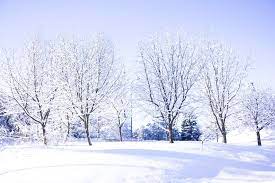
The holiday is merely the backdrop in this sketch and, refraining from discussing how Christmas has changed, Kerouac focuses only on what it inspires. “Soon dawn,” he writes at the end, “the rosy spread over pure snowfields…”
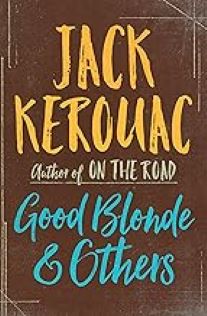
Before online sites made these stories available to everyone, their popularity prompted a series of unauthorized publications that, according to Rod Anstee’s Jack Kerouac: The Bootleg Era, spanned the 1970s to the 1990s. The stories were finally included in Good Blond and Others, a compilation sanctioned by Kerouac’s estate in 1993.
Although Kerouac’s fame is founded on his novels, these holiday tales are significant in their own right. As phantoms of an era that now belong only to history books, they ask us to evaluate our own time and our own relationship to such holidays.
At the conclusion of “Not Long Ago Joy Abounded at Christmas,” Kerouac recalls his youthful meditation in the early hours of Christmas Day before offering an evaluation of why Christmas celebration has seemingly changed: “it was always a delight for me to step out on the porch or even go out on the street a ways at one o’clock in the morning and listen to the silent hum of heaven diamond stars, watch the red and green windows of homes, consider the trees that seemed frozen in sudden devotion, and think over the events of another year passed… Perhaps too many battles have been fought on Christmas Eve since then – or maybe I’m wrong and little children of 1957 secretly dig Christmas in their little devotional hearts.”






 Epistrophe
Leave a comment