

UPDATED April 16, 2025
Daredevil @ 60: Part 5 – Born Again
“I don’t know how this would happen, but maybe one day we could pick up the baton and do it again.” Charlie Cox on playing Daredevil, December 2018
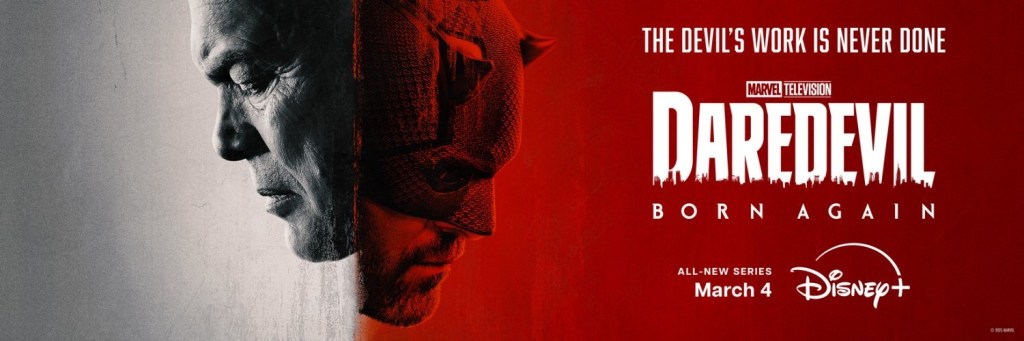
The past usually has a way of catching up to the present. After all, it was there first and has earned a say in what comes next. Take, for instance, the Netflix Daredevil series. It’s been seven years since that show’s third season ended, leaving a number of plot possibilities for the continuation of The Man Without Fear’s screen adventures. It’s also been seven years since the show was abruptly canceled, the result of what Charlie Cox told GQ Magazine UK was “some feud between Netflix and Disney.” In the intervening time between the end of the Netflix run and the March 4 premiere of the Disney+ Daredevil:Born Again, a period that has left behind a considerable media trail, the character was seen briefly in Spider-Man:No Way Home, (2021), She-Hulk, (2022), Echo (2024) and the animated Your Friendly Neighborhood Spider-Man (2025), with Charlie Cox voicing the character. So, for the past four years, he was not quite forgotten and never too far out of reach.
That wasn’t always the case, however. In 2018, the cancellation of the Netflix series placed a two-year ban on the show’s characters being used in any non-Netflix MCU project, guaranteeing their absence from the screen during the peak of Marvel cinema’s popularity. It also denied the show a fourth season. Comic Book Resources at the time reported executive producer and writer Sam Ernst as saying that Season 4 “had been fully plotted out,” and Cox recently told SFX Magazine that at the time of cancellation, “they had just pitched me the new season…” According to showrunner Erik Oleson, Daredevil Season 4 would have been a Typhoid Mary storyline, with Bullseye set to return in Season 5.
As Daredevil disappeared for several years with a vague promise from Marvel that he would be back, fans took matters into their own hands with a campaign, #SaveDaredevil, designed to demonstrate their disapproval of the cancellation “by writing to Marvel, signing their petition and continuing to spread their message on social media.”
Another wave of support for the series arrived in the form of #OperationNapkins, which, according to Comic Book Resources, “encourages fans to send napkins with “Nelson, Murdock & Page” written on them to Marvel HQ in New York City,” a reference to Season 3’s conclusion in which plans for a new law firm are initiated by the characters. The result was that 150,000 signatures were received by January 2019, aided by actor Vincent D’Onofrio’s Twitter support of the campaign.
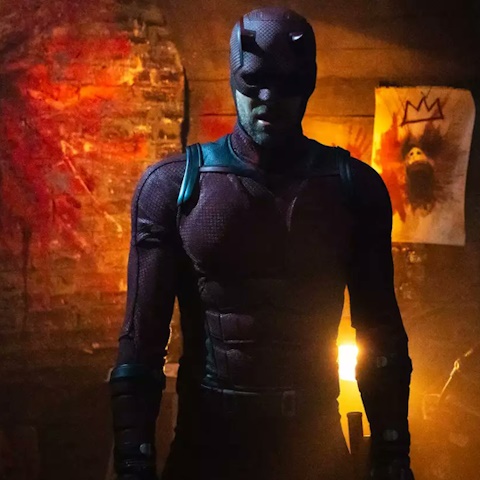
Marvel certainly noticed the reaction of fans and included the live-action DD as his alter ego Matt Murdock in one scene of No Way Home (a second scene was filmed but not used) and the TV series She-Hulk, in which he was seen cavorting in a “ketchup & mustard” outfit. Comic Book Resources accurately noted that the latter appearance “used Daredevil for comic relief, breaking the character’s mystique in comic lore.” His cameo in Echo put him back in his traditional costume and persona.
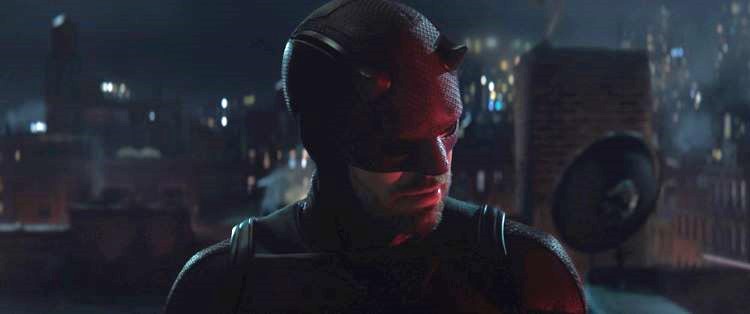
When it was announced that a new Daredevil series was beginning production at the start of 2023, fans weren’t aware that what was being filmed was far from an extension of the Netflix run. Dubbed Born Again, the new show was reportedly redesigned as a legal procedural in which Murdock wouldn’t be donning his costume until the fourth episode. D’Onofrio told SFX Magazine that he and Cox “were saying, ‘We’re not doing it right yet. We need to start again.’” Cox, in his GQ interview, explained, “Vincent and I were both not 100 percent convinced what we were doing at the time was the right path, but we’re both good soldiers and professionals, and we were trying to be open-minded.”
D’Onofrio and Cox’s concerns were validated when filming was halted by, first, a writers strike and subsequently an actors strike. With the production suddenly plunged into an indefinite limbo, the first six filmed episodes were reviewed. And, as Cox said in SFX, “there was a U-turn after the strike…Marvel looked at the episodes and knew it wasn’t quite working. We shot a whole new pilot and they reorganized what we had filmed to make it feel more like the show we had shot all those years previously.”
The result of that reshoot is currently streaming on Disney+ in an almost seamless transition from the Netflix series with a cast that reunites Cox, D’Onofrio, Jon Bernthal, Deborah Ann Woll, Elden Henson and Wilson Bethel with their onscreen alter egos Daredevil, Kingpin, Punisher, Karen Page, Foggy Nelson and Bullseye, respectively. Woll and Henson were not part of the original 2023 shoot. Bullseye wasn’t either. Nor was Dario Scardapane, but that’s because he was hired as the show changed directions. He took over as showrunner, replacing Matt Corman and Chris Ord, and was part of the reason some of the characters who had disappeared two years ago are now back.
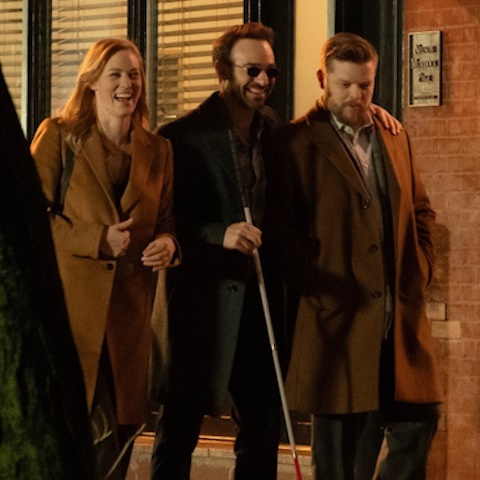
In SFX, Scardapane, former showrunner for the Netflix Punisher series, called Karen and Foggy “the heart and soul of this mythology…[they] are the family structure for our orphan Matt, and it was very important to have them.” He told the April issue of Empire Magazine he wouldn’t have done the show without their inclusion. But they’re only one reunion in the new series. Murdock renews his complicated vigilante relationship with the Punisher when, according to Brad Winderbaum, he needs something the latter can provide, namely perspective on why Matt has suppressed Daredevil for the past year. And Bullseye returns at the behest of executive producer Sana Amanat, who explained to Entertainment Weekly, “he just felt like the most appropriate villain to be returning.”
The title of Born Again belongs to the mid-1980s comic book story arc by Frank Miller and David Mazzuchelli that was the source material for Season 3 of the Netflix run. As it applies to the new show, whose source material is Charles Soule’s Mayor Fisk arc from last decade [see DD @ 60 Part 3], the title signals a relaunch of the series and a new level in the rivalry of Murdock and Fisk after some time away from each other.
In the world of Born Again, “a few years” have passed since the concluding events of the Netflix series, a period in which a lot has already transpired. The law firm of Nelson, Murdock and Page has been doing well. Murdock is still the Devil of Hell’s Kitchen until he relinquishes his night job after a line is crossed. Fisk is running for mayor. And the past has been seething, ready to be put to the test.
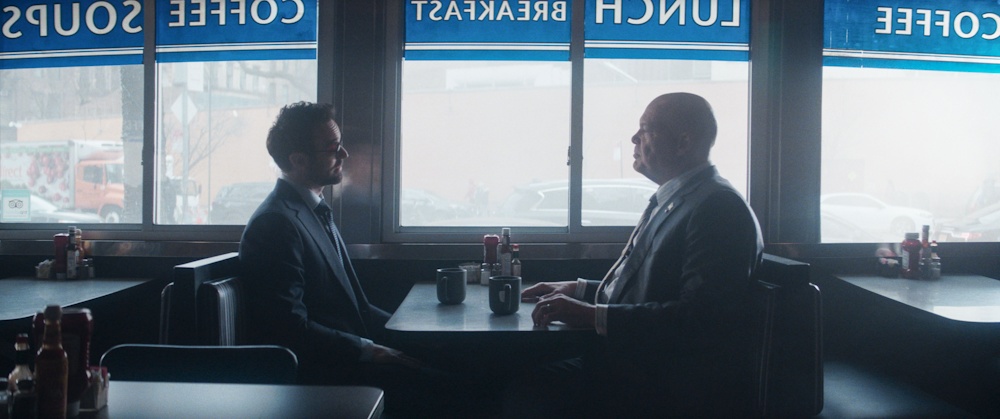
Murdock and Fisk, as Scardapane described them for Entertainment Weekly, are characters who each carry “dark passengers inside of them. They’re both wearing masks as they move through this story. Daredevil is wearing a Matt Murdock mask and Kingpin is wearing a Wilson Fisk mask. That was one of the things that we really wanted to underscore…”
It’s there from the first episode, which retains an uncomfortable feel from the opening events by the time it slides into the present with both Murdock and Fisk abandoning their true selves. Neither Daredevil nor Kingpin, each has embraced his alter ego. But who they really are is acknowledged visually. Fisk is reflected upside down in a few scenes in episode 1, with a lighting fixture endowing him with a halo, like an upside-down Tarot card, while Matt is seen occasionally associated with red.
With the second episode, as the pacing slows a bit, we begin to see their real selves gradually emerge, yet not as the result of each other. The corruption and threat by police officers first summon Matt’s alter ego temporarily. Fisk’s impatience with subordinates draws out the Kingpin, who applies his criminal tactics to those under his purview with the tact and precision he used to conduct his criminal endeavors. But an awareness of each other is apparent in how they are linked visually in the episodes. In episode 1, matching shots of each selecting a suit to wear for the day connect them. Episodes contain parallel shots of each character’s bruised knuckles. By episode 6, the cross-cutting between the two has become intense, the action of one completed by the other through the editing.
A color scheme is also employed. One early sequence has each standing in darkness and light, Fisk on the rooftops occasionally illuminated in an angelic white glow reminiscent of Kingpin’s earlier choice of suits, Murdock on the street bathed in a devilishly pulsing red. And it’s as if they’re looking at each other from reversed positions, now with Matt grounded and Fisk glancing from Daredevil’s turf.
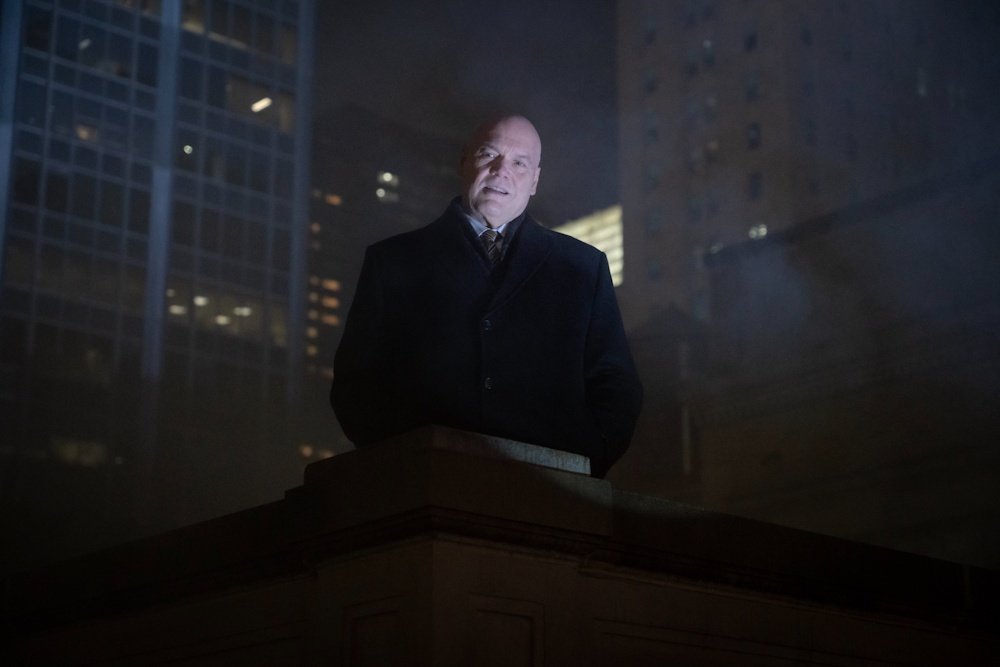
Color isn’t the only technique used in the filming to identify the two. Entertainment Weekly reported that “for characters in Matt’s world, [the directors] leaned into handheld; for characters in Fisk’s orbit, ‘the camera’s completely nailed to the floor and barely ever moves,’” said director Justin Benson, who also noted that the two rivals “have a warmth towards each other because they give each other purpose.” That purpose in Born Again, however, descends further into the darkness enveloping Hell’s Kitchen and the rest of NYC.
“Dark times, indeed,” Foggy says at the start of the first episode, and with that statement, the stage is set. If there was a constant in the interviews appearing weeks prior to the show’s premiere, it was the emphasis on the tone of the series. Comic Book Resources reported, “Charlie Cox assured fans they’ll see an even darker version of the character in his Daredevil: Born Again relaunch.” “In some ways it’s even darker than a lot of the stuff we’ve done in the past,” Cox told them. D’Onofrio explained his role to SFX by saying, “I felt the character lives best in a down-to-earth, gritty world, darker story” and Empire Magazine Online by noting “we’ve gone further in the darkness, the action, the nastiness.” Amanat described the show’s serial killer Muse as “a darker character. Those are some dark episodes for sure. I would warn people to be very mindful of any kind of triggers there…”
Scardapane cited a change in genre as the distinguishing factor for the series, telling SFX, “I really feel that Netflix’s Daredevil…was much more noir, and this show is more New York crime story…There’s a feeling for those classic ‘90s crime tales. It has a pace and a scope that, for a lot of reasons, Netflix wasn’t able to do. They were very dark, cinematically, not necessarily story-wise, although there were some dark elements. We’re much darker.”
The long-overdue appearance of Muse contributes to that. A psychotic shrouded in mystery, he’s one of the most formidable and dangerous antagonists in Daredevil comics. Providing the most memorable storyline of the first half of Soule’s run, he is directly connected to his print counterpart in Born Again. Prior to the series premiere, Sarah Butcher cited traits of the character retained from the comics. There are also comic book scenarios on view. And his presence, Scardapane told Entertainment Weekly, is a “ripple effect that extends beyond” season 1.
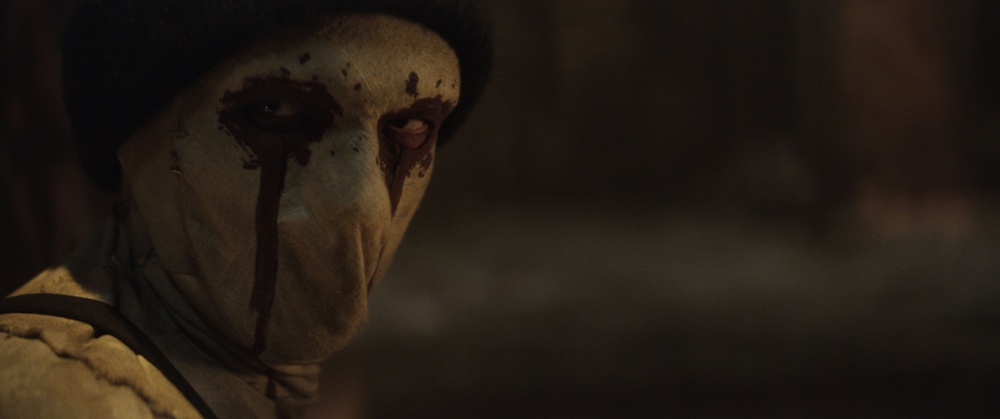
All the darker elements ground the series in the realm of comics runs by the likes of Frank Miller, Brian Michael Bendis (who is a series consultant and whose early 2000s Daredevil run provides the basis for the White Tiger subplot in Born Again) and, in particular, the concurrent, disturbing Daredevil: Unleash Hell run intended only for adult viewership and featuring the return of Muse. Cox admitted the same intention for Born Again, stating he “pushed for the show to remain geared towards an older audience and not dumbed down to kind of capture a wider net of people.” In the January issue of Empire Magazine he also said Murdock and Fisk’s past “obsession with stopping each other had a detrimental effect on society. There’s an attempt to stay out of each other’s lane, as long as lines aren’t crossed.”
But the past, it seems, just can’t resist. Cox summed up the success of that détente in SFX by describing the season as “a collision course between [Murdock and Fisk] pushing boundaries and forcing each other to cross lines they don’t want to cross.” Fisk’s eventual creation of a task force comprised of corrupt cops may be an attempt to eliminate both Muse and the city’s vigilantes but also guarantees that Daredevil’s return will not be brief and will pose a threat to the mayor. It’s the fulfillment of the promise that concludes the diner scene in which Murdock’s quiet resistance counters Fisk’s building rage.
The show’s version of NYC, very much a character in the series, takes its cue from the divisiveness and unrest of today’s world. Citizens identify themselves by political partisanship and either demand or eschew the need for vigilantes, a prime target of Fisk’s, to keep the streets safe. The police department is ravaged by shrinking numbers and the corruption of officers who put themselves above the law. And chaos feels as if it’s just around the corner.
Matt has sublimated the first episode’s tragedy into his role as lawyer. He no longer works or lives in Hell’s Kitchen, having chosen instead a new firm and a modern apartment in Manhattan away from his past. He has promised himself that he will let the system handle things and says he’s not Daredevil anymore “and I won’t let myself be.” But, as the episodes progress, he comments on his new life, saying that his current situation “all feels…fake,” and assessing his profession’s shortcomings by declaring, “once in a while, the system works.”
As we watch, he becomes more aware of the increase in crime and corruption that have invaded the legal and political factions in which he places his trust. “If this city actually elects [Fisk] mayor, maybe New York City gets the mayor it deserves,” he says. When his outlook is called cynical, Matt responds, “Or maybe I’m just wising up.” Matt’s new insights create an insurmountable doubt that has no choice but to bring Daredevil to the fore. This, however, is a Daredevil whose rage has been building since the first episode and whose identity has been suppressed for a year.
“Truth is great and shall prevail” appears on the wall of one courtroom early in the series, but the quote fails to distinguish which truth it is referencing – the absolute or the personal. Murdock says he was raised to believe in grace but that he was also was raised to believe in retribution, pitting New Testament forgiveness against Old Testament vengeance. It weighs his fear of the retribution he is capable of unleashing as Daredevil in relation to his slowly diminishing belief in damaged justice and law enforcement systems.
By the 6th and 7the episodes, Daredevil’s emergence occurs when things get personal and it’s necessary to protect those he loves. It is preceded and accompanied by Murdock’s reading of a prayer to St. Ives, patron saint of lawyers and judges, what Collider sees as “a sign that he’s trying to take back the final piece of what made him a hero.” Matt prays, “Do thou make us, by his intercession, steadfast in the pursuit of justice, confident in that merciful goodness,” admitting to Glenn that he may abandon the practice at times but “always end[s] up coming back to it,” the line’s dual meaning certainly lost on her.
Murdock may be tenuous about facing his previous life, but his reemergence is a personal affront to Fisk because it’s steeped in the past. It conjures a tirade about how he was “unjustly arrested,” by Daredevil, who, he says, “broke bones, broke spirits without due process,” conveniently overlooking his own past and present violence in the name of his business operations. His bluster over the wrongful treatment he feels he’s experienced at the hands of the Man Without Fear is a personal truth, crafted from hubris and unexpectedly useful in resurrecting the Kingpin as his mayoral power takes root.
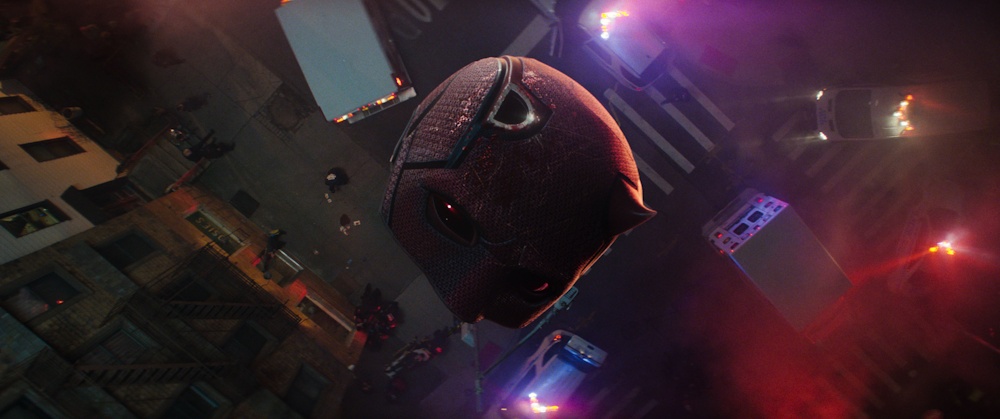
Appropriately, masks become an important part of the series early on, from the moment when Bullseye is unmasked at the end of his battle with Daredevil, who then casts his own headpiece off the roof. They’re evident during Hector Ayala’s trial, in Fisk’s diatribes against vigilantes and in the psychiatric work of Matt’s love-interest Heather Glenn, who reveals at a book signing that for her next project she’s “been thinking a lot about projected personas, how we present a curated version of ourselves, like through filters on social media or masks.” (Heather’s current book about confronting past traumas touches on another of her boyfriend’s issues.)
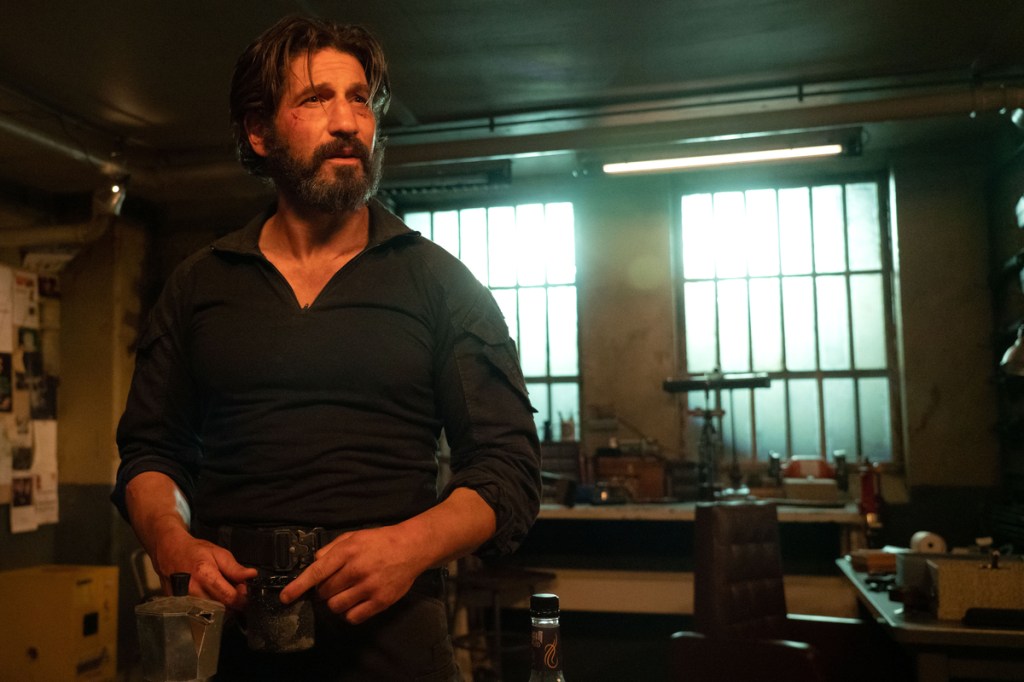
The fact that Murdock isn’t seen in a mask or costume from the second through fifth episodes may be a pointed statement. If the suppressed Daredevil is his true self, then his persona as lawyer has become his ‘mask,’ a “curated version” of himself. Heather might eventually reduce Muse to being a coward for wearing a mask, but she initially questions, “does a mask allow us to be our true selves, or does it strip away our identity and allow us to act like animals?” As the series acknowledges, it’s more complicated than that.
In light of this motif, the Punisher is the purest, most uncomplicated of identities in Born Again. He is maskless, does not carry a dual identity and maintains a clear-cut agenda. Ideologically opposed to Murdock, he is unwavering yet self-aware. As he told Daredevil in Season 2 of the Netflix run, “You’re one bad day away from being me.” In the new series, he again acts as Matt’s conscience, forcing him to face his year-long retreat from his alter ego as well as the district attorney’s statement during the third episode’s trial – “real heroes don’t need to hide.”
According to director Michael Cuesta, the Punisher was “in the early scripts” for the original 2023 version but was “reworked” for the new series. The Hector Ayala/White Tiger storyline was another holdover from the original reboot. White Tiger serves as more than a client to Matt – he represents the side of Murdock being repressed.
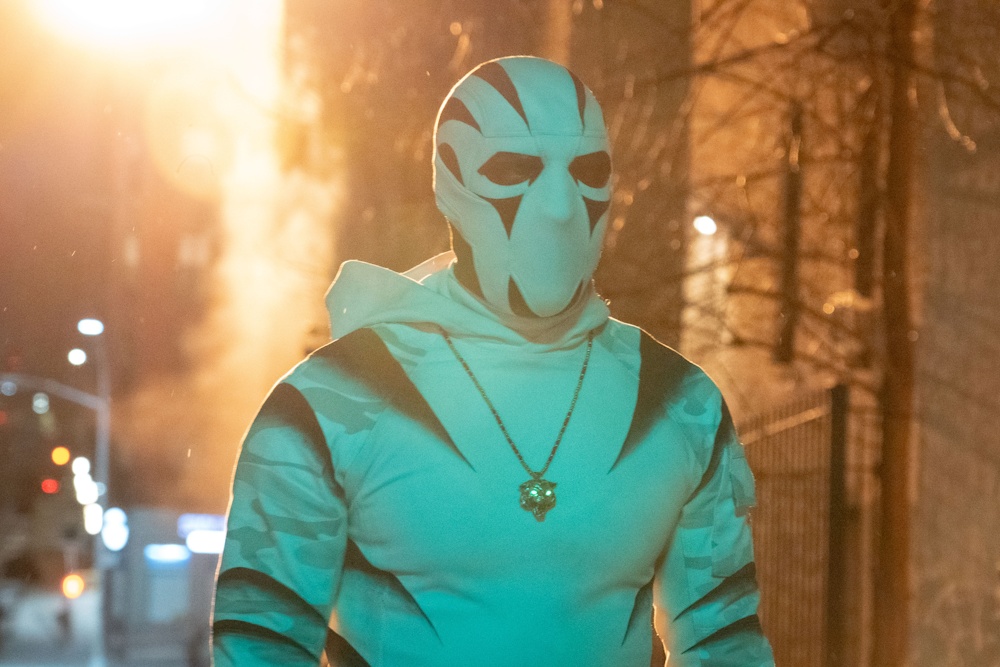
In one conversation, Matt tells Ayala it’s time to abandon his vigilante persona and look to his family. Hector explains that his White Tiger persona is “who I am…I didn’t choose it. It chose me. Might as well ask me to stop breathing.” Matt’s response is, “There are other ways to help.” In essence, Matt is having a dialogue with himself, justifying forsaking his true identity. It can be read as a reenforcement of his own decision. Yet, the outcome of the trial and its aftermath complicates the morality of Matt’s choices and helps prompt a change by the fourth episode. What follows is influenced by the absence of his client.
As installments unveil themselves and directors are interviewed, it’s obvious that half of what was shot of the original reboot has been retained, with much of Cuesta’s original pilot and follow-up now repositioned as episodes 2 and 3 and the bank robbery scenario becoming the fifth installment. Director David Boyd told Phase Hero that approximately half of episodes 6 and 7 airing on Disney+ are from the original filming. It seems, then, that episodes 1, 8 and 9 are largely compose of the reshoot, which would suggest that the darker side of Murdock and his retreat to his lawyer persona as well as the dismissal of certain characters were always part of the plan. By the start of episode 8, the reshoot has upped the stakes for all the key characters.
In the first episode, Murdock explains why he abandoned his role as Daredevil: “A line was crossed. I felt like I lost the privilege.” By episode 8, perhaps the most psychologically complex installment, it’s evident how the series has been positioning pieces and gradually disclosing the more insidious sides of the narrative, along with all the lines crossed before and since the start.
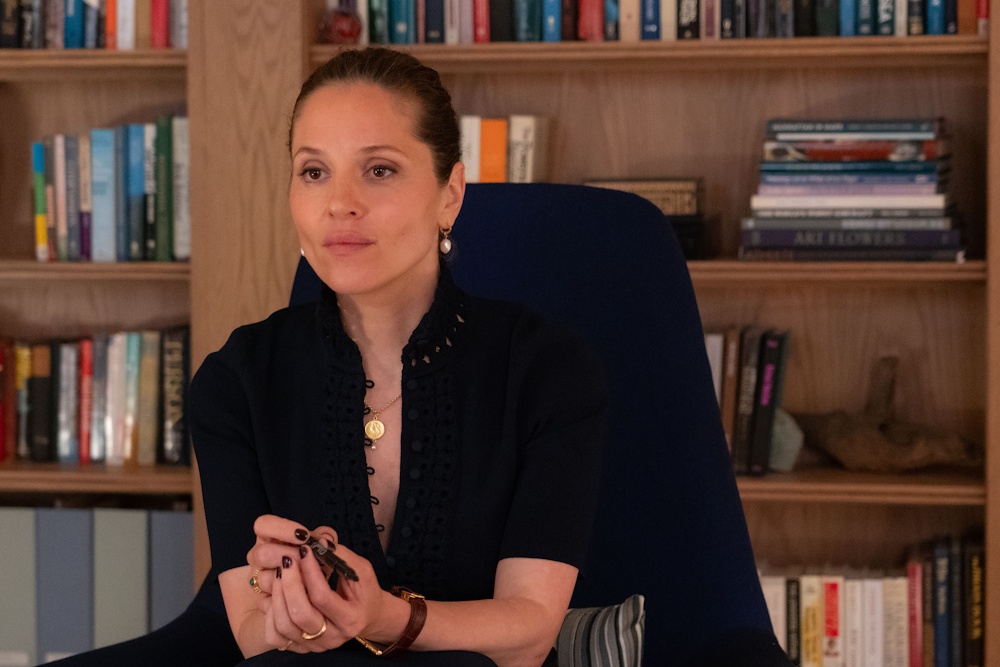
As Fisk’s effect on the city begins to manifest itself, one woman’s comment about the mayor early in the series is echoed: “That sort of person brings out the worst in other people as well.” As evidence, Heather classifies Muse as a vigilante and groups him with Daredevil. She has modified her view of masks, proclaiming to Matt, “I think I’m finally starting to understand how that violence, it just transfers from Daredevil to Muse, to me…They’re just these underdeveloped boys, hiding behind masks, trying to make it look like something more sophisticated.” She’s even emboldened enough to declare about her encounter with Muse, “I saved me,” dismissing Daredevil’s attempt to subdue Muse with, “They were both out there for themselves.” Acknowledging Fisk’s influence, she states, “He’s the mayor. He’s in everybody’s life.”
Heather’s link between Murdock and the Fisks reaches unsettling moments in episode 8. She and Fisk’s wife Vanessa, a threat in her own right, are inextricably linked in this episode, first by intercutting and later when they physically appear together at the Black and White Ball. The intercutting underscores the potential danger engendered by such a connection to the Fisks; the two women’s appearance at the ball accelerates that danger as pieces come together on the dance floor and color schemes reconfigure into new connections: Vanessa, dressed all in red, dancing with Murdock and Fisk and Heather both attired in white.
Meanwhile, for all his aggression against vigilantes, Fisk, whose physical appearance, like his power, grows as the season progresses, actually selects vigilantes, the so-called ‘fan boys’ of the Punisher whom he dubs “victims of bad luck,” to comprise his task force. This group, doubling as Fisk’s bodyguards/security team, are no different from the thugs of his previous operations as Kingpin, menials who enjoy their job of flaunting power and inflicting pain. Their presence signals the end of the old order of law enforcement and further stirs Murdock’s unrest.
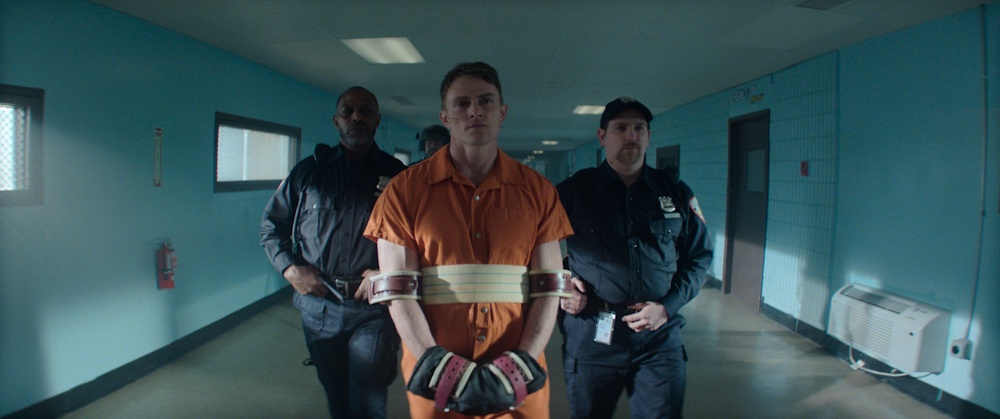
Just before he returns to Hell’s Kitchen and Josie’s Bar for the first time in a year, Matt finally loses his patience with all he’s witnessed, walking out on a client after using his enhanced hearing to determine that the truth is not being told and bemoaning “cops who are assaulting citizens…we’re not serving justice here, you know? We’re babysitting chaos. This, us, what – what we do, it feels useless.”
By the final episode, with Fisk’s power consolidated, his plans evident and his vendetta against vigilantes rampaging, the ineffectiveness of the legal and justice systems has grown exponentially. So has the task force and its mission. A threatening, maskless entity, it carries out orders ruthlessly as its presence fills NYC in the name of protection.
It’s here that Matt finally offers his view of masks during a confession about having allowed the darkness to enter him, to power him, thereby causing him to lose himself. It’s about coming to terms with reality and self, but it’s also an episode in which personal and absolute truths are weighed as more lines are crossed and stakes are raised. Matt’s self-assessment retains his moral code so that, while he still displays a brutality equal to the Punisher when battling the task force, he never permits it to end in death for his opponents. With a new depth to the darkness permeating the series by the close of episode 9, we await the conclusion of this morality play in Season 2.
There isn’t much laughter in Daredevil: Born Again. Most of it can be found in Josie’s Bar at the start of episode 1. The scene, both a summary and an exposition, conveys what the contentment and balance promised for Matt and his friends at the end of Netflix Season 3 must have been like during those unseen years between series, before characters lost and then found themselves again and prior to the past finally – and inevitably – catching up to the present.
Sources
Boyd, David. “Muse Scenes Explained.” Phase Hero, 26 March 2025. retrieved from YouTube.
Butcher, Sophie. “To Hell and Back.” Empire Magazine, April 2025, 64-69.
“Daredevil: Born Again.” Empire Magazine, January 2025, 75.
Davis, Brandon. “Daredevil Director on White Tiger & Matt Murdock.” Phase Hero, 12 March 2025. retrieved from YouTube.
Demetillo, Manuel. “Charlie Cox Says Daredevil: Born Again is Even Darker Than the Netflix Show,” Comic Book Resources, 16 December 2024.
Dominguez, Noah. “Daredevil Fans Launch #SaveDaredevil Campaign,” Comic Book Resources, 7 January 2019. retrieved from cbr.com.
Franklin-Wallis, Oliver. “How Daredevil Rescued Charlie Cox.” GQ Magazine UK, 18 February 2025 retrieved from gq-magazine.co.uk.
Jennings, Collier. Matt Murdock’s Episode 6 Prayer Scene ‘Daredevil: Born Again’ Has Deeper Ties to Foggy.” Collider, 29 May 2025. retrieved from collider.com.
Manfredi, Lucas. “Netflix’s ‘Daredevil’ Boss Says Scrapped Season 4 Was ‘Quite Different’ From ‘Born Again.’” TheWrap, 1 April 2025. retrieved from thewrap.com.
Romano, Nick. “To Hell and Back: Daredevil is Born Again as Stars Preview Their Marvel Resurrection and Season 2 Plans.” Entertainment Weekly, 19 February 2025. retrieved from ew.com.
Shepherd, Jack. “Dancing with the Devil.” SFX Magazine, February 2025, 22-25, 30-31.
Shepherd, Jack. “Matt’s Back.” SFX Magazine, February 2025, 26-27.
Shepherd, Jack. “Return of the King.” SFX Magazine, February 2025, 28-29.
Stone, Sam. “Daredevil Season 4 Was Entirely Laid Out at Time of Cancellation,” Comic Book Resources, 30 November 2018. retrieved from cbr.com.
Travis, Ben. “Daredevil: Born Again Violence Goes ‘Way Past Anything Netflix Ever Did.’” Empire Magazine Online, 10 February 2025. retrieved from empireonline.com.
Travis, Ben. “Why Daredevil: Born Again’s Overhaul Brought Back Karen And Foggy: ‘They’re The Heart of His World’” Empire Magazine Online, 11 February 2025. retrieved from empireonline.com.
Related Articles
DD @ 60: Part 1 – Hells Kitchen
DD @ 60: Part 2 – The Netflix Series
DD @ 60: Part 3 – The Charles Soule Run (2015-2018)







 Epistrophe
Leave a comment