
June 15, 2024
The Doors & the Matrix Masters

The Doors have become one of the most mythical rock groups from the 1960s, steeped in a mystique initially created by the death of lead singer Jim Morrison in 1971, somewhat fueled by subsequent interviews with surviving band members Ray Manzarek, Robbie Krieger and John Densmore and largely propagated by the media throughout the intervening decades. But if we dissociate the legend from the reality for just a moment, what remains is a poet and three musicians who ably explored the heights that words, music and performance could reach in an ever-changing artistic period.
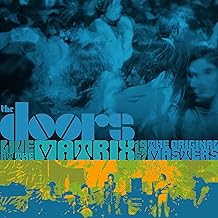
A most efficient way of stripping away the Doors’ myth is now possible with last year’s release of the Live at the Matrix 1967: The Original Masters, the long-circulated collection of sets by the band from early March 1967 as Morrison and Company were about to transition into fame and an uncontrollable narrative. But as Greg Shaw notes in his book The Doors on the Road, “These Matrix shows are relatively sedate compared to other Doors shows at the time. The band seems almost stoic in this intimate environment…” And that alone warrants a closer historical look at the venue and those performances.
The Matrix, a club located in the Marina district of San Francisco at 3138 Fillmore Street in what was formerly a pizza restaurant named the Syndicate, was established in 1965 as a performance space for Jefferson Airplane and other acts by Airplane singer Marty Balin, Elliot Sazer, Ted Saunders and Paul Sedlewicz. According to Jeff Tamarkin, the building was purchased from U.S. Pizza by Sazer, Saunders and Sedlewicz for $12,000 and Balin “was given a 25 percent ownership in the club in the form of stock options” in return for “12 percent of [Jefferson Airplane’s] future earnings.”
The club opened on August 13, 1965 as a place to mingle and hear live music but not to dance. Tamarkin explains that the city of San Francisco “had placed an ordinance on the books prohibiting dancing in an establishment unless food was served…The Matrix, which had removed the pizza ovens to make space for a dressing room, was refused a dance permit and was forced to set up tables and chairs and operate as a listening room.”
Balin’s business involvement with the club ended a year or so later, bringing Paul Abram and Greg Jackson into the fold. Jackson, it’s reported, handled the accounting, with Abram in charge of booking acts and occasionally recording them with the venue’s reel-to-reel tape system. And that’s where the Doors’ Live at the Matrix 1967: The Original Masters fits in.
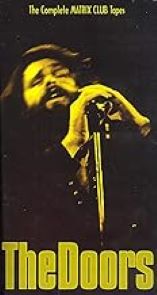
Portions of the Matrix tapes originally reached the public through early bootleg vinyl. The Sunburn Recs. Archives release and TAKRL’s Moonlight Drive each contain twelve performances from the Matrix sets, while the Definitely Closed boot from Better Days Records adds a thirteenth track, “I Can’t See Your Face in My Mind.” It wasn’t until 1994, with the Italian label Kiss the Stone’s four-CD box set The Complete Matrix Club Tapes, that a much wider representation of the existing recordings of the March 7 and 10 shows appeared, containing all but two instrumentals and an additional “Who Do You Love” from the March 7 second set that has not yet appeared on any officially sanctioned albums.
In 2008, Bright Midnight Records and Rhino Records manufactured the first official release of the recordings as Live at the Matrix ’67. The set contained a selection of twenty-four tracks from the two nights arranged randomly across two CDs. According to the Best Classic Bands website, “regrettably, it was discovered soon after that all the recordings were sourced from third-generation tapes, not the originals.” That left the Kiss the Stone bootleg as the preferable set.
All that changed last year with the new three-disc/five-LP release from Rhino. Best Classic Bands reported at the time that “for the 2023 release, Abram’s original recordings on 7″ reels have been remastered by Bruce Botnick, The Doors’ longtime engineer/mixer…the new collection includes all 37 songs from the shows sourced from the master tapes. Except for 15 songs released in 2017 and 2018 as Record Store Day exclusives, most of the newly upgraded live recordings are making their debut in the collection…”
The Doors’ extant Matrix recordings, which Joel Selvin’s liner notes reveal were preserved on “reels of Scotch 201 quarter-track tape recorded at 7 ½ ips,” may be the most misunderstood concert audio in the band’s history. The fact that they are not multitrack tapes usually earns a dismissal due to their sonic deficiency, and even the new Masters set is subpar compared to most of the group’s live albums. But those other concert recordings like Absolutely Live, Alive She Cried and the Bright Midnight CDs of shows from the Los Angeles Aquarian Theater and New York City’s Felt Forum raise the bar of expectation for a live Doors release.
The aforementioned albums caught a road-tested band at the height of their popularity in larger venues where Morrison could elevate the performance to the level of theater. The Matrix had an approximately 100-seat capacity when the Doors’ played a five-night residency there before a half-filled room shortly after the release of the first album on Elektra Records. According to Mick Houghton’s book Becoming Elektra, label head Jac Holzman assessed the studio sessions for that LP as superior to what the Doors were doing on stage. “The Doors upped the ante in everything, says Holzman, and their debut record was better than their live performance. ‘You only have to listen to the Matrix tapes done after The Doors was released,’ he says…”
But the Matrix run was meant to serve a different purpose from the group’s first album and even from its recent two-night stint at the Avalon Ballroom. Guitarist Krieger, quoted in the liner notes of the Masters set, states, “We looked at it as a paid rehearsal…We did it for ourselves.” Stephen Davis notes in his biography of Morrison, “…the Doors’ shows there in early March 1967 were relatively low key. Jim and the band used the club and the progressive vibes of the city to work out new material and indeed a new sound…” This was partially accomplished with Morrison’s additions to the repertoire. “Jim began premiering new songs at the Matrix,” Davis writes, “and changing others inside out, with newly written poems and illuminations…The surviving tapes of these shows document Jim inserting new poetic ‘routines’ in the middle of set pieces” such as “When the Music’s Over”and “The End.”
In particular, the excerpt of the latter song on the Live at the Matrix 1967: The Original Masters set from either March 8 or 9 supports Davis’s statement. While the complete version from March 7 is comparatively tame, the excerpt features Morrison, poetic and uncensored, delivering a performance more suited to what would be commonplace over the next several years. This may have been the result of the Avalon performances just prior to the Matrix dates since drummer Densmore explains in his autobiography Riders on the Storm that “the Avalon was the first place where ‘The End’ got real attention.”
In addition to including interludes of poetry, Morrison also offers a new song in a medley with the blues tune “Rock Me,” inverting the title of Josef Von Sternberg’s 1935 film “The Devil is a Woman” so that the preface to “Rock Me” is a piece commonly titled “Woman is the Devil.” As Greg Shaw explains, the director was on the faculty of UCLA while Morrison was a student, and the singer “sometimes avowed that Von Sternberg’s obscure Anatahan was his favorite film.”

In writing about the Matrix shows, Shaw observes that “the Doors frequently experiment[ed] with variations on their music, keeping the creative spirit alive even after the studio arrangement is completed.” At the club, “Light My Fire” featured a new guitar opening by Krieger in place of the familiar introduction that kicks off the studio recording and countless live performances, and “Moonlight Drive” contains some extended vocal interplay between Morrison and keyboardist Manzarek.
Cover songs are well represented on the Live at the Matrix 1967: The Original Masters and consist largely of blues standards. Some, like “Back Door Man” and “Who Do You Love” became staples of the band’s set lists, while others, such as “Close to You” and “I’m a King Bee” were revived occasionally at various shows. “Get Out of My Life Woman” and “Crawling King Snake” made it to the L.A. Woman sessions, the latter appearing on the record. As demonstrated by the earliest known live recording of the group at the London Fog club May 1966, released in 2016, the blues form was a foundation of the Doors’ sound, its influence finding its way into the band’s original material.
What might be the most surprising of the cover material on the new release are the two jazz tunes “Bag’s Groove” and “All Blues” from the March 7 first set, which join the already circulating “Summertime” to reveal a side of the band (actually the trio of Manzarek, Krieger and Densmore) that hasn’t always been acknowledged. “Summertime” is the most successful of the three, but altogether the three pieces provide a glimpse into where the inspiration for the band’s jazz inflections originate.
The new Matrix set offers an audio snapshot of the Doors on the verge of success, paying their dues and biding their time by exploring how far they could stretch the boundaries of the sound they created. In discussing the group’s performances during its May-through-August run as house band at the Whiskey a Go Go in 1966, David Dalton writes that the club “was an ideal space for the Doors to practice their alchemical plays. A median between private and public space where they could experiment. It was intimate enough for the empathy required of the audience to be believable, and public enough to oblige the Doors to structure their performance.”
The same holds true for the Matrix in 1967. The smaller stages, early laboratories in which the group could experiment, would soon give way to larger ones, but not before setting the direction for the Doors’ career. If for no other reason, Live at the Matrix 1967: The Original Masters rightfully belongs in the canon of the band’s live releases and deserve to be accepted, regardless of sonic imperfections and an occasional less-than-pristine performance, as a means of understanding the evolutionary process of the group.
And, yes, there is still the issue of the March 7 “Who Do You Love” missing from the new release. It’s declared that Matrix…Masters offers the complete set of performances by the Doors available from the club, but that track is conspicuously not there. Its absence does allow the March 7 first and second sets to fit comfortably on Disc 1 of the CD package. But it might also signal yet another official release of these tapes at some point with the promise of something new to hear, possibly even newly unearthed performances from other nights of the run. If that’s the case, welcome it kindly.
Sources:
Best Classic Bands Staff, “The Doors Release ‘Live at the Matrix 1967: Original Masters’ Set.” Best Classic Bands, September 2023. Retrieved from best classic bands.com.
Dalton, David. “from Mr. Mojo Risin’: Jim Morrison, The Last Holy Fool” in The Doors Companion: Four Decades of Commentary, John Rocco (ed.), New York: Schirmer Books, 1997.
Davis, Stephen. Jim Morrison: Life, Death, Legend. New York: Gotham Books, 2004.
Densmore, John. Riders on the Storm: My Life with Jim Morrison and the Doors. New York: Delacorte Press, 1990.
Houghton, Mick. Becoming Elektra: The True Story of Jac Holzman’s Visionary Record Label. London: Jawbone Press, 2016.
Selvin, Joel. Liner notes to Live at the Matrix 1967: The Original Masters, Rhino Entertainment Company, 2023.
Shaw, Greg. The Doors on the Road. London: Omnibus Press, 1997.
Tamarkin, Jeff. Got a Revolution: The Turbulent Flight of Jefferson Airplane. New York: Atria Books, 2003.





 Epistrophe
Leave a comment