
January 1, 2026
The Sounds of Nels Cline
A look at the trajectory of the guitarist’s musical endeavors through his recent releases and Philadelphia performances.
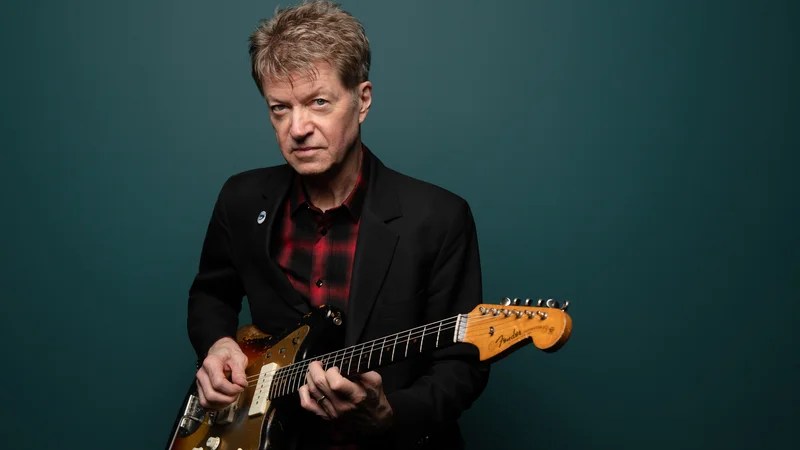
It seems that Wilco, the Chicago-based band headed by Jeff Tweedy, has spent more than a few years avoiding Philadelphia when touring the U.S. “Philadelphians would appreciate it if Wilco would stop bypassing the city on tour,” the Philadelphia Inquirer reported last year. During an overdue appearance in August 2025 at the Philly concert hall known as the Met, Tweedy apologized for the band’s absence but proclaimed to the audience, “We’re here now.”
There’s no need for Wilco guitarist Nels Cline, however, to offer a similar apology when it comes to his solo tours. “Cline has a special relationship with Philadelphia,” wrote Dan DeLuca, who noted at the start of February 2024 that, thanks to Ars Nova Workshop, cited by The Wire as “Philadelphia’s most reliable and ambitious presenter of new jazz and improvised music,” Cline had played Philly over a dozen times. Since then, there have been an additional ten shows.
One of those concerts, a 2018 program at Union Transfer called Lovers (For Philadelphia), was used for an NPR Jazz Night in America episode. The show, referred to by DeLuca as “a paean to the city’s music history,” represents only two sides of the multifaceted musical spectrum that is Cline’s career. He has demonstrated how consummate a guitarist he is over dozens of albums as a bandleader, sideman, partner and contributor.
Lovers (For Philadelphia) used a 17-piece ensemble conducted by Michael Leonhart. Ars Nova Workshop had commissioned Cline to fulfill a grant to create a tribute to Philly’s musical heritage. Combining his darker, unsweetened version of the 1960s style of “mood music” found on his 2016 Lovers album with material by composers native to the City of Brotherly Love, the guitarist wove together a program that alternated between his straight jazz playing and his lighter avant-garde stylings.
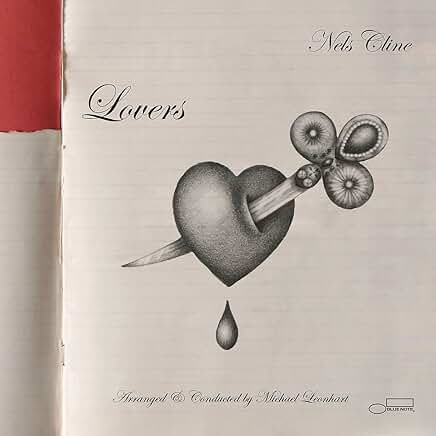
If the Lovers album proved that Sonic Youth’s “Snare Girl,” qualifies as “mood music,” the Lovers (For Philadelphia)concert confirmed that works by Philly composers like Sol Kaplan, Byard Lancaster, Eddie L. Jackson, Jerry Jones, William Hart and Thom Bell are also eligible. The concert culminated in a Philadelphia-composers medley called “Philly Suite” that embodied both guitar styles featured that evening, from the electronics-driven opening to the gorgeous “La-La Means I Love You” melody rendered by Cline in octaves. Edited from two sets at the Union Transfer performance on June 2, 2018, the NPR broadcast consists of 50 minutes of audio and video that can be found online. And, after eight years, Cline is resurrecting the live large-ensemble performance of Lovers this year with Leonhart again conducting.
In an age of musical compartmentalization, Cline is an anomaly. The full range of his recording history, from his first solo album Angelica to eclectic solo expeditions like Destroy All Nels Cline and Dirty Baby to CDs of his instrumental trios and quartets, encompasses rock, jazz, blues, country, noise, experimental and electronic in both structured and improvisational settings. He never sounds like a rock player performing jazz or vice versa – he is genuinely each genre he undertakes, despite his self-effacing written assessment in 2007: “What is my stake in the history and evolution of jazz? I really have no idea.” His gamut of textures and colors can be as basic as a solo guitar or as complex as woodwind and string arrangements. His contributions to projects by other artists like Jeff Gauthier, Scott Amendola, Wayne Peet and Greg Bendian are refreshingly about the material first and foremost. Budding guitarists would do well to study his playing for its restraint as much as for its notes and chordal voicings.
The gestation period for Cline’s own projects over the years vary. Something like his duo album with Sonic Youth’s Thurston Moore, Pillow Wand, was recorded in one day, as was the live performance that accompanied the sessions and was released as In-Store in 1997 separately from the studio album. Both feature the distorted wails, shrieks and howls that define noise as a genre, but anyone listening carefully will detect a nuance to the duetting.
Other endeavors by Cline take longer. The origin of last year’s Consentrik Quartet release began as far back as 2019, when, JazzTimes reported, “John Zorn offered [Cline’s trio of drummer Tom Rainey and and bassist Chris Lightcap] two nights at The Stone’s Brooklyn location.” For the second night, they were joined for an evening of improvisation by Rainey’s wife, saxophonist Ingrid Laubock, who completed the Consentrik Quartet lineup.
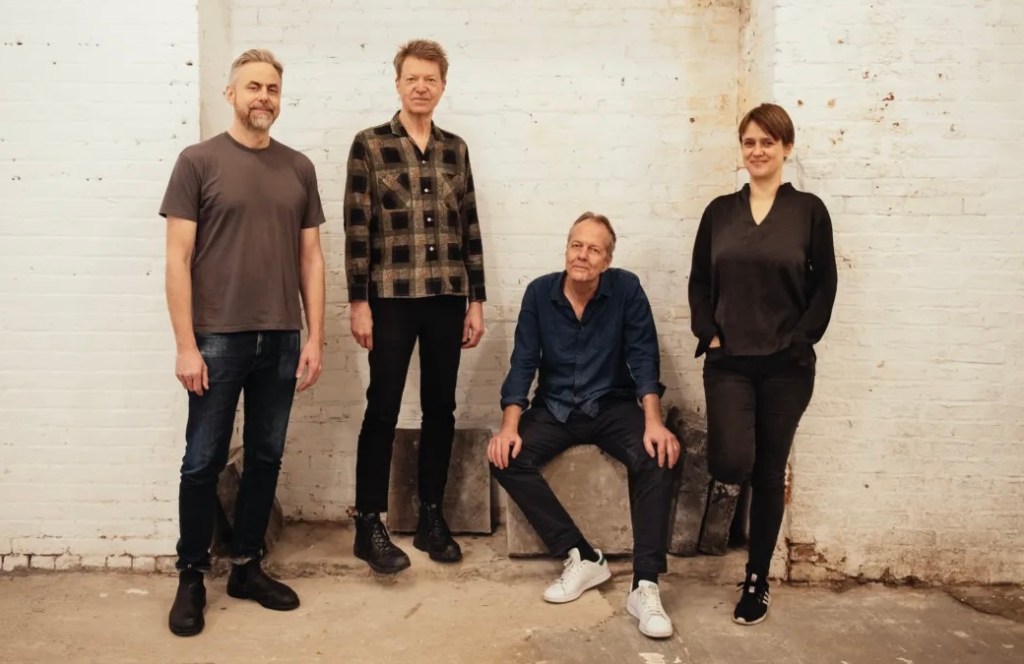
“Grant money soon followed from Ars Nova Workshop to fund a quartet playing new original music and touring up the East Coast,” JazzTimes explained. Guitar Player reported that the lineup “inspired Cline to write material specific for the configuration. He did some of it during the pandemic lockdown.” After the world emerged from isolation, Cline brought his Consentrik Quartet to Philly’s Solar Myth for three shows February 9-10, 2024, a few days ahead of two recording sessions at Brooklyn’s Bunker studio. Half the material performed/recorded for the Blue Note album, which was still over a year away from release at this point, consisted of compositions commissioned by the Ars Nova Workshop.
In composition and performance, Cline unintentionally shares with Dostoyevsky the unorthodox concept that 2 + 2 can equal 5, a symbol of working outside mainstream thinking, but it’s not the only mathematical metaphor that can apply here. The lineup and music of the Consentrik Quartet embodies the geometry of Cline’s oeuvre. His choice of bands are usually three- or four-piece units, occasionally offset by duo projects with players like Vinny Golia or Julian Lage or larger ensembles like his Andrew Hill tribute New Monastery, which can be seen as exponential expansions of the smaller groups. The trios and quartets are largely angular in sound, how acute or obtuse dependent upon the piece and arrangement. They are not unlike the geometric shapes they insinuate. Similarly, Cline’s decision to christen his latest four-piece ‘concentric’ is appropriate in the context of the word’s definition of “sharing a common center,” as a way of describing its lineup.
After a final recording session with the Consentrik Quartet in July, Cline’s musical wanderlust would return him to Solar Myth for a four-night October residency in 2024 that featured four different configurations of players led by Cline on various sonic adventures. On the 15th of the month, a trio of the guitarist, pedal steel player Susan Alcorn and percussionist Booker Stardrum took the stage. The following night it was a quartet of Cline, guitarist Gregg Belisle-Chi, bassist John Hebert and drummer Chad Taylor. The 17th was a duo performance of Cline and his wife Yuka C. Honda, with the closing show on the 19th featuring the guitarist and Wilco drummer Glenn Kotche. Videos of the final night can be found on YouTube (along with moments from the second show) and the intuitive playing between the Wilco bandmates is stunning, reminiscent at times of Fred Frith/Chris Cutler duets.
Cline and Kotche have plied their trade outside Wilco in guest appearances with Norwegian experimental group Huntsville on that band’s albums Eco, Arches and Eras, where they appear in a live performance recorded at the 2007 Kongsberg Jazz Festival, and Bow Shoulder, where they’re joined by bassist Darin Gray. They had also touched on some esoteric moments on Wilco’s 2024 EP Hot Sun Cool Shroud, particularly on the track “Inside Bell Bones,” but that sound is tame when compared to the duo’s live performances or its work with the Saccata Quartet, featuring Gray and drummer Chris Corsano.

If the Saccata/cicada wordplay of the band’s name tells us anything, it’s to hint at the pulsing percussion found on the band’s album Septendecim, released June 28, 2024. Here, sounds are interchangeable – a drum roll emulating electronics, a guitar utterance as metallic as some of the percussion – and the musical exchanges can be turbulent as on the seventeen-minute “Uh Oh,” but the restlessness of the percussion is a constant, as if an aural undulating force is trying to escape its boundaries. Other sounds, such as drones or extended feedback, compliment it and goad it on. The production largely places Kotche and Corsano in the forefront of the mix, allowing them to drive and shape the tracks. The result is a fulfilling thirty-four minutes of aggressive group improvisation.
Following his Solar Myth residency, Cline retreated to The Bunker on November 24-26 to record the Trio of Bloom album with keyboardist Craig Taborn and drummer Marcus Gilmore. The project, whose title is a nod to the John McLaughlin-Jaco Pastorius-Tony Williams late-1970s Trio of Doom, was conceived and produced by David Breskin, who, according to the WRTI website, “saw in this collaboration a sequel of sorts to Power Tools.” That earlier lineup’s 1980s release, Strange Meeting, featuring guitarist Bill Frisell, bassist Melvin Gibbs and drummer Ronald Shannon Jackson, was guided by Breskin as well and boasts mostly original material largely showcasing a lot of reverb-drenched guitar by Frissell.
The New York Times reported that, for Trio of Bloom, “Breskin laid out simple parameters for the session, asking each musician to bring in original pieces and select one cover.” It can be said that the trio’s sound is more rounded than the Consentrik Quartet’s, its structure more sedate. The number of ballads is certainly a contributing factor, but there is also a delicate, meditative touch that enfolds the tracks. “We approached it a bit more studio than I think would normally happen on those kind of sessions,” Taborn told the New York Times. Because of it, the album takes on a unique layered character not unlike a painting that alternates between abstract and impressionistic.
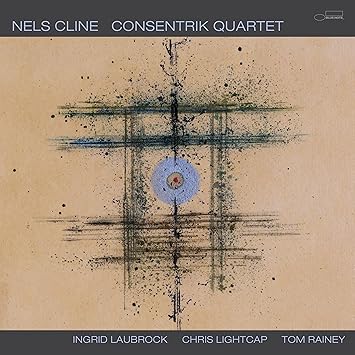
The Trio of Bloom album would not be released for ten months, overlapping it with the completion of the Consentrik Circle CD, which would receive its release on March 14, 2025. The Quartet then resumed touring, returning to Solar Myth on April 12, 2025, shortly after the Nels Cline Singers reunited for a performance at the Big Ears Festival in Knoxville, Tennessee on March 28 and the Trio of Bloom album mixes were completed April 1-2.
The convergence of the Consentrik/Bloom/Singers projects last spring offered an insightful glimpse into the recorded/live dichotomy of Cline’s material and his penchant for exploration. Take “The 23,” for example. In the hands of the Consentrik Quartet, it’s a very Cline-esque piece, its melodic and harmonic structures elusively playful. But its performance by Cline on Late Night with Stephen Colbert in 2025 with house-band Louis Cato & The Late Show Band is a funky, Latino-tinged electric jazz piece, never elusive and playful only in what it allows its soloists. It could have been recorded that way or in a number of other styles just as accommodating, but it speaks to Cline’s identity as composer and bandleader in his choice of what best represents him as an artist.
As for something like “Queen King,” the Trio of Bloom track on which its composer plays both guitar and bass, Cline described it to Nate Chinen as “a variation of sorts on a Nels Cline Singers song of mine called ‘King Queen.’ Both are 6/4 ostinato songs with a distinct nod to Afrobeat/Fela/Tony Allen, and ‘Queen King’ features Marcus crushing a hypnotic multidimensional groove along with piquant keyboard work from Craig…” If you listen to a live version of “King Queen” by the Nels Cline Singers, however, what you experience is closer to fusion than the Trio of Bloom’s “Queen King’s” rhythmic meditation. Similarly, at its 2025 Knoxville performance, the Nels Cline Singers rendered its opening song “Forge” as a churning vehicle for soloing, while on Trio of Bloom the piece becomes a percussive soliloquy for Gilmore, who rides a shimmering sea of guitars and keyboards.
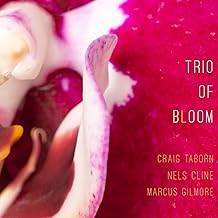
A week before the release of the Trio of Bloom CD on September 26, 2025, Cline had changed gears once again by joining drummer Scott Amendola and saxophonist Phillip Greenlief for a tour that included an appearance at Solar Myth on September 18, 2025.
The 2024-25 period for Cline ended with a Solar Myth appearance by the Saccata Quartet on December 5, nearly a year-and-a-half after the release of the lineup’s debut album…Where the next two-year solo trajectory will take the guitarist is anyone’s guess. As Cline told Guitar Player, “The modus operandi for me all these years is that the people who I’m playing with dictate what it will sound like.” Fortunately, his musical circle is far-reaching and rewardingly unpredictable.
Notes
Chinen, Nate. “Craig Taborn, Nels Cline & Marcus Gilmore Coalesce as Trio of Bloom.” WRTI-FM, 3 July 2025. retrieved from wrti.org.
Chinen, Nate. “Nels Cline Settles in at Solar Myth, Among Other Highlights This Week.” WRTI, 13 October 2024. retrieved from wrti.org.
Cline, Nels. “Dedication: Nels Cline Pays Homage to Andrew Hill.” JazzTimes, 5 September 2024. Originally published 1 January 2007. retrieved from jazztimes.com
DeLuca, Dan. “Philly loves you, Wilco. Would you come see us more often?” Philadelphia Inquirer, 7 August 2025, B4.
DeLuca, Dan. “The Week in Music: Highlights Include Stevie Nicks, Nels Cline and Making Times Valentimes.” Philadelphia Inquirer, 6 February 2024, B7.
Graff, Gary. “I would love to make a record with no guitar solos. I don’t want to hear me that much.” Guitar Player, 21 March 2025. retrieved from guitarplayer.com.
Shanley, Mike. “Nels Cline’s Consentrik Quartet Arrives.” JazzTimes, 17 March 2025. retrieved from jazztimes.com.
Shoemaker, Hank. “‘Not Sure What Genre It Is’: Meet the Adventurous Trio of Bloom.” New York Times, 12 Sept. 2025. retrieved from nytimes.com.





 Epistrophe
Leave a comment