
September 1, 2025
The Rascals: The Complete Atlantic Studio Recordings
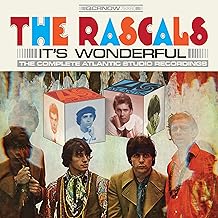
It all started in 1964 at the Peppermint Lounge, Manhattan’s premiere nightclub, where Joey Dee and the Starlighters performed for a who’s who of the entertainment industry. The Starlighters featured a racial mix of musicians that included keyboardist Felix Cavaliere, guitarist Gene Cornish and singer Eddie Brigati. By the beginning of the following year, these three musicians added drummer Dino Danelli to form the “blue-eyed soul” band that came to be known as the Rascals.
By summer 1965, the group’s soon-to-be manager, Sid Bernstein, saw the band at an engagement at the Barge, a Long Island nightclub a few steps up from venues like the Choo Choo Club in Brigati’s hometown of Garfield, New Jersey where it had started playing in February 1965. He used his achievement of booking the Beatles at Shea Stadium to advertise the band at the Fab Four’s August 16 concert by announcing “The Rascals Are Here” on the message board. Once he signed them, Bernstein affixed ‘Young’ to the the group’s name because there was another band who had registered the name ‘Rascals.’
Sporting the new moniker, the band signed with Atlantic Records receiving a $15,000 advance. That was low for the time, but the musicians accepted it in return for creative control and the right to produce its albums. The group’s relationship with the record company would last six years and seven albums, all of which are collected, remastered and packaged in last year’s It’s Wonderful CD box set on Cherry Red Records’ subsidiary label Now Sounds.
It’s difficult to argue that the new box augments and replaces Rhino’s 2007 All I Really Need: The Atlantic Recordings 1965-1971, with one exception. The earlier set contained better than a disc’s worth of the A & B sides of Rascals’ singles that once graced AM airwaves in the second half of the 1960s and early 1970s. But the rest of It’s Wonderful outweighs that oversight. Containing both the mono and stereo mixes of the first four albums, a generous helping of outtakes and detailed liner notes, it’s a must-have package for fans.
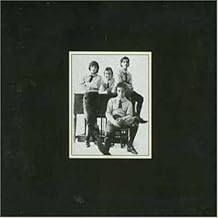
Unlike the Rhino box, It’s Wonderful gives each album its own disc, usually with outtakes from the sessions that created it. The first two discs, containing the band’s debut The Young Rascals and Collections, features the first set of original songs by Cavaliere-Brigati and Cornish along with covers like, “If I Fell for You,” “More” and “Land of 1,000 Dances” that had featured in the group’s live sets. As Cavaliere explained to Musician magazine in 1985, “we did a lot of songs that were unknown as hits. The creative ability in those days was to go out and dig up songs that no one really knew that well and rearrange them in a way that was identifiable to you. That’s how ‘Good Lovin’ came in, ‘Mustang Sally,’ ‘In the Midnight Hour….’”
“Good Lovin’” was the lineup’s first smash hit and a track that still makes the rounds today on streaming stations, oldies radio and television/movie soundtracks. It was also a recording that almost wasn’t released. “We really didn’t want that record out,” Cornish told Rolling Stone in 1970. “I didn’t like the mix or the sound.”
Early originals like “Love Is a Beautiful Thing,” “What is the Reason” and “Come on Up” still sound as fresh as when they were first released, and the remastering on the box set enhances that. The mono versions of the first two Rascals albums are an interesting listen but, unlike the mono mixes of Buffalo Springfield, which corrects the muddied sound of its stereo counterpart, and the Monkees’ first album, which adds punch to the tracks, they aren’t necessarily an improvement. It’s also a toss-up for the sonically superior Groovin’ album, the track list of which features an array of singles hits, several excellent deep cuts and a fervent cover of the Stevie Wonder hit “A Place in the Sun.” But the 1968 opus Once Upon a Dream, the first album credited to “The Rascals,” is a different story.
Recorded in fall 1967, Dream is only one of two Atlantic Rascals LPs (the other being Freedom Suite) to feature only original material. It’s also clearly influenced by the Beatles’ Sgt. Pepper’s Lonely Hearts Club Band and, like that album, sports a mono mix superior to the stereo version. In 2007, the Collector’s Choice Music label released Dream and its predecessors in mono for the first time on CD, but the new box set corrects its long-out-of-print status.
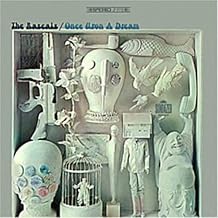
Richie Unterberger addressed the style and elaborateness that makes Dreams better suited to mono: “the frequent use of brief instrumental and spoken passages and sound effects to link and introduce tracks; the abundance of session musicians and orchestration to embroider the quartet of actual Rascals; the eclecticism of styles and arrangements, which varied widely from track to track; and the whimsical, loose-livin’-and-lovin’ optimism of much of the lyrics and music.” All these factors sit comfortably in the mono mix, instruments free from being assigned a single channel and never overwhelming the R&B phrasings or Bel Canto stylings of the vocals. The result is that the mix accommodates the album’s wide range of genres, from horn-augmented blues and sitar-led Indian forms to pop tunes and orchestrated ballads, as effectively as the spoken and instrumental segues between tracks.
Dream was followed in early 1968 by the single “It’s a Beautiful Morning,” a true classic destined to be a non-album track but signaling a return to the group’s earlier approach. Over the next several years, the Rascals would release three more albums on Atlantic that continued the evolution of their traditional sound. Those releases might be underrated or overlooked but are significant achievements for the maturity of the songwriting, the quality of the performances and the continued use of jazz greats like Ron Carter, Joe Farrell and Hubert Laws. To dismiss them, particularly the nuanced sounds of See, is to miss the creativity that permeated the last several Atlantic years. From Freedom Suite’s topical “People Got to Be Free” and studio take of the band’s stage piece “Cute” to See’s enchanting “Nubia” and slinky “Hold On” to Search and Nearness’s cover of “The Letter,” the band was offering up a musical feast. Its soulfully delivered cover of “Temptation’s ‘Bout to Get Me,” included on the box in a previously unreleased outtake from the Collectionssessions and the See track, may arguably be worth the price of set.
It’s Wonderful’s booklet includes the band’s long-overdue Atlantic Records recording history as well as essays offering biographical information and interview material culled from publications over the decades, completing a well-crafted set and a deserved reissue of the original group’s material. As 1970 faded, the Rascals’ lineup and record label would change, as would popular music in general. But, in the 1960s, as Cavaliere told Musician, the spirit embodied by the Rascals was “the most important part. I think that’s what the people related to…a certain vibration, an uplifting harmony.”
Notes:
Baird, Jock. Felix Cavaliere: The Soulful Saga of the Rascals and Beyond.” Musician #78, April 1985, 62-70, 92-95, 104.
Lombardi, John. “The Blackest White Group of All.” Rolling Stone, 1 October 1970, 27-29.
Unterberger, Richie. “Liner Notes for the Rascals’ Once Upon a Dream.” Richie Unterberger website, 2000-2010. retrieved from richieunterberger.com.




 Epistrophe
Leave a comment