
March 15, 2024
Philip Roth Revisited
The following is a tribute that appeared in SNJ Today on June 13, 2018, shortly after the death of author Philip Roth on May 22.
The passing of New Jersey’s native son Philip Roth last month marks another oversight on the part of the Swedish Academy, which never saw fit to award him the Nobel Prize in Literature, an honor bestowed only on living authors. The consolation, if any, is that he is certainly in good company as a non-recipient when we consider other writers denied this recognition.
Born in Newark, Roth chose to use the Garden State as a setting for many of his works, even incorporating such South Jersey sites as Camden and Gouldtown in his fiction. As a novelist and essayist, he spanned six decades chronicling the second half of 20th century American society, populating his books with the experiences of his Newark childhood and adolescence. But his hometown served as only one facet of his learning process in becoming a writer.
What also fashioned Roth’s sensibility as an author was the collection of books in which he immersed himself during grade school and high school. Before European authors like Kafka and Dostoyevsky supplanted his earliest influences, there was a steady diet of Theodore Dreiser, Sherwood Anderson, Sinclair Lewis and Thomas Wolfe, and the lessons they offered had more to do with America and its history than prose style and characterization.
“The writers who shaped and expanded my sense of America were mainly small-town Midwesterners and Southerners,” Roth stated in his 2002 acceptance speech for the National Book Foundation’s Medal for Distinguished Contribution to American Letters. “…These writers were shaped by the industrialization of agrarian America…by the transforming power of the industrialized cities…They were made, in short, by the force that, since the country’s inception, has been at the heart of the national experience and that drives the national legend still: relentless, destabilizing change…change on the American scale and at the American speed: radical impermanence as an enduring tradition.”
Roth embraced America’s permanent impermanence, reveled in it, forged a career out of it and left behind a record of it. The aspiring author of the 1950s, taking his first steps with shorter works like Goodbye, Columbus, soon metamorphosed into the daring, controversial writer of Portnoy’s Complaint in the 1960s. His restless escape into political satire and other explorations in the 1970s eventually led to The Ghost Writer and its alter-ego protagonist, Nathan Zuckerman, whose subsequent appearances would grace the best of Roth’s remaining novels over the next thirty years.
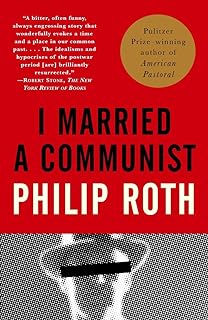
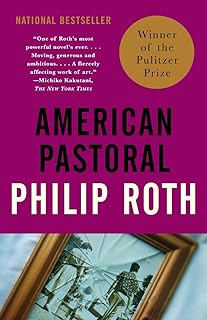
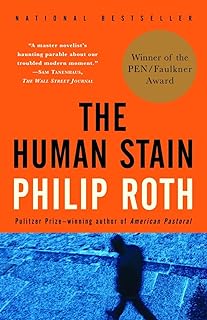
As the New Yorker’s David Remnick acknowledged in a recent tribute, Roth’s first four decades contained enough high-quality works, like the aforementioned novels, to merit a permanent place in the world of literature. “But then” Remnick writes, “Roth…redoubled his sense of discipline and set himself free.” The result was what has become known as the American Trilogy, the pinnacle of his career. Comprised of the novels I Married a Communist, The Human Stain and the Pulitzer Prize-winning American Pastoral, these works have arguably come to define their author more than any other.
If change fueled Roth as a writer, it also propelled his narratives as well. His characters, great and small, grapple with forces that threaten to alter their existence, and there is no better example of this than the American Trilogy. Essentially, these novels constitute a study of the division engendered by politics, class, age and race in the U.S. from the 1950s through the 1990s. In each novel, characters are separated by society’s agendas and are ascribed consequences to which they must succumb, no matter how life-altering the results or how noble their resistance.
These are the accomplishments that should have earned Roth a Nobel Prize in Literature, but the unique qualities that defined earlier writers like dramatist Henrik Ibsen and novelists James Joyce and Mark Twain were overlooked by the Swedish Academy members as well. Maybe Roth was denied for being too American . After all, he was outspoken in how he viewed himself as a writer.
“As a novelist I think of myself, and have from the beginning, as a free American,” he proclaimed in 2002, “and…as irrefutably American, fastened throughout my life to the American moment, under the spell of the country’s past, partaking of its drama and destiny, and writing in the rich native tongue by which I am possessed.”






 Epistrophe
Leave a comment