November 1, 2026
A Quandary of Slow Horses
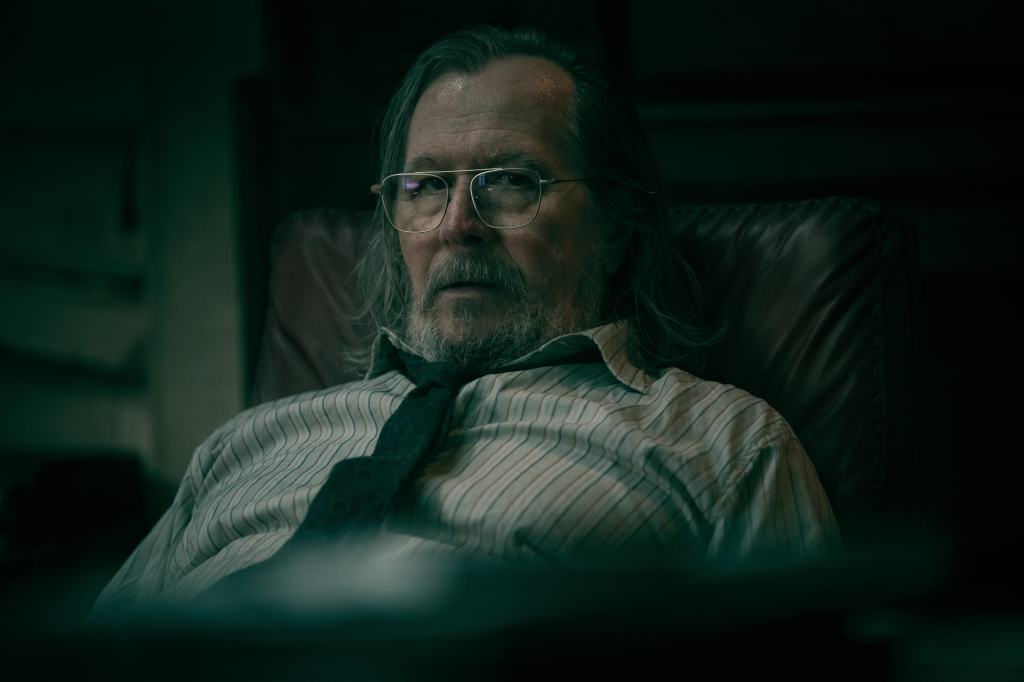
In a 2022 discussion with Radio Times about Slow Horses, the Apple TV+ adaptation of his Slough House novel series, Mick Herron attested, “I’ve been very happy with the approach they’re taking, and I certainly don’t require the plotting to be step-to-step in line with the book, because what would be the point of that in the long run? We want to be more creative and carry on being creative with the adaptation.”
For the first five seasons of the television series, the liberties taken with the adaptations have ranged from moderate rewrites of Herron’s novels (London Rules) to more faithful renderings (Spook Street). But season 6, which began airing on September 16, is a significant departure in that it combines two novels, Joe Country and Slough House, each certainly deserving of its own season considering they represent two of the strongest additions to the print series. And for Herron fans watching the adaptations, things have become a bit more complicated.
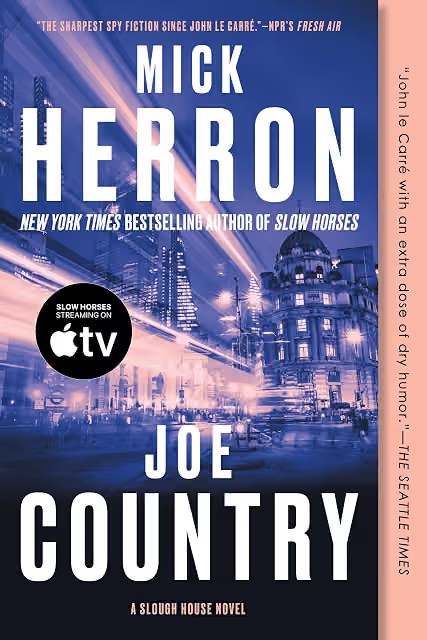
The “book is always better” argument holds sway here just as it does in other filmic interpretations but, in this instance, we’re faced with the task of treating two books as one. Joe Country is a narrative about death, family and responsibility. From its opening proper, the funeral of David Cartwright unites the slow horses with frayed bloodlines of the past and the moral decisions and sacrifices that create the present. It’s one of Herron’s most thrilling novels, set into motion by an unforgettable image of a flaming owl darting through the winter darkness.
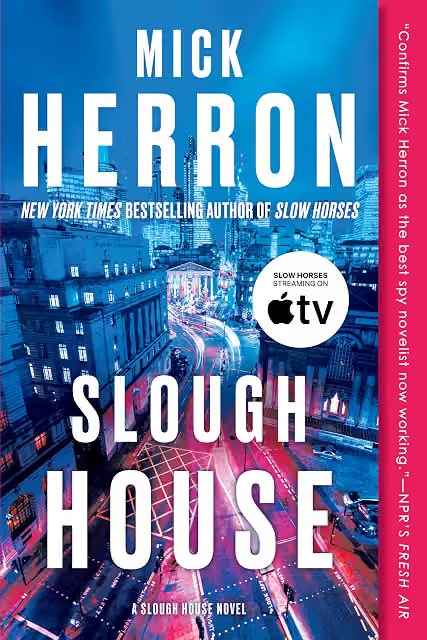
Slough House, its follow-up, has the team hunted by Russian assassins who are leaving bodies of former slow horses in their wake. Death is again a motif, but it’s the hauntings of the departed that primarily pervade the narrative, from Cartwright’s former home to the reappearance of characters who’ve been missing-in-action and another who disappears into the twilight by the end. Part mystery, part thriller in the inimitable Slough House fashion, it’s a well-woven tale.
One would think that combining two works in a six-episode television adaptation would be, at best, compromising. At its worst, it should be unwatchable. But surprisingly the season 6 Slow Horses opener presents itself as a faithfully seamless melding of the two novels, as if Herron’s Slough House actually incorporated Cartwright’s funeral as backdrop to the start of the assassins’ mission. The juxtaposition of Joe Country’s events on its successor is fully underway by episode’s end with the return of ex-CIA operative Frank Harkness, father of Cartwright’s grandson River, one of the slow horses. The remainder of the season, however, is, to varying degrees, not as faithful or seamless.
In the TV series, Jackson Lamb, in charge of Slough House and impeccably played by Gary Oldman, serves as the glue tying all this together. He accordingly plays the same role in the novels, but that doesn’t mean his charges are always tethered to him. Joe Country’s print version has him ensconced in London while four of his slow horses roam the Wales countryside in search of an intended victim whose pursuers add Lamb’s agents to their kill list. Herron subtly imparts the severity of the threat confronting the team when he has Lamb uncharacteristically provide one of his slow horses with a gun before sending them off. That has been altered for the television series, which constricts the action to the London area to allow Lamb much more presence in all six episodes, a practical decision good for ratings if not accuracy.
Rewrites have always served a different agenda from the novels, and that’s to be expected. As quoted above, Herron acknowledged it as a means “to be more creative,” and that might arguably apply to something like Slow Horses’s fifth season, in which a secondary character in London Rules is elevated to lead villain to effect a plot twist. But sometimes it’s not about creativity. Down Cemetery Road, last year’s Apple TV+ adaptation of Herron’s first novel, succumbed to the pitfalls of tampering with significant characters’ published fates, and now season 6 of Slow Horses demonstrates similar tendencies. Beginning with episode 2, several of the rewrites are extreme enough to demand scrutiny.
In Slough House, Reece Nesmith III is an adult of restricted growth urgently seeking answers about his partner’s death in Russia, but in Slow Horses he appears as a teenager, also of restricted growth, the son of a recently deceased Regent’s Park security officer or ‘Dog,’ who is in possession of an item for which Harkness is searching. The changes imposed upon Reece’s character were derived less from a creative burst than from a suggestion of casting Lenny Rush in the role following his BAFTA-award-winning performance in the BBC’s comedy/thriller Am I Being Unreasonable? Slow Horses co-executive producer Gaby Chiappe told TV Insider in September that during a writer’s meeting, “one of the producers suddenly said Lenny’s name, and everybody got really excited at the thought of that.”
Reece doesn’t properly arrive until episode 3, but when he does it’s immediately clear that his purpose is for laughs, mostly at the expense of the slow horses. His verbal jabs and thrusts aimed at his protectors are punchlines, his defiance a defense and his comedy not always as dry as in Herron’s novels. Shortly into his appearance, he and Lamb engage in a flatulence contest during a car ride, prompting speculation on why it was necessary for Lamb’s ubiquitous gas-passing to become a competitive event. The name ‘Reece Nesmith’ may be the same as the Slough House character, but he actually serves as the replacement for Lucas, the teenage boy Louisa and other slow horses are attempting to rescue from Harkness and his crew in Joe Country.
Even Louisa’s unprecedented absence from the fifth season and her return in the sixth, where her print counterpart takes the lead in the Harkness narrative, is glossed over. So are other slow horses matters. And while subtler, more nuanced alterations in season 6 of Slow Horses tend to complement the source material, the aforementioned changes risk turning the TV season into a distant relative of the novels on which they’re based.
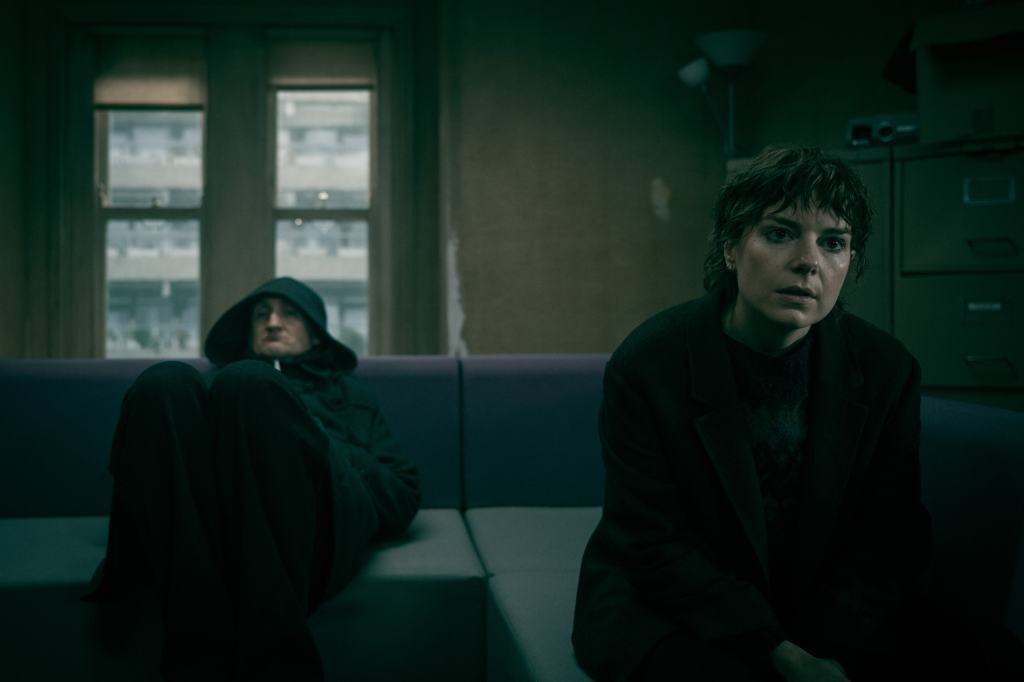
Slow Horses’ success unfortunately comes with compromises such as these, yet there is still more than enough to recommend the show to Herron fans and would-be Slough House readers. To its credit, the TV series has always been able to match the suspense in Herron’s novels, and the current season is no exception. Episode 4 opens and closes with heart-pounding moments courtesy of the Russian assassins and there are scattered scenes throughout that genuinely earn the show the ‘thriller’ label Apple TV+ assigns it.
The cast is another reason to watch, and not just for the regulars. Semi-recurring roles are just as well-chosen, with this season’s return of Hugo Weaving as Harkness a treat. And with the regulars having comfortably grown into their characters, their roles have been subtly developing over time. There are things attempted now that weren’t possible five seasons ago. Take, for instance, Lamb’s unarmed confrontation with Harkness in episode 4, created solely for the TV adaptation. It’s a brazen show of confidence to prove that outwitting opponents is always more satisfying than outgunning them.
What to do then? For those who’ve read the books, watching the TV show might require adjusting perspective to accept an alternate reality in a Slough House multiverse, one in which some things simply play out differently. As Chiappe lamented, “there are some beautiful scenes that we had to lose because you had to find a new pathway through to get those two books to cohere together.” Readers can argue that the two novels need not have been combined in the first place, but they were. And we can have the best of both worlds if we want.
Notes
Earle, Toby. “Slow Horses writer Mick Herron Teases ‘Big Changes’ in Season 2.” Radio Times, 12 July 2022. retrieved from radiotimes.com.
Jacobs, Meredith. “Slow Horses’ Boss Explains Major Book Change for Olivia Cooke’s Return.” TV Insider, 23 September 2026. retrieved from tvinsider.com.
Related Articles
Clown Town: Past, Present & Pitchforks