
August 1, 2026
By The Cold Gray Sea
A slightly longer version of this article appeared in issue #3 of Montague Street: The Art of Bob Dylan in 2012. My thanks to its editor Nina Goss, who published this and another of my articles in the journal.
Atlantic City remains a ball of contradiction, a never-ending trail of opposites that have come to imply both fame and notoriety in the same breath. Since its incorporation in 1855, it has existed most famously as a family resort, complete with taffy, peanuts and fudge, elegant pre-casino hotels and diving-horse sideshows, while sharing the territory with bookies, bootleggers and mob bosses. For years, every September witnessed a newly crowned Miss America traversing the runway of the city’s Convention Hall as prostitutes set up for their nightly street-corner vigil across town. Celebrities appeared for a run of shows at venues like the Steel Pier while the bump and grind of strip clubs offered nightly entertainment in both high-priced establishments and dives. Today the main attractions are the casinos, whose much heralded arrival in the late 1970s enjoyed a brief Golden Age before succumbing to buy-outs and the economic landslide at the end of the Bush era in the 2000s, but the city’s past has never really vanished.
Perhaps the contradictions and all that they imply are, in part, what has drawn Bob Dylan back to this seaside realm over the last twenty-one years. Atlantic City’s Gemini-like characteristics are something the singer has in common with the town, although the city’s birth, officially declared with the approval of its charter, occurred on May 1, 1854, a bit early to fit the horoscope’s category of twins. Regardless of the reasons, Dylan has recently maintained a somewhat regular relationship with the city that didn’t fully establish itself until the late 1990s when attempts to incorporate rock acts into a Sinatra-style environment had given way to nurturing the rock genre as part of a successful casino future. It had taken time for the town to accept rock acts as the replacement for the previous generation of entertainers, and it had taken time for Dylan to warm up to the resort.
Atlantic City has been host to to a time-honored list of entertainers since the start of the 20th Century when, according to The Last Good Time author Jonathan Van Meter, it discovered its true identity in the theatres, halls and amusement piers that thrived through much of 1900s. Prior to that, Atlantic City was part of an island purchased by Thomas Budd from William Penn and several other Quaker landowners who had been bequeathed the territory. The area, in turn, was sold to Jeremiah Leeds who proceeded to farm the land. (The Leeds name has local recognition to this day thanks in large part to a famous thirteenth child still said to reside in the Pine Barrens as the Jersey Devil.)
Van Meter reports that after Jeremiah’s death, his sons sold the land to several businessmen who parlayed their purchase into a lucrative enterprise spearheaded by the introduction of the Camden-Atlantic City Railroad which began transporting numerous tourists and their wallets to the newest of New Jersey resort towns in 1854. Atlantic City’s most formidable competition was Cape May, a popular vacation spot further down the coast that had even drawn a pre-presidential Abraham Lincoln to its shores. But it wasn’t long before the town developed into a first-rate attraction that quickly learned what was necessary to draw clientele. Sandra Bernhardt performed there in 1906. John Philip Sousa routinely entertained in Atlantic City. Soon fledging performers like Bing Crosby, Red Skelton and Bob Hope added the town to their touring itinerary on their way to fame. The city became the model for the Monopoly board game while clubs and other venues sprouted around town to accommodate an entertainment paradise. Eventually the casinos arrived just as rock music was about to prove its unexpected longevity.
In 1980, Dylan referenced this resort town, placing it within a temporal context when, in an early version of “Caribbean Wind,” he wrote, “Atlantic City, two years to the day, I hear a voice cryin’, “Daddy,” and I look that way.” Two years had meant a world of difference to the city when the line was written. In 1974, voters rallied against a referendum to allow legalized gambling in the town. In 1976, a change of heart led to the approval of Atlantic City as a gaming town. In 1978, Resorts International was the first casino to open in the town, promising revitalization for the location which had slowly been in decline since automobile and airplane travel made other tourist attractions easily accessible after World War II.
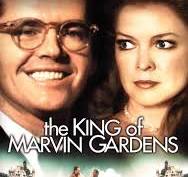
Pre-casino Atlantic City was captured on film at its nadir in director Bob Rafelson’s 1972 movie The King of Marvin Gardens. Sight and Sound magazine called the movie’s locale “a playground for the class-cultured rich, now grinding down into seaside vulgarity.” The early years of the town’s casino era were also preserved by French director Louis Malle in his 1980 film Atlantic City, its exteriors capturing the resort as it transitioned into a new empire of casinos against the backdrop of the city’s poor and homeless.
Atlantic City has never been unaccustomed to affluence. The casinos were a corporate replacement for hotels like the Ritz-Carlton and the Traymore which, at the height of the city’s popularity, were renowned for their elegance and majesty. From its inception as a resort, Atlantic City was filled with hotels where families could vacation for weeks at a time. According to reports, many of these facilities in their earliest incarnations were cottages by the beach that served as boarding houses. One of these, the Dennis Hotel, was refurbished and expanded in the early 1920s and enjoyed a lucrative existence before languishing, like its competitors, in the downturn of the postwar era. By 1979, it was purchased by Bally’s Grand, given a makeover and served as the original hotel portion of Bally’s Atlantic City operation.
In the late 1980s, Bally’s added its Grandstand Under the Stars, a 3,800-seat open-air venue adjacent to its main structure that offered an alternative to its indoor lounges. The acts proved to be the same fare that filled the casinos at that time, singers and comedians from the pre-rock era whose audiences were the parents of the younger rock fans. But in 1989, Bally’s attempted to draw a different age group to its facilities other than the older Vegas-style crowd. By providing a mix of performers like Little Feat, The Doobie Brothers, Neil Young and Chicago, the casino hoped that younger fans attending the shows would file out of the grandstand and while away the next hour or so on the casino floor. While it was reported that several acts, including Jackson Browne (whose set contained a surprise appearance by Bruce Springsteen), brought fans into the gaming areas, most concertgoers seemed content with what the cost of their concert ticket bought them.
The series of rock acts who paraded through the outdoor venue that summer unknowingly marked the transition into what currently defines Atlantic City’s casino entertainment. All were welcomed by a new audience starved for rock music and tired of driving up to an hour-and-a-half to the Philadelphia concert venues. And the press went along with it, all except for one act.

Dylan arrived on July 20, 1989 with the second incarnation of his Never Ending Tour band, no doubt aware that his decision to finally play a casino might conjure visions of the latter-day Elvis Presley, whose gaudy Las Vegas appearances helped to unflatteringly define him. But by the late 1980s, it was gradually becoming more acceptable for rock performers to play casinos, it seemed, as long as the icons still put up resistance. Now the last bastion of the genre’s integrity was about to give way. Whether Dylan anticipated the type of media reaction he received is unknown, but the local press, more than happy to play guardian, greeted his appearance as if it were akin to Newport ’65.
“In a scene as surreal as some of his old songs,” wrote Peter Landry in the Philadelphia Inquirer’s review of the show, “Bob Dylan brought songs of pathos, protest, rebellion and redemption to the Land of Slots…It may come as a jolt that Dylan would deign to play Atlantic City, a place that celebrates the crass and the kitschy at every corner.” Landry goes on to say that it might be expected that Jagger and the Stones would play here, but not Dylan.
The Press of Atlantic City’s David J. Spatz was less incredulous but decried the concert as a turning point for casinos. “No longer can any entertainer be considered too anti-establishment for a gaming venue,” he proclaimed. Even the fans, positioned within the amphitheater as well as on the boardwalk, registered surprise at the choice of Atlantic City when interviewed by the media.
Spatz complained in his review that Dylan’s set “only covered a handful of his best-known songs” and that most selections were “obscure or relatively new material.” In retrospect, Dylan’s Grandstand setlist was short on the “hits” that later shows here would provide, but there were a number of songs, performed here with G.E. Smith, Christopher Parker and Tony Garnier, that subsequent Atlantic City concerts have failed to repeat: “John Brown,” “I Want You,” “Boots of Spanish Leather,” a cover of Don Gibson’s “Legend in My Time” and “In the Garden.” And then there is, of course, the rare “Lenny Bruce.”

No Dylan fan could have expected the second slot of the set that night to be filled with this Shot of Love song. It was the first time the song was performed on the Never Ending Tour and remains a rarity to this day. Singing it at his first casino concert, Dylan could be seen as associating himself with the outlaw comedian whose act defied the conventions of entertainment. But the fact that Dylan hauled it out again for Atlantic City audiences in 2008 indicates that the song might be meant more as a tribute than the fans at the 1989 Bally’s show might have suspected.
In the 1950s and early 1960s, Bruce was the trailblazer for the comedy that George Carlin, Richard Pryor and Chris Rock later honed and perfected. The semantic examinations of Bruce’s routines were riddled with profanities, ethnic slurs and anatomical references that, while commonplace today, were horrific within the standards of the Eisenhower and Kennedy eras. The comedian was routinely arrested and placed on trial for obscenity.
According to the meticulously maintained Complete Lenny Bruce website, in August 1962, just before he would become consumed by the legal defense of his act, Bruce played Le Bistro, an Atlantic City club in the area of Missouri Avenue known for presenting entertainers like Vic Damone and Jackie Mason. His residency there, which ended September 1, did not result in any arrests or controversy over “blue” material, providing Bruce with a location in which he could perform without fear of legal repercussions. According to reports, Bruce’s run at Le Bistro coincided with a memorable August 27 appearance by Sinatra, Dean Martin and Sammy Davis Jr. at the 500 Club which apparently stood a mere 50 yards away from Le Bistro.
The rock experiment conducted in 1989 at the Grandstand Under the Stars unfortunately ended with the summer, but it had opened the door to new possibilities. Several of the casinos that emerged over the next decade sported small indoor concert venues to accommodate the numbers that had filled the Grandstand. In the early 1990s there were rumors that Dylan would again be appearing at a casino. In January 1993, The Press of Atlantic City reported that “the Taj [Mahal] is this close to a deal to present rock legend Bob Dylan on Jan. 29, but no contract has been signed.” Calls to the Taj box office at the time turned up nothing. Instead, the Taj brought in a rock memorabilia display, a portion of which included a small but somewhat impressive collection of Dylan instruments, posters and photos that filled a display case.

As time passed, casinos increased bookings of top names in rock, which continued to erode the entertainment barriers that might have still plagued a Dylan casino show here in the early ‘90s, despite the acceptance he received at recent Las Vegas concerts. Dylan’s tours continued to bypass Atlantic City until 1998 when he would finally play the Taj Mahal’s 5,000-seat Mark G. Etess Arena. By now the press was ready to accept Dylan as a casino act. Acknowledging the recent acclaim for Time Out of Mind, the Press of Atlantic City found Dylan “riding that newfound wave of musical momentum” and “forging a critical comeback.”
As in 1989, Dylan paid little attention to his ‘70s catalogue, performing only “Tangled Up in Blue” from that period here in 1998 and favoring largely a mix of 60s songs and Time Out of Mind material. But the older songs, recast in new arrangements, both celebrated their previous incarnations and eulogized them. They reconnected with Nashville in 1966 and 1969, summoned the spirits of Highway 61 and revisited the basement in Woodstock. They also stirred up a number of ghosts.
The inclusion of “This Wheel’s on Fire” at the Taj Mahal show gains more import with its historical connections. Local Dylan fans probably first heard the Basement Tapes in the early 1970s when the boardwalk’s hipper shops began carrying bootlegs of Dylan and other acts, a treasure trove of unreleased studio outtakes, live performances and basement noise, great white wonders in plain white packaging waiting to be purchased, carried home and savored. But while the songs may have been recorded in Woodstock, New York, historically the Atlantic City area is actually where it all started.
The Band’s involvement with Dylan began just a few miles from Atlantic City in a town called Somers Point. It was there that Levon and the Hawks were playing a summer residency at Tony Mart’s, a popular local club, when they received the call from Dylan to join him on tour. The phone call is legendary but before it was made, it is possible that Dylan visited the area himself to hear what his potential backing band sounded like. According to Clinton Heylin’s Bob Dylan: A Life in Stolen Moments, Albert Grossman’s secretary Mary Martin took Dylan to a club to see the Hawks perform in early August 1965. The timeframe places the visit in the middle of the band’s residency that summer. In Jeff Schwachter’s highly informative Atlantic City Weekly article “Somers Point ’65,” someone recalls the appearance of a “skinny guy in a trenchcoat” who might have been Dylan.
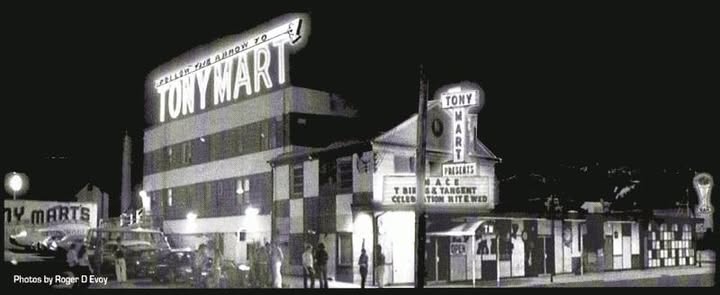
While it remains uncertain he actually visited Tony Mart’s in 1965, Dylan has continued to appear in Atlantic City fairly regularly here since his 1998 Taj Mahal appearance, with only the years 2001, 2002 and 2009 denied an Atlantic City performance. Before playing the Tropicana Casino and Hilton Hotel in 2000 and 2003 respectively, he appeared in 1999 at the Sands, the smallest of the gaming facilities at the time, on two separate occasions. It was here, for the first time in AC, he played two shows in a room in which the audience was seated at tables in traditional casino style. Dylan’s assimilation into this world of entertainment was completed when, in the Press of Atlantic City, he shared article space with the Righteous Brothers and Debbie Reynolds.
In 2010, Dylan’s appearance in Atlantic City shared more than article space with the town’s current top celebrity, a former political boss of the city. Enoch Lewis “Nucky” Johnson, whose bootlegging operations and political maneuverings during the Prohibition provided illegally what the casino world of today offers within the law, commanded the most media attention in the resort during the 2010 fall season. While Dylan could be seen staring out from a billboard on the Atlantic City Expressway, Nucky enjoyed a television series that was fashioned around him, a book that immortalized him and a revival that paid him tribute forty-two years after his death.
From 1911 until 1941 Nucky ruled the resort, growing considerably wealthy from the Prohibition period. While other establishments in violation of the government ban on the sale of liquor were shut down and/or fined, Nucky’s wide range of political connections made Atlantic City untouchable. Tourists flocked to this town that proclaimed itself “Playground of the World,” allowing Nucky to accumulate much of his wealth from what is reported as the percentage he claimed on every gallon of liquor purchased. He rented the eighth floor of an exquisite boardwalk luxury hotel, the Ritz-Carlton, wore a fresh red carnation pinned to his lapel daily and rode in a powder blue chauffeur-driven limo. The height of his celebrity was also the town’s pinnacle.
Indicted for tax evasion in 1939 and convicted two years later, Nucky served four years and fourteen days of a ten-year sentence. He lived until 1968, long enough to witness a demoralized Atlantic City in the early throes of its demise as a family resort but well before his beloved Ritz-Carlton was transformed into condominiums.
As a highly respected leader in his community, Nucky worked toward his town’s betterment at the same time he challenged the law. His Atlantic City Press obituary refers to him as “a Robin Hood who took his giant share from the rackets and gave to the poor.” His New York Times obituary quotes him as saying, “When I lived well, everybody lived well.” Time has only enhanced his image as a figure well-loved by the common person both then and now because he actually did help the citizens of Atlantic City who needed it. Nucky always looked out for the residents of his resort, handing out cash to those who were down on their luck and seeing to it that the Republican Party provided turkeys and baskets of vegetables for the needy at Thanksgiving and Christmas, an ample supply of coal for the neighborhoods during winter and transportation for a family who had suffered a loss.
The folk hero that Nucky became isn’t too different from Woody Guthrie’s portrayal of the title character in his “Pretty Boy Floyd.” Similarly, Dylan might recognize Nucky as a kindred spirit to the outlaws in his own songs, such as John Wesley Harding, Billy the Kid and the fictional Jack of Hearts, each “a friend to every man,” even though the authorities wish to incarcerate or hang them for crimes committed.
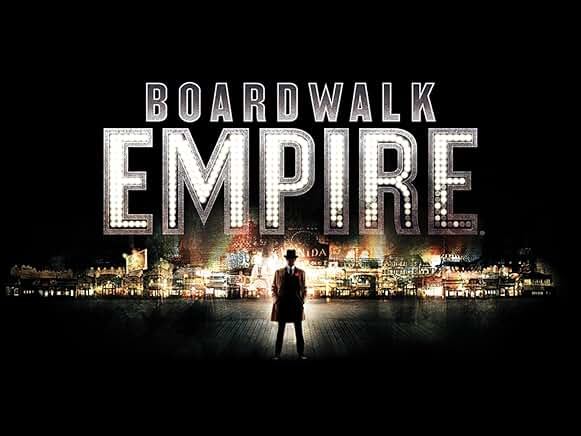
It’s no coincidence that the pre-sale code for Dylan’s 2010 show in Atlantic City was “nucky.” At the moment, everything about the city revolves around the HBO fall television series Boardwalk Empire, and Dylan entered the town on November 26 in competition with the public’s current ongoing infatuation with the former political boss. Nelson Johnson’s Boardwalk Empire, a bestselling book that examines crime in the resort over the decades, was adapted for the series and Nucky has been transformed by the writers and actor Steve Buscemi into a semi-fictional character with the surname of Thompson. The resort setting is intact and populated by various historical characters from the city, county and state. And while the book had a minimal impact on the region, the HBO series, with a debut episode directed by Academy Award winner and No Direction Home director Martin Scorsese, has transformed Atlantic City into a 1920s styled version of itself.
Dylan’s 2010 concert at the top-of-the-line Borgata, where he has performed exclusively in Atlantic City for the past six years, also has its relevance to Nucky’s upper-class world of gambling and speakeasies, the popular tourist draw during the 1920s. In today’s recession-era Atlantic City, riddled daily with reminders of downsized casinos in ill-repair and an upswing in criminal activity, the Borgata offers a respite from the economic downturn, if not in reality, then in its stylized confines. High-priced Chihuly glassworks fill huge areas of its modern architecture which reinvents the newness that once pervaded the city during the early years of gaming. The Borgata also stands apart from the boardwalk and most of the other casinos in both proximity and affluence. If Nucky were alive today, this is where he’d no doubt spend his time and invest his money. He would also have been sitting front row at the Events Center on November 26. And what he would have witnessed was how Dylan peels back the layers of time to reveal his artistry.
But the Dylan who played Atlantic City in November 2010 is a seasoned road veteran and a gruffer version of the one who first arrived here in 1989. In the same way he has developed as a writer and recording artist, Dylan has evolved as a performer over time, particularly in the touring years since 1988. The set on November 26 was a showcase for that evolution. The band, consisting of Charlie Sexton, Stu Kimble, Donny Herron, George Recceli and led by Tony Garnier, the only holdover from the 1989 lineup, is more orchestral today, and Dylan plays the sound as much as he does his keyboard or guitar. Unlike the four-piece rock band approach twenty-one years earlier, this is a lineup that can hit the subtleties as much as it can kick ass, so that a song such as “Nettie Moore” can achieve the graceful rendering it deserves without resorting to placing it in an acoustic framework, yet material like “Highway 61 Revisited,” Thunder on the Mountain” and the rewritten “Gonna Change My Way of Thinking” can be as blistering as the most rocking numbers performed with G.E. Smith and company.
Even the audiences have evolved over the years. In 1989, the Press categorized the fans in its headline as “hippies” and “yuppies” (A1). Ten years later, Alex Ross, writing for the New Yorker, classified Dylan’s audiences as “young urban record-collector types, grizzled weirdos, well-dressed ex-hippies, and enthusiastic kids in Grateful Dead T-shirts.” Deadheads, Ross pointed out, accounted for a large part of the audience. But with former Grateful Dead members touring regularly these days, the Deadheads don’t seem to comprise as much of the Dylan audience now. Today, the old-timers in the concert crowds are the same age as when their parents attended Sinatra’s first decade of casino shows in Atlantic City. They are the ones who remember hearing “Like a Rolling Stone” on an AM car radio and they mix with younger attendees whose interests might potentially extend to gambling, eating and drinking just as much as seeing legends.
From his first show here, Dylan was criticized for the dim stage lighting, but this time around, while the stage remained relatively dark, the visuals were augmented. A sepia-flavored photo of a cityscape composed of buildings of varied architecture appeared behind the band during “Most Likely You Go Your Way and I’ll Go Mine,” momentarily plunging the crowd into what could have been the Atlantic City from Nucky’s point of view. “Cold Irons Bound,” performed in front of a black and white photograph of what appeared to be the base of the Eiffel Tower, visually reflected the confinement of the song. During Dylan’s harp solo, a live video feed was projected onto the photo, transforming the soloist and Sexton into black-and- white ghostly images that belong more to the world of silent film than the Events Center of the Borgata. When the entire band was projected later in the set, it was on a time delay, Recceli’s drumming and the other musicians’ movement seconds behind the real time on the stage. At other moments, only Dylan’s shadow loomed imperially over the stage.
According to Lighting and Sound International, the visuals were the result of the tour’s lighting company, TMS, and, in part, its use of the Vari-Lites system. Early in the tour, however, the concert visuals served as a live extension of the silent film Intolerance which was partially screened prior to the start of the show. Word on the web’s Expecting Rain discussion group site has it that the film was the idea of a new lighting director and that Dylan approved the choice. The film’s first twenty minutes served as an opening act for a handful of concerts starting with the Fort Lauderdale and Tampa shows on October 6 and 7, respectively. By the time of the Atlantic City concert, Intolerance was no longer part of the tour, but the initial inclusion of this silent film classic, directed by D.W. Griffiths, does reflect Dylan’s own outlook on what he referred to as the “power and greed and corruptible seed” that is so prevalent in the world.

The first twenty minutes of the film, the portion screened before Dylan shows, largely concerns itself with the contemporary storyline of “The Mother and the Law.” William M. Drew’s D.W. Griffith’s Intolerance: Its Genesis and Its Vision identifies that the inspiration for this storyline was the Federal Industrial Commission’s investigation into the deaths of nineteen striking workers at a chemical factory in Bayonne, New Jersey and Colorado’s Ludlow Massacre which began with coal miners striking for higher wages and an eight-hour workday and ended with the death of 45 people, including women and children, at the hands of the state militia.
When the complete version of Intolerance played Atlantic City’s New Nixon Theatre on January 1, 2 and 3, 1917, its three-hour running time limited it to only two screenings daily at 2:10 and 8:10 p.m. Dylan faced a similar problem with the four-hour version of Renaldo and Clara in 1978 and found himself having to artistically compromise his vision by cutting the film down to two hours for a re-release. Similarly, Griffith re-edited Intolerance in 1919, reducing it to only the “The Mother and the Law” storyline and releasing it under that title.
Had Dylan’s fall 2010 tour started in the Northeast, audiences here would have witnessed how Intolerance worked alongside Atlantic City’s current ongoing obsession with the early 20th century. But the Atlantic City booking was a late addition. It followed a New York City run of three shows and preceded the closing night of the tour at the Foxwoods Casino in Mashantucket, Connecticut, the type of competition that has recently sprouted up in Pennsylvania and New England and slowly chipped away at the Atlantic City casino trade over the past decade.
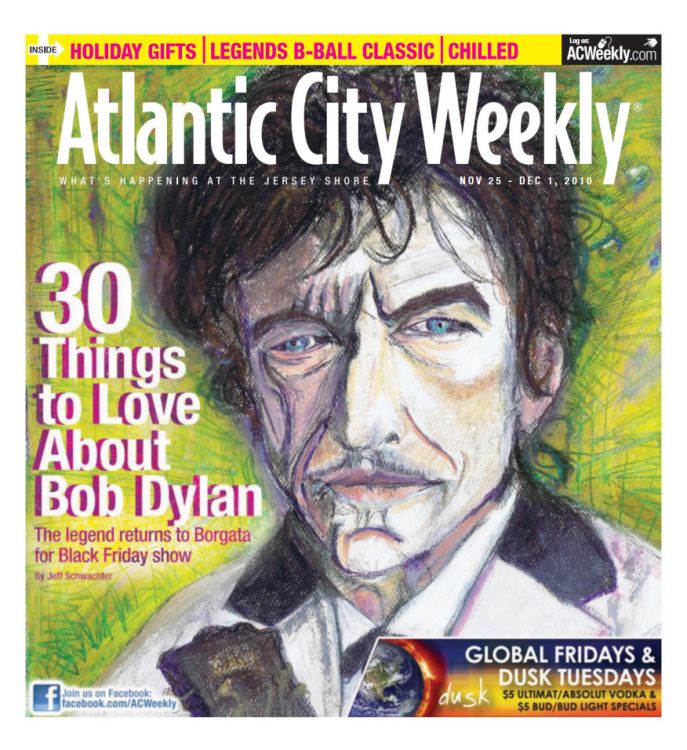
After the November 26 show, it was reported that Dylan had strolled through the Borgata, posing for photos with fans. After twenty-one years, he seems perfectly comfortable playing the resort. And with a sold-out show and the Atlantic City Weekly greeting him with a cover story entitled “30 Things to Love About Bob Dylan,” the city seems to have accepted him as well.
As the departing concert crowd swarmed toward the parking garage, one of the elevators opened and a couple in their twenties stepped out in casual dress for a night of clubbing in the late-night party spots scattered about the Borgata. Taken aback by the amount of people waiting in the area, the woman stopped for a moment while her date inquired as to what was going on.
“Bob Dylan just played here,” one of the concert-goers told him.
The man paused for a moment and scanned the area beyond the crowd before responding to no one in particular, “Wow, Dylan’s here?”
Related Articles



 Epistrophe
Leave a comment