
May 5, 2026
Daredevil @ 60: part 7 – Born Again Season 2
***
My name is Ozymandias, King of Kings/Look on my Works, ye Mighty, and despair/Nothing beside remains. Round the decay/Of that colossal Wreck, boundless and bare/The lone and level sands stretch far away. -Percy Shelley
“We have to try, don’t we?” – Matt Murdock
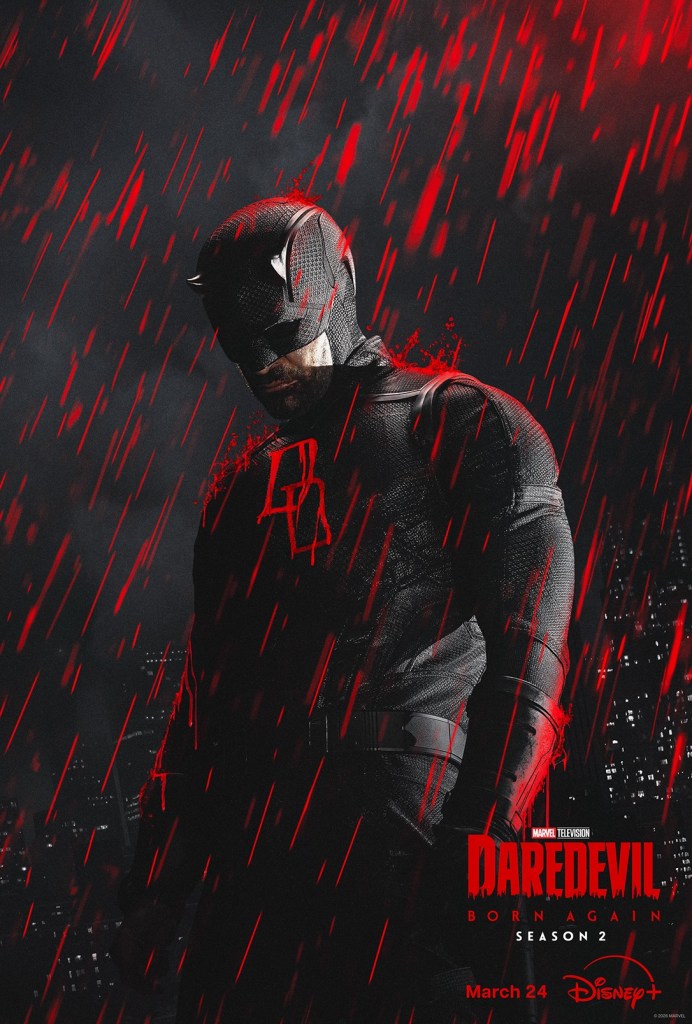
At the conclusion of the Disney+ TV series Daredevil: Born Again’s first season last year the stage was set for a showdown. NYC mayor Wilson Fisk, aka Kingpin, was victorious, having coordinated the city’s police force into a corrupt, vigilante-hunting, opposition-squelching team of lawless brigands to secure complete power for their employer in his empire building. Daredevil was defeated but avoided capture. Last we saw, he had begun assembling an army comprised of trustworthy police officers and friends dedicated to toppling the Kingpin and taking back their city. The lines were drawn and season 2, which commenced streaming on March 24, begins with the early rumblings of the confrontation we’ve awaited for nearly a year.
Born Again season 2 is a battle of wills, of narcissism vs. idealism, personal gain vs. self-sacrifice, optics vs. reality and damnation vs. grace. For every resident’s belief that “New York is back and better than ever” or “New York has never been this great,” there is an unidentified price to be paid in Fisk’s empire, one void of tolerance or varying opinions. It is a regime taunting its opposition to take a swing at it so that it can demonstrate just how powerful it is and why it deserves to be feared.
Because of that, “Daredevil is a revolutionary in this season,” Marvel Television head Brad Winderbaum told Entertainment Weekly in late 2025. “He’s a rebel and it’s fun to see him go up against the power of the city.” The publication also reported that Born Again showrunner Dario Scardapane “used the French Revolution as a common reference during filming,” and actor Charlie Cox described the atmosphere of the new season as “a very claustrophobic world.” And it is.
Historically, repression alters its guise over time from that of a seemingly benign rule that gradually sheds its skin to reveal itself as intolerant of resistance and violently determined to enforce its will. On view in the duplicity of Fisk’s New York in Born Again season 2 is a largely satisfied public made to believe they are living in a better city with a lower crime rate and less vigilantes, unaware that the real crime is being perpetrated by the police and government who grow more self-assured and inflexible in their actions.
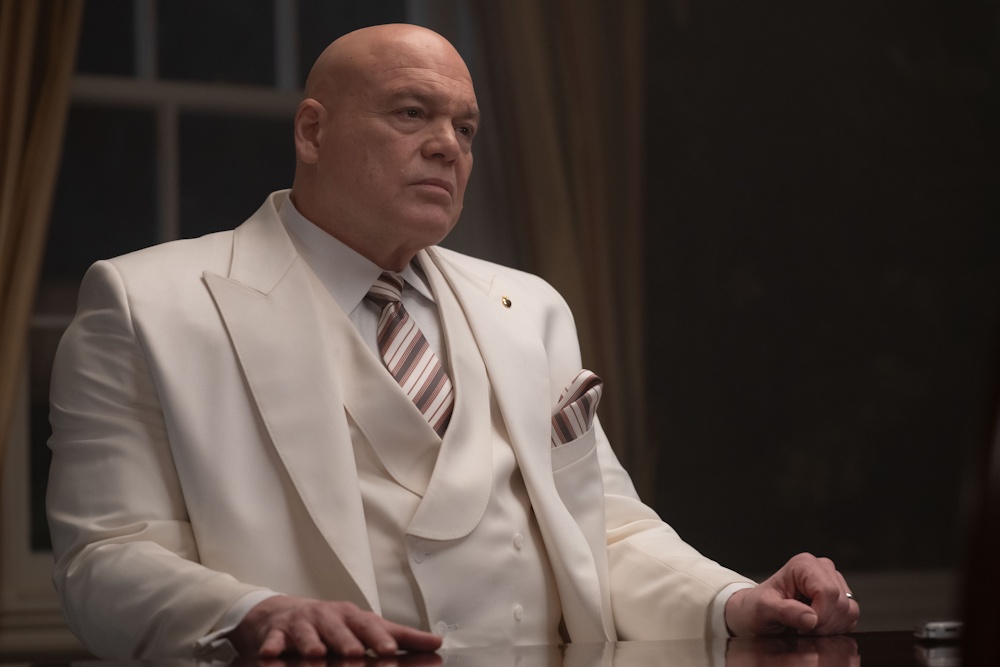
The two sides play out in BB Urich’s positive reports on Fisk’s work for NYC on her social media platform and in her anonymous clips of his underhanded dealings on her guerrilla postings. The latter is a dangerous maneuver, especially since she’s pilfering information from inside Fisk’s administration, but it’s much more accurate than her approved journalism, which is forced to spin the sinking of the Kingpin’s gun-running ship carrying a 30-ton cache of military-grade weapons while en route to his city-state enclave of Red Hook. The tactics and alter egos employed by BB, whose relationship with Deputy Mayor Daniel Blake precariously affects his standing with Fisk’s lieutenant Buck Cashman, borrow a page from Daredevil, who insists “We prove the mayor’s smuggling guns. We force everyone in New York to see who he is, to know what he does.”
A portion of that goal is accomplished through Karen and Matt’s information campaign, but its progress is slow, as Entertainment Weekly warned late last year: “the rebellion takes longer than the audience (and Matt himself) might expect.” In the meantime, the pressure of eluding the AVTF, the mayor’s anti-vigilante task force, while patiently culling information against Fisk has Karen wishing for the Punisher’s help. “He is effective,” she tells Matt, who responds, “Murder is not how we win this.”
Much like his lawyer alter-ego, Daredevil is resolute in his method of toppling Fisk, telling Karen, “We still have a system that’s not entirely broken.” But his belief in what remains of his city’s justice system demands faith. “Show the city, show Albany who he is, and he will be held accountable. I have to believe that.”
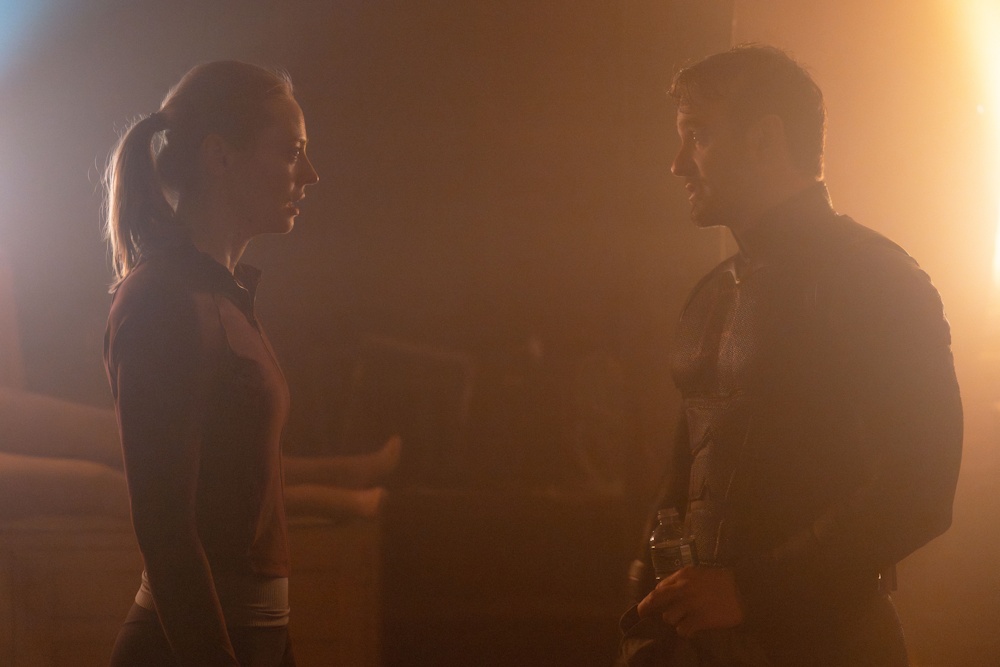
Although other vigilantes are being hunted and imprisoned, the disguised Murdock and Page move around the city risking extermination if discovered. When, in a shrewd attempt to widen the search for the “missing” Murdock, Fisk publicly proclaims Matt a hero, he encourages citizens to locate the attorney. It’s a ploy as deadly as the task force dispatched to hunt Daredevil. But unlike last season, Matt Murdock, now denied his courtroom and sought as prey, is largely absent from the proceedings. “Do you miss it, being Matt Murdock?” Karen asks early on, treating it as an assumed identity rather than a real one. “Yeah, I guess that sometimes I do,” Matt replies. It’s a far cry from the denial of his Daredevil persona the previous season.
The most rewarding aspect of Born Again season 2 is the depth of its characterizations. If season 1 was intended to (re)introduce viewers to the characters in this corner of the Marvel Universe, the second season fine-tunes them, adding layers that are psychologically intricate, not unlike the best of the comic book runs. The latest season is not afraid to examine the series’ full cast, providing each with ample moments of screen time always tethered to the title character. And like Daredevil, the returning characters of Born Again season 2 are living on a high-wire, balancing the ghosts of the past with the threats of the present as lines are redrawn.
Benjamin ‘Dex’ Poindexter aka Bullseye, maintains a minimal presence in the first three episodes, having set in motion Born Again by killing Matt’s law partner Foggy Nelson at the start of season 1. Now, biding his time, he intervenes at a crucial moment, saving DD from the AVTF, his actions exhibiting a demeanor as confused as it is lethal and perched at the edge of a madness that has complicated his motives. “Father, I need absolution,” he tells a priest when seeking redemption in a church while wielding a threatening blade and enveloped in an eerie blue glow. “I’ve betrayed people. I’ve betrayed myself.”
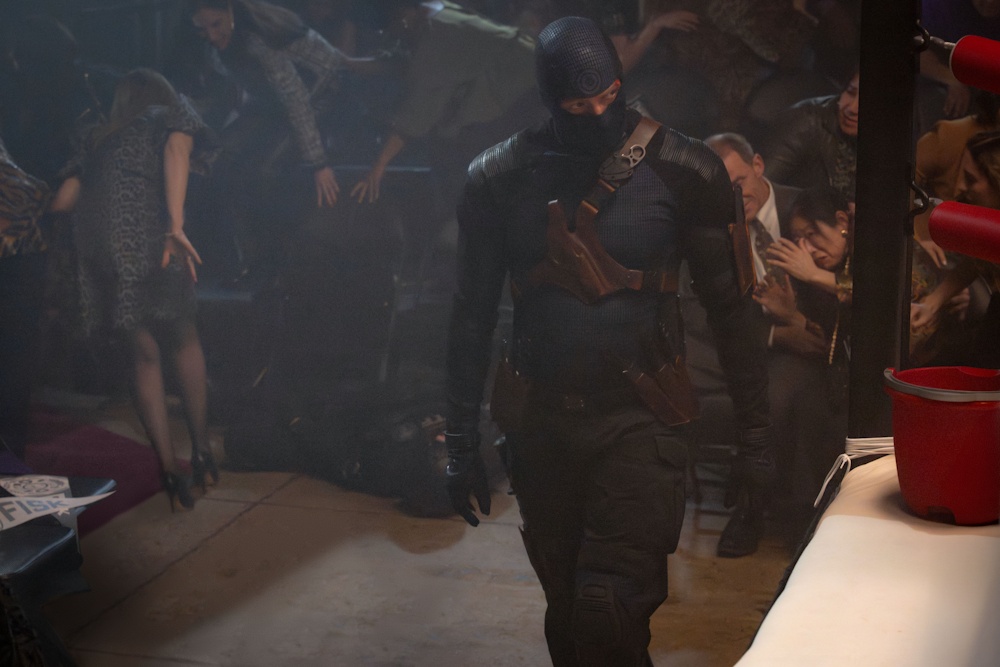
Actor Wilson Bethel, who plays Bullseye, discussed his character with Entertainment Weekly, saying, “That’s the whole beauty of this f—ing character. This whole season is him thinking he’s one of the good guys.” Bullseye even professes as much during the tour-de-force diner scene, in which he phones-in a Frank Castle sighting in order to lure an AVTF squad to its slaughter. “Dex has this guiding principle,” Bethel explains, “he feels good about it, doesn’t matter that the rest of the world doesn’t see it remotely his way.”
That guiding principle, Bullseye’s “North Star,” harkens back to last decade’s Netflix Daredevil series that offered a look at his years of therapy and his fantasy relationship with a former co-worker, Julie, each manipulated by Fisk to unleash Dex’s full potential as he’s groomed to be Kingpin’s henchman. It’s the same principle he “had in the past with Julie and with his therapist,” Bethel said, “and that gives him a sense of purpose and a little bit of a sense of lightness.” But the hatred he developed for Fisk in the Netflix series remains.
In episode 4, during a fight with Daredevil, Bullseye says, “One good deed. It levels the scales again,” referring to his intention to kill Fisk.“What you won’t do,” he accuses his opponent. When he attempts to carry out his threat at the charity boxing match between Kingpin and Matter Horn, an event intended to draw him out, he nearly meets his end. But, “murder is not how we win this,” and just as he saved Fisk at the hands of Bullseye in Born Again season one, Daredevil now rescues Poindexter from Kingpin, adding yet another level of complexity to their relationship that’s reminiscent of Frank Miller’s initial run on the comic book.
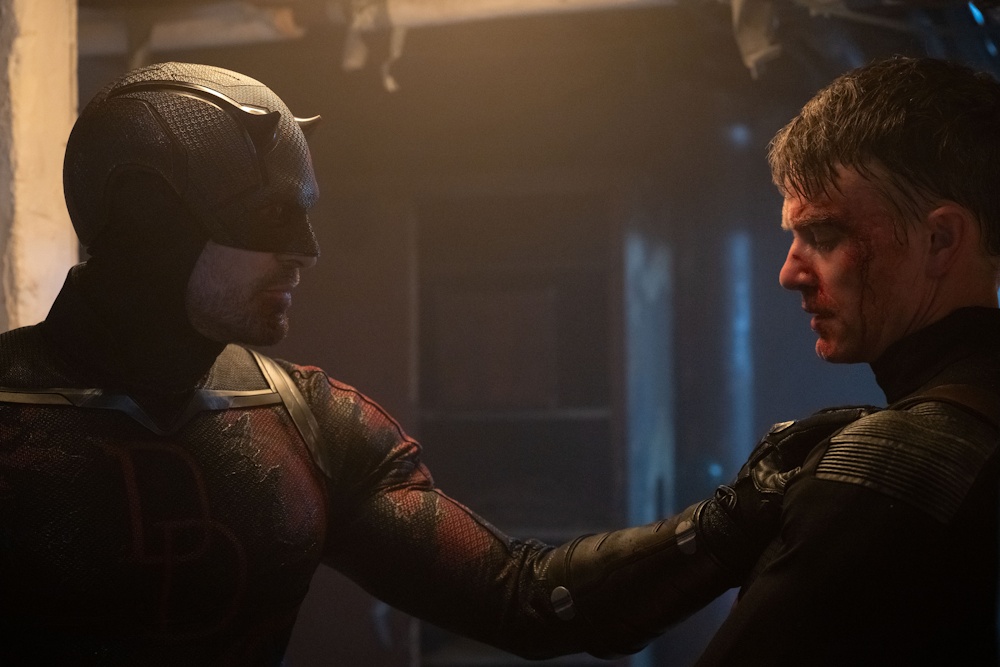
That complexity receives its exploration in episode 5 as Daredevil carries and drags Bullseye to safety from the AVTF. “Leave me here,” Dex insists. “None of this matters now.” “It matters to me,” Daredevil counters. When he realizes he’s bleeding out, Bullseye says, “I’ve earned this many times over.” Unwilling to betray their natures, the two characters are still sparring, only the punches are verbal, the cuts and bruises psychic until something can be shared. “Brother, we are who we are,” Dex explains, “acting something out, scratching some kind of itch…There’s no escaping it.” It’s a moment of vulnerability, of comprehension, of confession. “I’m trying to save you because I tried to kill you,” Daredevil admits. “I lost sight of that on Josie’s roof. Maybe tonight’s penance is mutual.”
When Daredevil falters, begging forgiveness and leaving Bullseye behind for the AVTF, it’s the memory of his former law partner Foggy Nelson that restores his conviction about the redemption of second chances, and he returns to rescue his antagonist once again. It’s not coincidence that the title of the fifth episode is called “The Grand Design,” the concept of which could be used to describe the entire season and its metaphoric use of constellations as compasses, from the sinking of The Northern Star to the concluding “Southern Cross.” The interconnectedness of that macrocosm is unveiled in episode 5 through a seamless flow of moments from the past and present, dreamlike on occasion, as if the two time frames are concurrent and intertwined. In each, the past and its ghosts inform the present. Vanessa speaks of her and Fisk’s first encounter as part of the grand design. Bullseye tells Daredevil “that night you threw me off the roof I was supposed to die. Four-story, no one survives that.” “And yet, maybe that’s the grand design,” the Devil of Hell’s Kitchen responds.
Such discourse would certainly escape Matt’s former girlfriend and Fisk’s new mental health director Heather Glenn, whose trauma incurred from killing Muse after his assault on her lingers, his visage appearing periodically before her. The experience has exacerbated her antipathy toward vigilantes, turning her psychiatric evaluations of those incarcerated into exercises of vengeance, vendettas and, as one character comments, “hatchet jobs.” Heather’s spiral into madness becomes more pronounced when we discover she is in possession of Muse’s mask, employing it seemingly as a psychological totem. And her generalization that all vigilantes are the same dismisses outright any notion of humanity in their behavior. When asked if it’s difficult to get into the psychology of these individuals, she explains unsettlingly, “Sometimes it’s a little too easy.”
Glenn’s skewed evaluation of Jacques Duquesne, the Swordsman, is as much a mockery of justice as his trial. While Duquesne’s presence in the season is minimal, he represents someone who objectively reads what’s wrong without falling prey to the anger and frustration consuming others. When informed by his attorney, Murdock’s law partner Kirsten McDuffie, “The district attorney has no proof of who Fisk says you are,” Duquesne responds with a question, “Do they need that these days, counsellor?” Earlier, McDuffie had been given her own glimpse of the new justice system when she warned the prosecutor, “My defenses are rock solid and I have the evidence to prove it,” only to be told, “You think the evidence matters?” Duquesne calmly receives his conviction at the hands of Fisk’s tribunal, stating under his breath, “for the entertainment of the masses,” having already viewed this moment as a mere echo of similar historical situations.
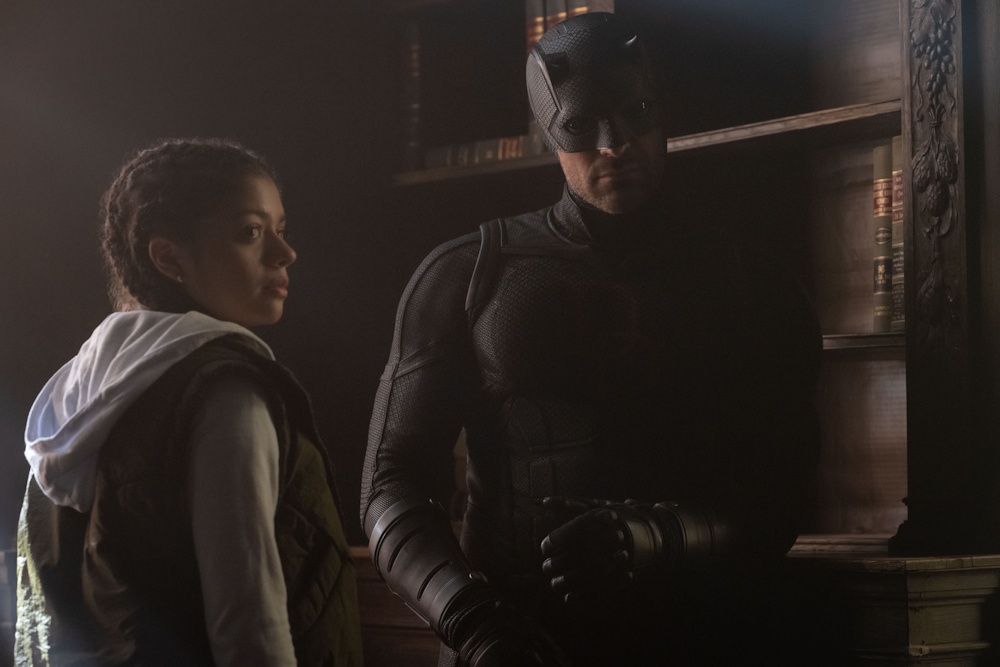
Someone who does not react calmly about what NYC has become is Angela Del Toro. Still mourning the death of her uncle, Hector Ayala, aka White Tiger, who was cold-bloodedly killed by police in season 1, she remains determined to combat Fisk’s Safe Streets initiative, which includes government-sanctioned terrorism on citizens connected with the harboring, abetting or knowledge of the whereabouts of vigilantes. Ignoring the risks, she’s drawn directly into the fray when she watches her aunt arrested by the AVTF. In response, she begins wearing her uncle’s medallion and assuming the role of the White Tiger.
Karen Page’s return at the end of last season has evolved into a high-risk commitment to aiding Daredevil in bringing Kingpin down. It’s Karen’s work with BB that fuels her and Daredevil’s side of the information wars with Fisk. “Her role is the best it’s ever been,” DD actor Charlie Cox told Entertainment Weekly last year. It’s a side of her Matt Murdock has “always known is beneath that surface.” There is certainly enough evidence in the Netflix series of how far her courage will carry her in the pursuit of her beliefs, and here her instincts are necessary in pivotal moments, her reasoning a boon for Matt’s intentions on the battlefield.

Prior to the new season, it was announced that Jessica Jones would make her TV return in Born Again. Winderbaum hinted to Comic Book Resources earlier this year that her reappearance would be accompanied by some changes: “There’s a time gap between the last time we saw [Jones and Daredevil]…and that really helps us because we get to reintroduce and reestablish everyone and a new status quo, and everything that entails.” Reencountering her in episode 6, we find she’s raising a daughter, Danielle outside the urban landscape of NYC. An attack at her home convinces her to join the resistance.
Being a mother “allows Jessica to really step into her fierceness and her strength,” actress Krysten Ritter told Entertainment Weekly, and it’s evident from her first scene in Born Again in which she protects her daughter from their attackers. But for Jones, motherhood comes with a price – her strength cuts in and out indeterminably, as exemplified during a subsequent fight. It’s a vulnerability added to those already part of the character’s makeup, but one she does not allow to diminish her will.
The chemistry between Cox’s Daredevil and Ritter’s Jones is reason enough to watch the Netflix Defenders series. As Ritter acknowledged in Entertainment Weekly, “our scenes together really worked. They crackled and popped.” But her character’s no-nonsense attitude also went a long way in tempering the male egos of the team, and if any member could be called ‘leader’ of the group it would be Jones. In Born Again, her role is secondary, but her presence is crucial. “She brings edginess and lightness…” Amanat notes, “and she cuts through the BS in a really fun way.” Like the Punisher, Jones, as both ally and sounding board for the title character, needs no grand entrance or introduction. “They have a shared history together,” Ritter says of Jones and Daredevil. And fans understood she was always there, just like the other Defenders, whenever the moment was right.

By the start of the season, everyone who needed to be in Fisk’s pocket has been either imprisoned or secured through some form of coercion. Except for his obsessive displays of vengeance toward “the masked vigilante from Hell’s Kitchen,” Fisk lives only in the present, the ghosts and regrets successfully buried away. But his present now has a governor ready to revoke the Red Hook charter as a freeport and an overseer in the form of Mr. Charles of the CIA, whose operation involves arming another country’s forces across the world with Kingpin’s contraband. The weapons on The Northern Star and their intended arrival in Red Hook are under Charles’s oversight and therefore become a deal-gone-wrong for Fisk when they are sunk and delayed exportation.
We discover that the arrangement with Charles is an attempt to grow a more global presence for Fisk, who proclaims, “I believe that I can do more good than just New York,” the term ‘good’ seemingly defined as personal gain. Discussing what he feels is an obligation “to make a global impact,” his wife, Vanessa inquires, “How many worlds do you need to conquer?” “How many are there?” responds Fisk. As series producer Sana Amanat told Empire last year, “When you give a person whose thirst cannot be quenched his most valued treasure, is it enough? Or does he squeeze his treasure too hard?”
Having gotten this far in his control of NYC, Fisk develops a false sense of security that leads to stumbling blocks – the sinking of The Northern Star, the unexpected escape of a number of illegally imprisoned vigilantes and undesirables, the relentless brutality of his boxing during the charity event, the unsuccessful attempt to harness Punisher or to capture Bullseye and his inability to outmaneuver and eliminate Daredevil, who repeatedly undermines his accomplishments.
“You don’t realize it, do you?” Duquesne asks Daredevil. “You’re not a hero. You’re a symbol now. Hope for an entire city.” It’s a mantle he assumes without the ego that accompanies and fuels his nemesis, and the contrast is stark in season 2. As Fisk’s situation slowly crumbles from within and without, the political manipulations of his empire become even more personal, more reckless. Daredevil can’t afford to be so careless. As Cox put it in Entertainment Weekly, “It feels like one misstep and loved ones disappear.” Most of the steps taken against Kingpin are measured and calculated, with an occasional moment of serendipity here and there. The stakes may be higher for DD and his accomplices, but it’s a longer and much more humiliating plummet for Fisk should he fail.
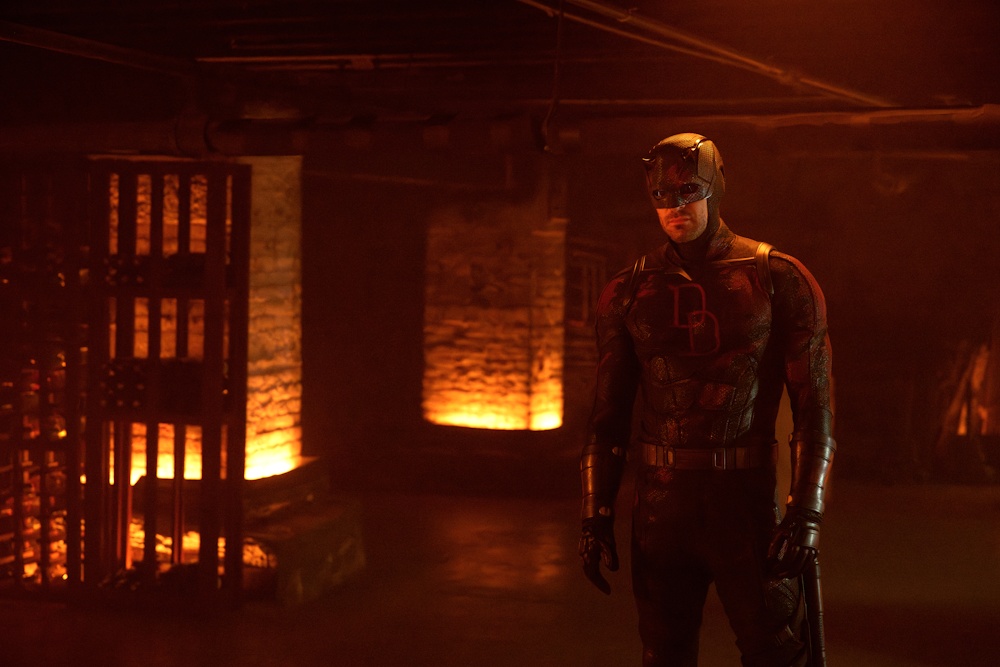
By the final three installments, the show is plunged into what the title of episode 7 calls “The Hateful Darkness,” a realm born from both Fisk’s reimagined NYC and his own spiraling void. Daredevil, confronting Fisk privately in an attempt to end the escalating war within the city, declares, “This fight, it is poison. It destroys everything, the city, the people we love.” Suggesting they both leave NYC, he tells his nemesis, “Imagine if we’d never met.” But the Kingpin’s rage reduces the conversation to a brutal physical confrontation mirroring the violence erupting on the streets between the AVTF and demonstrators. “Is this really what you want?” DD asks once the fight begins. “It’s what we both want,” Fisk replies.
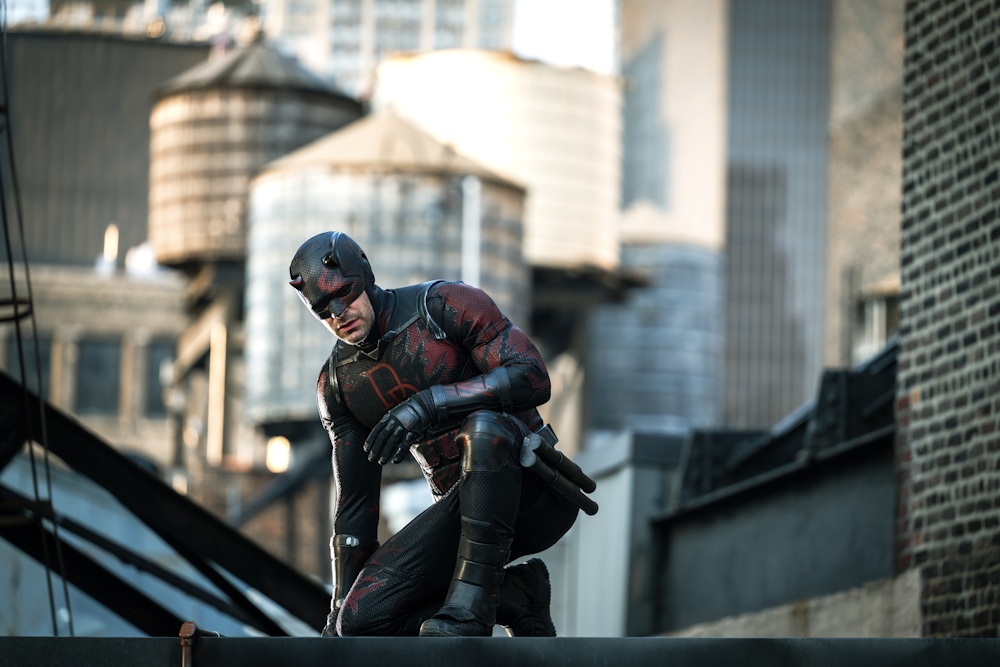
It’s an encounter unexpected as early as episode 6, but there is too much evidence of death, destruction and incarceration for Daredevil not to attempt a truce. Page’s own rage is mounting, BB and Angela are jeopardizing their lives, the task force is doubling its efforts and Charles is sending his own team to attack Matt’s friends. Daredevil’s white flag is offered as his efforts are gaining traction, as his black outfit, sporting the interlocking ‘Ds’ of the comics for the first time, becomes battle-worn with the red of his traditional costume visible in places. If the black suit is intended as a resistance uniform, the success of its wearer’s actions in forcing a return to normalcy is measured by the progressively emerging red, just as Matt’s white flag, ignored by Fisk, risks turning the same color.
Daredevil: Born Again season 2 is a tale of repression, control, hatred, resistance, rebellion and violence in eight episodes. Whether reflective, cautionary or predictive, tales spun from such a cycle are only as interesting as their characters and details, which in this case are intimately woven and tightly spun as part of the grand design that renders Born Again season 2 less predictable than one might think. The black and white of Daredevil’s world always bleed into one another. And we should be grateful for that.
Notes
Iacobucci, Jordan. “Daredevil: Born Again Season 2’s Time Jump Rewrites Jessica Jones’ Netflix Era for the 2020s.” Comic Book Resources, 3 March 2026. retrieved from cbr.com.
Romano, Nick. “Brad Winderbaum, the Head of Marvel TV and Animation, Sits Down with EW Ahead of the Studio’s New York Comic-Con Panel.” Entertainment Weekly, 10 October 2025. retrieved from ew.com.
Romano, Nick. “Jessica Jones Returns in Daredevil: Born Again season 2 — Charlie Cox Previews the War for New York (exclusive).” Entertainment Weekly, 18 December 2025.” retrieved from ew.com.
Romano, Nick. “Krysten Ritter on her Daredevil: Born Again Return, ‘Some Talk’ of a Season 1 Debut, and Jessica Jones’ Life Off Screen.” Entertainment Weekly, 22 April 2026. retrieved from ew.com.
Romano, Nick. “Wilson Bethel Goes Behind Bullseye’s Daredevil: Born Again Diner Fight: ‘We just went absolutely crazy.’” Entertainment Weekly, 8 April 2026. retrieved from ew.com.
Travis, Ben. “Daredevil: Born Again Returns For Season 2 With Total Freedom: ‘We Can Do Whatever We Want.’” Empire, 17 November 2025. retrieved from empireonline.com.
Other Articles in the Daredevil @ 60 Series






 Epistrophe
Leave a comment