
October 15, 2026
Youngbloods: The Matthews Soundboards
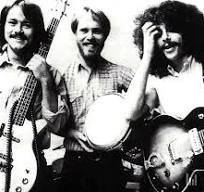
It was on a Saturday afternoon in 1970 that I happened upon National Educational Television’s [NET] The Show, a twenty-six-episode series that featured live performances by national touring musicians who also conversed with host Chip Monck, the MC of the Woodstock Festival. Each hour-long episode presented an array of folk singers, rock bands and soul artists in the intimate setting of WITV Studios in Hershey, Pennsylvania, where the tapings were attended by a small group of local high schoolers.
The episode on that Saturday was the twenty-first of the season and primarily featured The Youngbloods, known for its classic recording of the Chet Powers song “Get Together.” More to the point, this was the trio version of the band with Jesse Colin Young, Lowell ‘Banana’ Levinger and Joe Bauer that toured in 1969/1970 after the departure of co-founding member Jerry Corbitt and prior to the inclusion of bassist Michael Kane. And if educating an audience was the purpose of the series, it more than fulfilled its obligation for at least one viewer.
To watch and listen to the Youngbloods in 1970 was to witness how the boundaries between musical genres could melt away, how rock, blues, jazz, folk, bluegrass, country, classical and r&b could occupy space in the same set and never seem forced or out of place. While the band never achieved an exalted place in the pantheon of rock music, they were nonetheless trailblazers in exploring a variety of musical styles that hadn’t yet been individually boxed and categorized by the record industry. They certainly weren’t the only band to do this, as the Grateful Dead testifies, but they were one of the first to seamlessly and effectively blend multiple genres within a rock context.
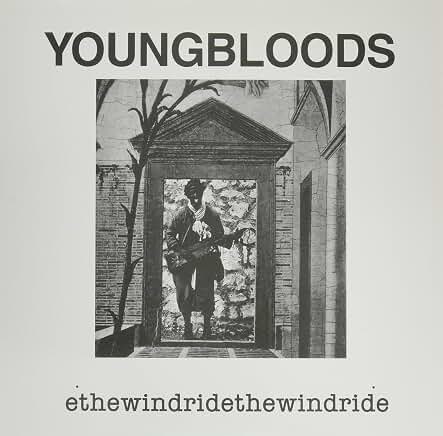
The Youngbloods trio is officially represented on album, appropriately enough, by what are primarily live releases in the form of Rock Festival (1970) and Ride the Wind (1971). The former was comprised from a series of West Coast shows in 1970 and a Pacific High Recording session, the latter from a run of concerts at the Fillmore East in November 1969. Like NET’s The Show performance, Rock Festival is a significantly edited representation of the concerts the band was performing at the time, yet its eclecticism generated its share of confusion among the more pedestrian of reviewers. Rolling Stone’s November 26, 1970 issue complains that the song “Fiddler a Dram” “can only sound (negatively) weird on electric strings that segue unnaturally into jazz improvisation.”
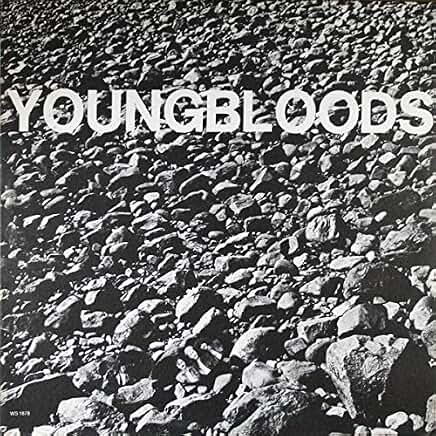
For decades, the band’s unofficial 1960s/70s recordings consisted largely of preserved radio broadcasts and some audience tapes. Now, after fifty-plus years, fans who’ve waited patiently are being rewarded the opportunity to experience the melting pot of some Youngbloods 1970 shows through the recent circulation of full and partial sets of concerts from which Rock Festival’s tracks were drawn, all courtesy of excellent soundboard recordings made by Grateful Dead sound engineer Bob Matthews.
Of the three concerts from the Family Dog on the Great Highway in San Francisco on March 27-29, 1970, the last night is clearly the highlight. From the first notes of “On Beautiful Lake Spenard” to the finale, “Get Together,” this is probably what should have been released as an expanded double-album Rock Festival. In addition to originals from the Elephant Mountain album that include “Ride the Wind,” “Sunlight,” and “Darkness Darkness” as well as one of the most infectious renditions of “It’s a Lovely Day,’ it contains rarities like Chuck Berry’s “Sweet Little Sixteen” and John Lee Hooker’s “She’s Long, She’s Tall (She Weeps Like a Willow Tree)” in a tour de force performance by regular guest Richard ‘Earthquake’ Anderson on harmonica.
Other covers, elusive until the appearance of these soundboards, are scattered across the boards. At the March 27 and 28 concerts, you can find versions of the Hank Williams hit “Lovesick Blues” as well as Merle Haggard’s “Branded Man.” Richie Valens’s “Donna,” which would appear on the band’s final album, High on a Ridge Top, makes an appearance at the April 18 Santa Clara concert.
There are even some early originals that make cameos like “Rain Song (Don’t Let the Rain Bring You Down)” on the five-song July 19 San Rafael soundboard, the February 20 Berkeley performance of “Til You Come Back Home Again,” which would wait until Young’s 1975 Songbird album for official release, and March 29’s “Quicksand.” An announcement on March 29 also teased “Grizzly Bear,” which never materialized.
We are also treated to multiple versions of “Hippie from Olema,” Levinger’s response to Haggard’s put-down of the hippie community, “Okie from Muskogee,” and it’s in its original version, which retains Haggard’s melody with a new set of lyrics. When it was recorded for the Good and Dusty album as “Hippie from Olema #5,” it boasted a new, original melody. The recordings also provide an overdue explanation that the song’s rebuttal shouldn’t be mistaken as a dismissal by Levinger of Haggard’s talents as a songwriter or performer.
Most importantly, the soundboards are evidence of how eclectic the Youngbloods were. Young’s solo acoustic “Peace Song,” Levinger’s solo banjo “Interlude,” the rollicking blues “Peepin’ and Hidin’ (Baby What You Want Me to Do),” the jazzy “Ride the Wind,” the classically styled “On Sir Francis Drake,” the good-time “Sugar Babe,” the soulful “Beautiful,” and the moving balladry of “Sunlight,” with its accompaniment of acoustic/electric guitars and hand percussion, were all part of that inimitable sound that defined the Youngbloods.
This was the band who taught me in 1970 that music needn’t be segregated, that it wasn’t necessary to pick one genre and follow it in your own musical career. Elsewhere on this blog are plenty of archival Dark Hollow tracks that, taken together, reflect a variety of musical sounds, whether they are original material or cover songs. Each of the band’s members agreed that it should be an eclectic repertoire. And while I can’t speak for the others, for me this outlook began on that Saturday afternoon in 1970 when I discovered the 21st episode of The Show.
And speaking of that program, the release of The Show’s episodes has been tied up in legalities, preventing the series from streaming today. But there are two Youngbloods performances, poles apart, that have found their way onto YouTube: “Hippie from Olema” and a sublime rendition of “Josiane.” If you’re inclined, check them out below. And remember, bands rarely play this wide a variety today.
https://www.youtube.com/watch?v=q2xnmVmonXk
https://www.youtube.com/watch?v=C2JViDGanfc
Related Articles




Leave a Reply