
October 1, 2026
The Art of the Bootleg
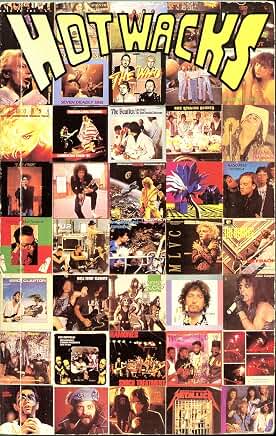
If you turn to any page in the main text of the now out-of-print Hot Wacks books, you’ll find listings upon listings of bootleg albums by rock artists from the 1960s to the 1990s. Titles, labels, tracks, sources, quality ratings – they’re all there, recorded and measured for anyone in search of officially unreleased music by a rock act. In an age of pre-internet/pre-streaming, it was a valuable source of information, just like its subject.
Bootlegs should not be confused with counterfeit or pirate recordings, unauthorized reproductions of albums released by major record labels. Kurt Glemser notes in his 1985 essay “Bootleg,” which appears in Hot Wacks Book XI, “the record labels do not lose revenue from a recording which is not in their catalog.” Still, copyright protection in 1972 made bootlegs illegal only three years after the release of what is generally considered the first rock boot, a collection of Bob Dylan tracks titled Great White Wonder. But bootlegs precede Dylan and rock music by quite a few decades.
Private recordings of live performances can be traced to the start of the 20th century with the advent of primitive recording equipment on which live performances could be captured, at least in part, on cylinders or discs. The proliferation of radio broadcasts after World War II also provided collectors with an abundance of material. Once circulated, these recordings became bootlegs.
The field of opera seems to have provided the earliest bootlegs. Glemser quotes from Dean Meador’s article in Hot Wacks Quarterly # 4, “A History of Bootleg Recordings,” in which we are told, “the librarian of the Metropolitan Opera…received a cylinder recorder from Thomas Edison. He took his gift up into the fly-loft on several occasions during the Met’s 1901-03 seasons and recorded bits and pieces of performances.” The recordings offered fans, aficionados and collectors an opportunity to, according to Meador, “obtain and hear performers, singers, artists and speakers of that era who never appeared on commercial recordings, others in roles they didn’t duplicate on authorized discs.”
Clinton Heylin’s 1994 book Bootleg informs us, “the bootlegging of operatic performances continued to generate the largest area of growth in the decade before rock bootlegs…” Steven E. Jones is identified as the person “who began the commercial bootlegging of operas in earnest…” using “acetate air-checks” of 1930s and 1940s radio broadcasts.
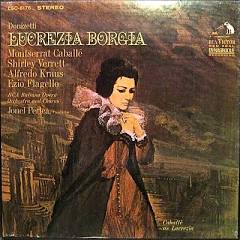
Bootleg also identifies Roland Ernest, who “seemed able at will to obtain high-quality recordings of any Carnegie Hall concert he so desired.” It seems his “greatest coup was perhaps the most famous opera bootleg of them all: [Spanish soprano Montserrat] Caballe’s American debut in Donizetti’s Lucrezia Borgia” on April 20, 1965. The recording first appeared as a vinyl release on the Voce Records label.
Jazz bootlegs had their start as early as the 1930s. An online essay, “The Story of the John Dawson Jazz Collection: The History of Private and Unreleased Live Jazz Recordings,” identifies that “the first jazz bootleg may be a radio link in a Louis Armstrong concert done in Denmark 1933. It was captured with the new technology of the time, the 78 rpm disc-cutter…”
The essay explains that “one of the early legal tests of bootleg records in the USA occurred in 1936. This happened when transcription recordings made off the air were so good that small radio stations could compile programs by Bing Crosby or Paul Whiteman and sell them to the public as records.”
What is arguably the most famous jazz bootleg is a performance by Duke Ellington and his band at the Crystal Ballroom in Fargo, North Dakota on November 4, 1940. Recorded by two college students, Richard Burris and Jack Towers, the recording was made with the permission of Ellington, the venue’s owner and the William Morris Agency with the provision that it could not be used for commercial purposes.
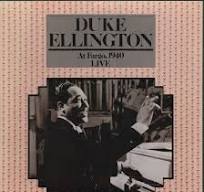
Using several microphones and “a sapphire-tipped cutter that carved v-tracks in 16-inch acetate discs,” Burris and Towers “cut 5 1/2 discs, 15 minutes per side,” the essay reports. Towers explained that he dubbed a tape copy of the show for someone years later. That copy wound up in the hands of someone else and eventually an LP of the performance appeared in Europe in 1964. But there was more in store for its future.
Beginning in the 1950s, radio broadcasts of jazz performers, primarily from but not restricted to Europe and New York City, became a staple of jazz collectors using tape recorders instead of discs to capture performances. Concerts by Miles Davis, John Coltrane, Bill Evans and a who’s who of jazz were preserved by fans for future generations. For example, an abundance of broadcasts on KING radio from Seattle’s jazz club The Penthouse, including sets by Evans, Ahmad Jamal and Wes Montgomery, have recently found their way into official release over the last several decades. Some of Coltrane’s performances at the club in 1965 were released by Impulse in 1971, but others comprised a bootleg to satisfy completists.
On-air transmissions of Davis concerts include several from the late-1950s featuring the Kind of Blue lineup before the recording of that classic album. The first two Davis Bootleg Series sets from Columbia consist of broadcasts, and Coltrane’s overall catalog has its fair share of official radio releases, including one from his hometown of Philadelphia, the 1966 Temple University concert discovered in WRTI-FM’s archives.
Rock music, then, had a formidable precedent when it came to establishing its own legacy of releasing ephemera in the form of live recordings and studio outtakes on such labels as Trade Mark of Quality and The Amazing Kornyphone Record Label. Unreleased studio recordings provided an entirely new realm for the process, securing tracks from privately circulated tapes or studio vaults.
It’s rather appropriate that the inaugural Great White Wonder consists of some of Dylan and the Band’s basement recordings from 1967 distributed only to publishing companies for artists interested in recording any of the songs, of which Fairport Convention, Julie Driscoll, Brian Auger & the Trinity, Manfred Mann, the Byrds and Peter, Paul and Mary availed themselves. By adding in a December 1961 private recording known as the Minnesota Hotel Tape circulated by Dylan in his pre-fame days, the boot provided some revelatory moments about the singer’s early live performances and his recent recording endeavors in the Woodstock area while recuperating from a motorcycle spill.
It’s probably fair to say that in the rock genre, the Grateful Dead has the edge on most artists building a concert library from its own multi-track and board recordings, radio broadcasts and audience recordings made by fans, who generously tape-trade their achievements and collections in ever-changing formats of tape, DAT and the current digital medium, an ‘in-house’ practice whose tapes nonetheless still found a way onto vinyl and CD boots over the years. But the process also spawned literature about the recordings in the form of books like Dead Base, the three-volume Grateful Dead Taping Compendium and Peter Conners’s in-depth history of an acclaimed show, Cornell ’77, to assist tapers on their quest for concert recordings.
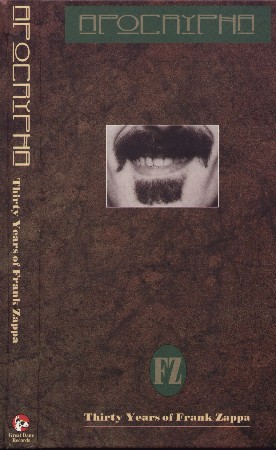
During the 1990s, box sets of unofficial live recordings began to expand with a purpose. Two four-disc compilations on the Italian Great Dane label appeared in 1994 and helped contribute to the format. Apocrypha: Thirty Years of Frank Zappa provided a sampling of mostly live tracks covering the maestro’s various phases as it traced the twists and turns of Zappa’s music and personnel. It’s the type of retrospective that eventually became commonplace with official multi-disc releases like The Band’s A Musical History (2005) and Michael Bloomfield’s From His Head to His Heart to His Hands (2013).
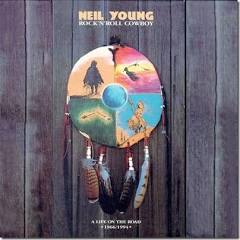
But it was Great Dane’s Neil Young set, Rock ‘n’ Roll Cowboy: A Life on the Road (1966/1994), that served as a substitute for the real thing – the long-promised but endlessly delayed official archives series Young mentioned he was working on in 1991. It would take over a decade for the official run to begin, but Rock ‘n’ Roll Cowboy assuaged fans with enough rare material, including Buffalo Springfield and CSNY tracks, to make the wait more tolerable. The set offered unreleased treasures from live performances, many of which became officially available once the archives were underway. And it inspired Crawdaddy founder Paul Williams to intersperse four essays in the form of “musical diary entries” throughout his Neil Young: Love to Burn collection of articles, each examining a disc of the Rock ‘n’ Roll Cowboyset. Totaling roughly 130 pages, they are an appropriate accompaniment to the music and extensive liner notes contained on the set.
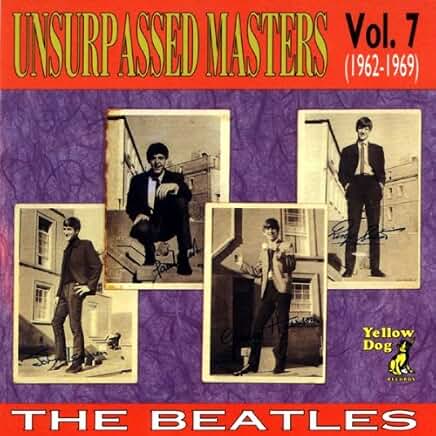
The bootlegging of studio outtakes reached its pinnacle during the 1990s with the introduction of several series that still stand majestically above even today’s official box sets in scope and volume. The release of the Unsurpassed Masters series of the Beatles and Beach Boys in the early and late 1990s, respectively, offered multiple sets on vinyl and CD of studio outtakes from the vaults. The Beatles collection, released on the Yellow Dog label, contains alternate takes of familiar songs from sessions spanning the 1960s. The Beach Boys releases, a truly revelatory examination of Brian Wilson’s studio prowess on the Sea of Tunes label, include a three-disc set of the making of “Good Vibrations” and four discs devoted to the abandoned SMiLE album.
Boots have always been about the historic but never with the quality and depth offered by these releases or the penultimate of box sets, A/B Road. Culling together the audio from the Beatles’ January 1969 Get Back/Let It Be film sessions, including the Nagra A- and B-rolls, the Purple Chick label’s 2004 A/B Road set consists of eighty-three CDs containing nearly a hundred hours of music and chatter that comprised the month-long project. Even Columbia’s massive Cutting Edge:Collector’s Edition box of Dylan’s entire 1965-66 sessions is sixty-five discs short of this Beatles collection, which, along with Terry Wilson’s insightful two-volume book Let It Be:The Making of the Beatles Final Album, is the perfect companion to Peter Jackson’s documentary Get Back in properly understanding the working dynamics of the Beatles at this time. In fact, it’s significant that Jackson acknowledged his use of Beatles bootlegs while working on the film and that Purple Chick’s set can now be found online for anyone interested.
Bootleg material may have lost its outlaw status with the ascendance of the more uncontrollable digital file, but its legacy now informs both artists and record companies in the trend of physical archival releases of the last several decades. Columbia Records initiated a Bob Dylan Bootleg Series thirty-plus years ago and currently has eighteen volumes in its catalog. Similar sets from the Beatles, The Who, Jimi Hendrix and Pink Floyd, to name just a few, have appeared (and, in some cases, already disappeared) during the 2000s. And following on from Paul Cable’s Bob Dylan: His Unreleased Recordings, an indispensable read for fans in search of those elusive tracks back in the 1970s, there’s a trove of publications studying, dissecting, reporting on or reviewing a variety of rock acts’ unofficial catalogs for the casual fan and the die-hard collector.
And then there’s that Duke Ellington Fargo performance, so meticulously captured by devotees on primitive equipment in an era that couldn’t begin to imagine the lengths future music lovers would go to re-live a concert experience. What ever happened to that 1940 recording? It went on to become a Grammy-winning official release.
Related Articles




Leave a comment