
September 1, 2026
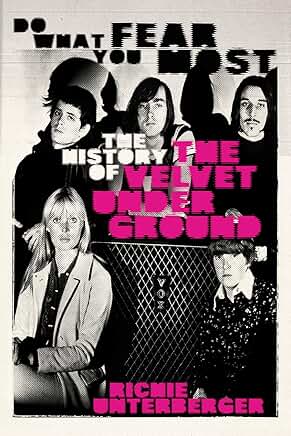
Do What You Fear Most: The History of the Velvet Underground
When Lou Reed and John Cale reunited in the studio for their 1990 Songs for Drella album, a tribute to the filmmaker/artist Andy Warhol who once managed them, the creative chemistry, conspicuously absent for twenty-plus years after they had parted ways, was clearly still there. The same applied to the rivalry. The Reed-Cale relationship was always a complicated partnership. Collaboratively and competitively, they were the driving force of the Velvet Underground, transforming the pop/rock/folk sensibilities of Reed’s early compositions into the dark, edgy tones of the first two VU albums.
The Drella project turned out to be a prelude to a Velvet Underground reunion, with Reed and Cale first joining their compatriots Sterling Morrison and Maureen Tucker in 1990 for a performance of “Heroin” outside Paris at the opening of a Warhol exhibition and then in 1993 for a short European tour in advance of a planned U.S. run. The shows resulted in official CD and DVD releases, but the American concerts never happened, sabotaged by Reed’s demands for control. Instead of firing Cale, as he did in 1968, he managed to terminate the entire band this time, ending any chance of further collaboration.
The drama of the VU is all there and then some in Richie Unterberger’s new 800-page biography of the group, Do What You Fear Most: The History of the Velvet Underground, which surpasses in scope and depth previous bios on the band. Unterberger is certainly no stranger to the band’s story or rock history, having published White Light/White Heat: The Velvet Underground Day-By-Day in addition to worthy studies of The Byrds and The Who. Four months prior to the new biography’s publication, Kirkus Reviews was already proclaiming, “First-rate research and writing make this a book that lives up to its legendary subject,” quite a compliment for a bio about a band that remains largely unknown to the average music fan.
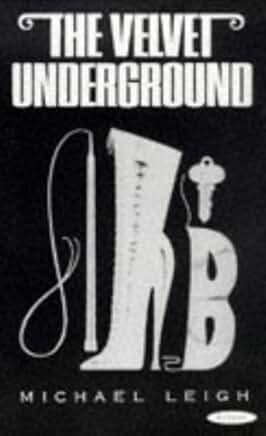
Even before the Velvet Underground took its name from Michael Leigh’s book about the sexual subculture of the early 1960s, it was already setting itself apart from mainstream culture. Reed noted in his second volume of collected lyrics, Pass Thru Fire, that the words to his early songs were “often seen as a celebration or glorification of what was commonly seen as sin…That this occurred in a recording was of itself thought sinful.” Add in the choice of underground filmmaker Warhol as manager and the group’s entry into the multi-media Exploding Plastic Inevitable live shows and the VU didn’t so much burst on the scene with the release of its first recordings in 1967 as slip quietly into the evolving mix of rock music happening at the time.
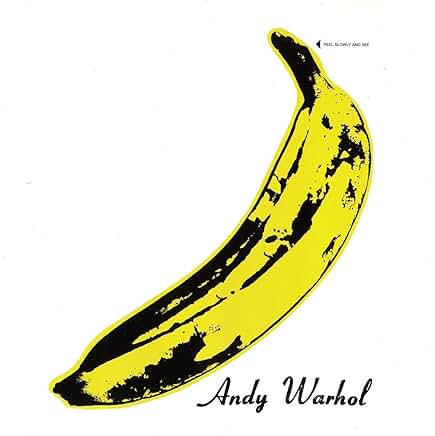
Its debut album, The Velvet Underground & Nico, featuring German-born singer and La Dolce Vita actress Christa Paffgen, aka Nico, began production in the group’s home base of NYC, embodying much of the city’s underbelly in words and music. Its completion, however, at TTG Studios in the glimmer and gloss of Los Angeles offers a striking dichotomy, especially as a region where the band encountered resistance during its first West Coast tour in 1966. But the VU would be filled with dichotomies, including the title of its first album, where Nico’s appearance was as a ‘plus one’ to the band proper, a move facilitated by Warhol. As an addendum, the “& Nico” of the title might best declare her role, which didn’t stop Reed and Cale from competing for her affections. Her time with the VU ended, as Unterberger puts it, by being “unceremoniously booted out,” yet her lead vocals on Reed’s more conventional compositions raise those tracks to a level of European chic when delivered by such a distinctive chanteuse. But it would be through her solo recordings, particularly those under Cale’s sympathetic supervision, that established her renown and legacy.
When reduced to its four-piece sound, the Velvet Underground, both musically and lyrically, could be raw, provocative and chaotic. The evidence is there in the debut album’s unconventional compositions, which soon formed the modus operandi of the band’s second LP, White Light/White Heat. The initial release’s moments like “Heroin” and “European Son” gave way to its follow-up’s “Sister Ray,” which continued to evolve into live thirty-to-forty-minute sonic meltdowns even following Cale’s departure.
Unterberger’s VU biography takes its title from Reed’s “Some Kinda Love,” the same source that inspired the name of Reed’s first collected volume of lyrics, Between Thought and Expression. “Let us do what you fear most, that from which you recoil,” the song petitions, and it could be addressing a listener, particularly in the mid-1960s, engaging with the Velvet Underground’s music. There’s danger in the unknown that’s dwelling in some of those sounds and images, an aural pulp novel from a realm as far from the pop songs inhabiting AM airplay as one could get.
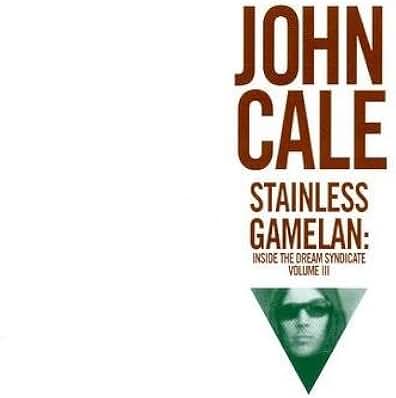
The genesis of the distinctive VU sound embraced the strains of the uncommercial as its core members began to coalesce in 1965. Reed’s time as an in-house songwriter for Pickwick Records produced its share of pop and soul, just as his 1965 acoustic copyright demos, with Cale on vocal harmonies, reveal the lilt of traditional ballads and the traces of what Reed archivist Don Fleming called “a Greenwich Village folk song,” in both composition and performance. It also evidences the influence of Bob Dylan. But two songs from the demos, “Heroin” and “Waiting for the Man,” would receive a drastic makeover once the Velvet Underground was underway, thanks to Cale’s viola and his experience in LaMonte Young’s avant-garde ensemble performances of ambient drone pieces. While he was assisting Reed in his demos, Cale had already undertaken his own drone experiments, which were recorded by fellow Young alum Tony Conrad and later released as the Inside the Dream Syndicate volumes. They were the sounds Reed’s music and lyrics were waiting for.
In 2023, talking with the New York Times, Todd Haynes, director of the 2021 documentary Velvet Underground, explained that “there was no way to overstate John’s absolutely primary role as a conceptual and creative partner with Lou Reed.” Cale’s contribution augmented the band’s sound in a unique fashion, reshaping it and informing the other members’ playing. Drummer Tucker’s mostly cymbal-less style was a perfect fit from the start. Guitarist Morrison can be found on Dream Syndicate recordings diving into the genre with Cale on the 1965 track “Stainless Steel Gamelan.” And Reed later acknowledged in Victor Bockris’s VU biography, “I first started thinking about Metal Machine Music as far back as when John used to work with LaMonte Young.” The inclusion of a John Cage-like influence created within the group a finely balanced concoction of song styling vs. drone, melody vs. noise and rehearsed vs. spontaneous.
That’s not to say that other influences weren’t also at work. Commenting on the spontaneity of the “Sister Ray” track, Reed told Bockris, “I had been listening to a lot of Cecil Taylor and Ornette Coleman and wanted to get something like that with a rock & roll feeling.” Reed had been listening to these jazz musicians since his college days and even played them and other progressive jazz players on his short-lived Syracuse University radio show, which he named after the Taylor composition Excursion on a Wobbly Rail. The program was cancelled when faculty complained about the content.
That didn’t stop Reed from putting out his own mimeographed literary magazine, named after a Coleman song, Lonely Woman Quarterly. The three-issue run contained some of his earliest prose writings, assessed by Unterberger as “contributions [that] were not run-of-the-mill early sixties college essays.” They included the offbeat story “The Gift” that would find its way onto White Light/White Heat with Cale narrating the tale against a pulsing soundtrack, one of the VU’s most exemplary moments.
But, according to an early Reed collaborator, Phil Harris, quoted in Do What You Fear Most, the motivation behind his friend’s ambition “more than anything else was money…He wanted to create something novel, unique, edgy, and he wanted to make money doing it.” It’s been suggested over the decades that firing Cale was an attempt to make the VU’s music more accessible by late 1968. Morrison, who, along with Tucker opposed sacking Cale, is quoted in the biography as saying that Reed “wanted to go pop,” a notion supported by the band’s more conventional 1969 eponymous third album. Whatever the reason, the decision was not without consequence.
Just as Cale’s presence in the VU served as a foil to Reed, his absence created its own set of dual dynamics in everything from songwriting to the perception of the group. In Between Thought and Expression, Reed’s footnote for “The Murder Mystery” identifies the personal motivation for the song: “I was having fun with words and wondering if you could cause two opposing emotions to occur at the same time. I’d fired John from the V.U.” In the Foreword to Do What You Fear Most, Dean Wareham notes that “it almost makes sense to think of the Velvet Underground as two different bands with Cale and post-Cale.” Only Tucker, it seems, favored an unrealized finality for the group with Cale’s termination when she told What Goes On several decades later, “I wish we had quit after two years instead of getting so close to being ‘heard’ nationally.”
Because they didn’t disband in 1968, the Velvet Underground covered additional ground, this time within the pop-song boundaries that generated such classics as “Sweet Jane,” “Rock ‘n’ Roll Music” and a setlist preserved on the official bootleg release Live At Max’s Kansas City. Concurrently, the band was slowly subtracting members – Tucker was on maternity leave during the Loaded sessions, Reed walked out near the end of the 1970 Max’s run and Morrison left not too long after. Doug Yule, Cale’s replacement, carried on without any original members until the 1973 Squeeze album. According to the new biography, Yule declined attending the band’s 1996 induction into the Rock ‘n’ Roll Hall of Fame when told by the Velvet Underground Partnership’s lawyer “he’d have to pay his way to the ceremony and watch it from the audience.”
Such in-between moments, one of many that are disheartening, can be found throughout Do What You Fear Most. But that shouldn’t be a deterrent. Reading this biography, which Unterberger states, is “dedicated to telling [the VU] story in the detail it deserves” while debunking the “mini-myths…too often misleading and sometimes inaccurate,” is having a thorough, informative and impeccably researched history of a significant band all in one place.
Notes
Bockris, Victor and Gerard Malanga. Up-Tight: The Story of the Velvet Underground. London: Omnibus Press, 1996.
“Do What you Fear Most.” Kirkus Reviews, 2 February 2026. retrieved from kirkusreviews.com.
Larson, Sarah. “Unidentified Parcel: Listening Party.” The New Yorker, 26 September 2022, 21-22.
Millstein, Phil, M.C. Kostek and Katherine Messer. “The Maureen Tucker Interview (1980-90).” What Goes On #4 in The Velvet Underground Companion, Albin Zak III (ed.), New York: Schirmer Books, 1997.
Reed, Lou. Between Thought and Expression. New York: Hyperion, 1991.
Reed, Lou. Pass Thru Fire. New York: Hyperion, 2000.
Unterberger, Richie. Do What You Fear Most: The History of the Velvet Underground. London: Omnibus Press, 2026.
Zoladz, Lindsay. “A Storied Rock Resume Gets Longer.” New York Times, 22 January 2023, AR8.




Leave a Reply